
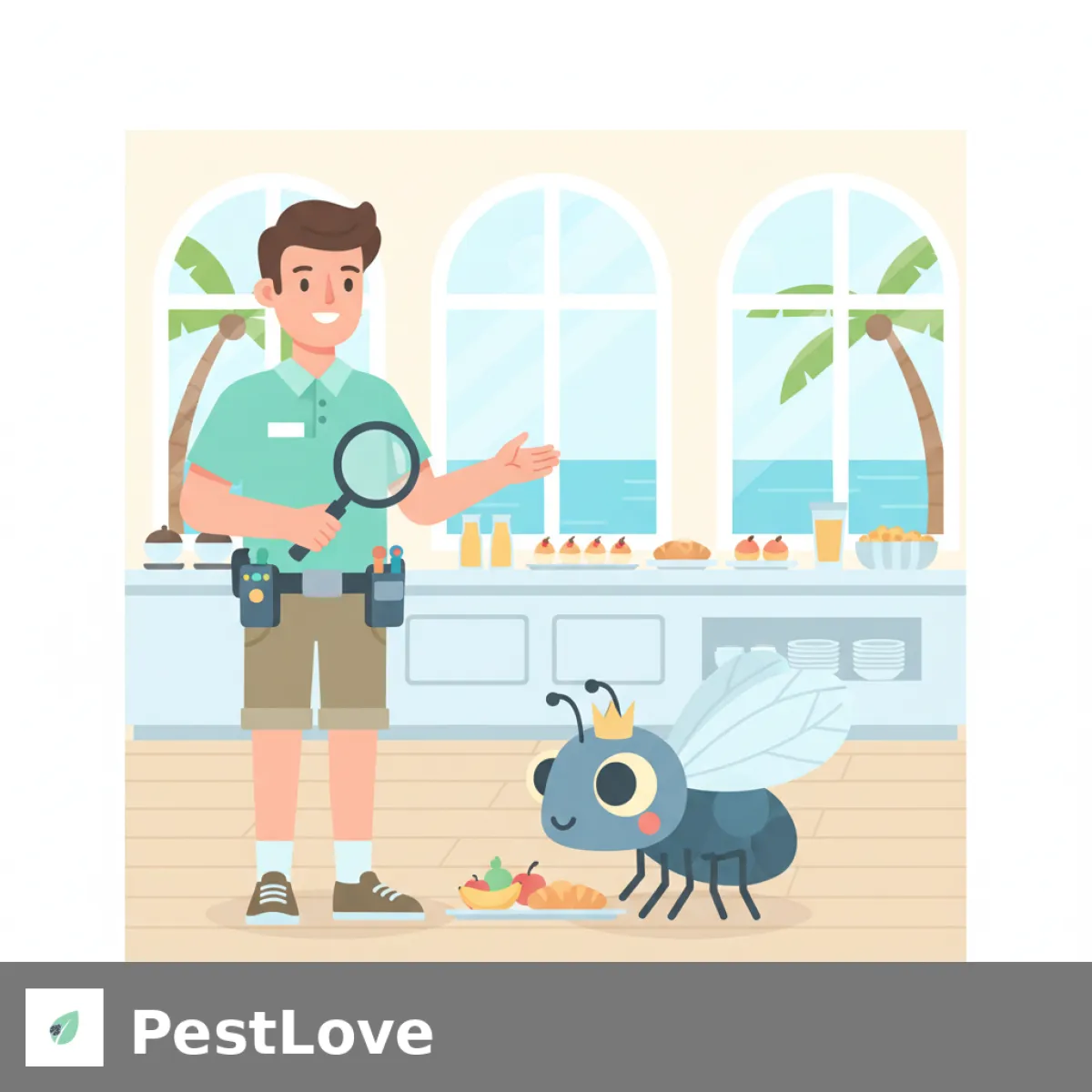
Mga Pangunahing Punto<\/h2>- Basura-langaw langaw<\/a><\/strong> (Musca domestica<\/em>, Chrysomya megacephala<\/em>, Drosophila<\/em> spp.) ay mabilis na nagpaparami sa tropical na init, na ginagawang kailangang gawin ang pang-araw-araw na kalinisan para sa hotel buffet areas.<\/li>
- Pagbuo ng hadlang at disenyo ng airflow<\/strong>—kasama ang air curtains, screened openings, at positive-pressure ventilation—bumubuo ng unang linya ng depensa.<\/li>
- Ang kontrol ng temperatura<\/strong> ng ipinakitang pagkain, pinagsama sa mahigpit na aliw sa pagtanggal ng basura, ay nag-aalis ng mga breeding substrates na sumusuporta sa populasyon ng langaw.<\/li>
- Integrated Pest Management (IPM)<\/strong> ay nagsasama ng cultural, mechanical, at targeted chemical controls upang mapanatili ang fly-free buffet service nang hindi sinasakripisyo ang food safety.<\/li>
- Professional pest control partnerships<\/strong> ay mahalagang suportahan ang monitoring, documentation, at regulatory compliance sa hospitality settings.<\/li><\/ul>
Pag-unawa sa Banta: Bakit ang Tropical Buffets ay Mataas na Risk<\/h2>
Ang hotel buffet at breakfast service areas sa tropical na klima ay nagpapakita ng ideal na pagkakataon para sa pag-unlad ng basura-langaw. Ang ambient temperature na patuloy na higit sa 25°C (77°F) ay nagpapabilis ng life cycles ng langaw—ang Musca domestica<\/em> (ang karaniwang bahay-langaw) ay maaaring kumpleto ang egg-to-adult development sa loob lamang ng pitong araw sa 30°C. Ang mataas na humidity ay pumipigil sa desiccation ng mga itlog at larvae, habang ang maraming organic matter na likas sa bukas na food displays ay nagbibigay ng parehong attraction cues at breeding substrates.<\/p>Ang business consequences ay parehong matindi. Ang isang langaw na bumagsak sa plate ng bisita ay maaaring magdulot ng negative online reviews na nakakasama sa reputasyon ng hotel sa loob ng maraming buwan. Ang health inspections sa karamihan ng tropical jurisdictions ay tinatrato ang langaw activity malapit sa food service bilang critical violation. Ayon sa World Health Organization, ang basura-langaw ay mechanical vectors para sa mahigit 100 pathogens, kasama ang Salmonella<\/em>, E. coli<\/em>, at Shigella<\/em>—mga organism na may kakayahang magdulot ng foodborne illness outbreaks na may legal at financial liability.<\/p>Pagkilala: Kilalanin ang Mga Species na Present<\/h2>
Ang epektibong pamamahalaan ay nagsisimula sa tumpak na pagkilala, dahil ang bawat species ay nagpapahiwatig ng ibang sanitation failures at nangangailangan ng tailored interventions.<\/p>
Bahay-Langaw (Musca domestica<\/em>)<\/h3>Ang pinakakaraniwang basura-langaw sa buong mundo, ang bahay-langaw ay 6–7 mm ang haba, gray na may apat na dark longitudinal stripes sa thorax. Sila ay umuugnaw ng digestive fluids papunta sa food surfaces bago kumain, na nagdedeposit ng pathogens sa bawat contact. Ang kanilang presensya malapit sa buffets ay karaniwang nagpapahiwatig ng decaying organic matter sa loob ng 150 meters ng service area.<\/p>
Blow Flies (Chrysomya megacephala<\/em>, Calliphora<\/em> spp.)<\/h3>Metallic blue o green flies, 8–14 mm, na nakakaakit sa protein-rich foods—lalo na ang meat, fish, at egg dishes na karaniwan sa breakfast buffets. Ang blow fly activity sa loob ay malakas na nagpapahiwatig ng carcass, spoiled protein waste, o inadequately sealed refuse bins na malapit.<\/p>
Prutas-Langaw (Drosophila melanogaster<\/em>, Drosophila repleta<\/em>)<\/h3>Maliit (2–4 mm), tan-bodied flies na may distinctive red eyes, na nakakaakit sa fermenting fruits, juice stations, at sweet condiments. Sila ay nagpaparami sa thin films ng organic residue sa loob ng drains, sa ilalim ng equipment, at sa mop heads—na gumagawang sila ay sanitation indicator species.<\/p>
Kanal-Langaw (Psychodidae<\/em>)<\/h3>Moth-like flies, 2–5 mm, na may fuzzy wings na nakaabang tulad ng bubong sa katawan. Habang mas hindi malamang na direktang makipag-ugnayan sa pagkain, ang kanilang paglalabas mula sa floor drains sa buffet areas ay nagpapakita ng biofilm accumulation sa plumbing—isang substrate na sumusuporta din sa phorid at prutas-langaw breeding<\/a>.<\/p>Pagpigil: Ang Sanitation-First Approach<\/h2>
Ang IPM principles ay nagsasaad na ang prevention sa pamamagitan ng environmental modification ay mas sustainable at epektibo kaysa reactive chemical treatment. Para sa tropical hotel buffets, ang prevention ay nakatuon sa tatlong haligi: sanitation, exclusion, at food handling protocols.<\/p>
Daily Sanitation Protocols<\/h3>- Pre-service deep clean:<\/strong> Lahat ng buffet surfaces, sneeze guards, chafing dish frames, at serving utensil holders ay dapat palambutin sa food-safe sanitizer kahit 30 minuto bago ang bawat service period.<\/li>
- Continuous bussing:<\/strong> Italaga ang staff na mag-clear ng used plates, spilled food, at soiled napkins sa intervals na hindi mas malaki kaysa 10 minuto sa panahon ng active service.<\/li>
- Waste removal:<\/strong> Palitan ang waste receptacle liners bawat dalawang oras sa service. Ihatid ang sealed bags sa exterior refuse areas kaagad—hindi kailanman itayo ang waste bags sa loob o malapit sa buffet zone.<\/li>
- Post-service protocol:<\/strong> Sa loob ng 30 minuto ng pagwawakas ng service, alisin ang lahat ng pagkain, linisan ang lahat ng surfaces, at pagsalumpingin ang mga sahig gamit ang enzymatic cleaner na nakakasira ng organic residue sa halip na pag-iba-iba lamang nito.<\/li>
- Drain maintenance:<\/strong> Hugasan ang floor drains sa mainit na tubig o enzyme-based drain gel linggo-linggo. Ang biofilm removal sa floor drains at grease traps<\/a> ay nag-aalis ng breeding habitat para sa drain flies, prutas-langaw, at phorid flies nang sabay-sabay.<\/li><\/ul>
Structural Exclusion<\/h3>- Air curtains:<\/strong> Mag-install ng commercial<\/a>-grade air curtains sa lahat ng entrance sa pagitan ng kitchen, buffet, at outdoor areas. Ang mga units ay dapat lumikha ng minimum airstream velocity na 8 m\/s sa buong door opening upang makabuo ng epektibong insect barrier.<\/li>
- Screening:<\/strong> Lahat ng windows at ventilation openings sa buffet area at adjacent kitchen ay dapat may 1.2 mm mesh screens. Inspeksyon ng buwan-buwan para sa mga liro o gaps.<\/li>
- Positive pressure:<\/strong> Panatilihin ang slight positive air pressure sa buffet dining room kumpara sa outdoor areas upang ang hangin ay magsabog pababa kapag bukas ang mga pinto, na pumipigil sa fly entry.<\/li>
- Door discipline:<\/strong> Ipatupad ang self-closing mechanisms sa lahat ng service doors. Ang loading dock at delivery doors ay dapat manatiling sarado maliban sa active deliveries.<\/li><\/ul>
Food Display Best Practices<\/h3>- Gumamit ng sneeze guards na may side panels na umaabot sa loob ng 25 cm ng food surface, na binabawasan ang puwang kung saan maaabot ng langaw ang ipinakitang items.<\/li>
- Panatilihin ang hot-held foods na higit sa 60°C (140°F) at ang cold items na mas mababa sa 5°C (41°F). Ang mga temperature sa safe range na ito ay nagbabawas ng volatile organic compound emissions na nakakaakit ng langaw.<\/li>
- Takpan ang fresh fruit displays, juice dispensers, at condiment stations gamit ang fitted lids o cloches sa pagitan ng guest interactions.<\/li>
- Palitan—sa halip na punan—ang buffet trays, dahil ang residual food sa ilalim ng replenished trays ay maaaring umaabot sa temperatures sa fly-attractive danger zone.<\/li><\/ul>
Paggamot: Mechanical at Chemical Controls<\/h2>
Kapag ang prevention ay hindi sapat—karaniwan sa panahon ng tropical monsoon seasons kapag ang fly pressure ay umabot sa peak—ang targeted treatments ay sumasagot sa sanitation baseline.<\/p>
Mechanical Controls<\/h3>- Insect light traps (ILTs):<\/strong> Iposisyon ang UV-A light traps nang estratehikong sa buffet area, pinipili ang mga lokasyon malapit sa entry points at service corridors. Ang ILTs ay dapat gumamit ng glue boards kaysa electrocution grids, na maaaring magkalat ng insect fragments sa food zones. Ilagay ang mga units sa 1.5–2 meters height, malayo sa competing light sources at sa labas ng direct guest sightlines. Ang professional pest management provider ay maaaring magsagawa ng light trap audit upang ma-optimize ang placement at subaybayan ang catch data para sa trend analysis.<\/li>
- Fly bait stations:<\/strong> Sa back-of-house areas, exterior refuse rooms, at loading docks, ang granular o liquid fly baits na naglalaman ng attractant z<\/em>-9-tricosene na pinagsama sa low-toxicity insecticide ay nagbabawas ng fly populations bago sila umaabot sa guest-facing spaces.<\/li><\/ul>
Targeted Chemical Controls<\/h3>
Ang chemical interventions ay dapat ang huling resort sa food service environments, inilapat lamang ng licensed pest management professionals, at hindi kailanman sa panahon ng active food service.<\/p>
- Residual surface sprays:<\/strong> Ilapat ang microencapsulated pyrethroid formulations sa exterior walls, refuse area perimeters, at non-food-contact surfaces sa back-of-house corridors. Ang mga ito ay lumilikha ng residual barrier na pumipigil sa langaw sa transit sa pagitan ng breeding sites at ng buffet.<\/li>
- Space treatments:<\/strong> Sa matinding infestations, ang ULV (ultra-low volume) fogging na may pyrethrin-based products ay maaaring makamit ang rapid knockdown. Iskedyul ang mga application sa overnight service gaps, na nagsisiguro ng full ventilation bago ang susunod na food service period. Lahat ng food contact surfaces ay dapat palambutin at sanitize pagkatapos ng anumang space treatment.<\/li>
- Larvicides:<\/strong> Para sa patuloy na breeding sa drains o exterior organic matter accumulations, ang insect growth regulators (IGRs) tulad ng cyromazine o methoprene ay pumipigil sa larval development nang hindi ipinapakilala ang adulticide residues sa food service areas.<\/li><\/ul>
Pag-monitor at Dokumentasyon<\/h2>
Ang patuloy na pag-monitor ay nagbabago ng reactive pest control sa proactive management system—isang core principle ng hotel IPM programs<\/a>.<\/p>- ILT catch analysis:<\/strong> Suriin ang glue boards linggu-linggo, na nagrerekord ng species composition at quantity. Ang biglaang spike sa blow fly catches ay maaaring magpahiwatig ng bagong breeding source (tulad ng isang dead rodent sa ceiling void), habang ang pagtaas ng prutas-langaw numbers ay madalas na umaangkop sa drain maintenance lapses.<\/li>
- Staff reporting system:<\/strong> Turuan ang buffet at kitchen staff na mag-report ng fly sightings gamit ang standardized form na nagrekord ng location, time, at estimated quantity. Ang frontline data na ito ay invaluable para sa pagkilala ng emerging hotspots.<\/li>
- Pest control log:<\/strong> Panatilihin ang detailed service log na nagdodokumento ng lahat ng inspections, treatments, corrective actions, at monitoring data. Ang log na ito ay nagsisilbing patunay ng due diligence sa panahon ng health inspections at essential para sa mga hotel na nagsusumikap ng food safety certifications tulad ng HACCP o ISO 22000.<\/li><\/ul>
Kailan Tumawag sa Propesyonal<\/h2>
Ang hotel management ay dapat makipag-ugnayan sa licensed pest management professional sa mga sumusunod na sitwasyon:<\/p>
- Ang fly activity ay patuloy na umuulit kahit ang mahigpit na sanitation at exclusion measures, na nagpapahiwatig ng hidden breeding source na nangangailangan ng professional inspection.<\/li>
- Ang health inspectors ay nag-cite ng fly-related violations, na nangangailangan ng documented corrective action plan na inihanda ng certified pest management provider.<\/li>
- Ang maraming fly species ay kasalukuyang nandoon, na nagpapahiwatig ng systemic sanitation o structural issues na nangangailangan ng comprehensive IPM site assessment.<\/li>
- Ang guest complaints tungkol sa langaw ay lumilitaw sa online reviews, na susuportahan ang urgent professional response upang protektahan ang brand reputation at mapanatili ang hospitality standards<\/a>.<\/li>
- Ang property ay nangangailangan ng patuloy na compliance documentation para sa HACCP, local health authority permits, o brand standard audits.<\/li><\/ul>
Sa tropical climates, ang quarterly professional service visits ay kumakatawan sa minimum frequency; ang monthly visits ay inirerekomenda sa panahon ng wet seasons kapag ang fly pressure ay nagiging mas malakas. Ang isang competent pest management firm ay magbibigay ng trend reports, risk assessments, at proactive recommendations—hindi lamang reactive treatments.<\/p>
Konklusyon<\/h2>
Ang pagpapamahala ng basura-langaw sa tropical hotel buffet areas ay nangangailangan ng systems-based approach. Walang iisang hakbang—hindi ang pinakamaingat na sanitation program o ang pinakaadbenturadong insect light trap—na mag-aalis ng fly risk sa isolation. Ang tagumpay ay nangangailangan ng disciplined integration ng sanitation protocols, structural exclusion, mechanical trapping, targeted chemical intervention, at continuous monitoring. Ang mga hotel na nakatuon sa layered IPM framework na ito ay nagpoprotekta sa health ng bisita, nagpoprotekta sa kanilang reputasyon, at nagsisiguro ng consistent compliance sa food safety regulations sa ilan sa pinakamahulugang pest environments ng mundo.<\/p>
Pag-unawa sa Banta: Bakit ang Tropical Buffets ay Mataas na Risk<\/h2>
Ang hotel buffet at breakfast service areas sa tropical na klima ay nagpapakita ng ideal na pagkakataon para sa pag-unlad ng basura-langaw. Ang ambient temperature na patuloy na higit sa 25°C (77°F) ay nagpapabilis ng life cycles ng langaw—ang Musca domestica<\/em> (ang karaniwang bahay-langaw) ay maaaring kumpleto ang egg-to-adult development sa loob lamang ng pitong araw sa 30°C. Ang mataas na humidity ay pumipigil sa desiccation ng mga itlog at larvae, habang ang maraming organic matter na likas sa bukas na food displays ay nagbibigay ng parehong attraction cues at breeding substrates.<\/p> Ang business consequences ay parehong matindi. Ang isang langaw na bumagsak sa plate ng bisita ay maaaring magdulot ng negative online reviews na nakakasama sa reputasyon ng hotel sa loob ng maraming buwan. Ang health inspections sa karamihan ng tropical jurisdictions ay tinatrato ang langaw activity malapit sa food service bilang critical violation. Ayon sa World Health Organization, ang basura-langaw ay mechanical vectors para sa mahigit 100 pathogens, kasama ang Salmonella<\/em>, E. coli<\/em>, at Shigella<\/em>—mga organism na may kakayahang magdulot ng foodborne illness outbreaks na may legal at financial liability.<\/p> Ang epektibong pamamahalaan ay nagsisimula sa tumpak na pagkilala, dahil ang bawat species ay nagpapahiwatig ng ibang sanitation failures at nangangailangan ng tailored interventions.<\/p> Ang pinakakaraniwang basura-langaw sa buong mundo, ang bahay-langaw ay 6–7 mm ang haba, gray na may apat na dark longitudinal stripes sa thorax. Sila ay umuugnaw ng digestive fluids papunta sa food surfaces bago kumain, na nagdedeposit ng pathogens sa bawat contact. Ang kanilang presensya malapit sa buffets ay karaniwang nagpapahiwatig ng decaying organic matter sa loob ng 150 meters ng service area.<\/p> Metallic blue o green flies, 8–14 mm, na nakakaakit sa protein-rich foods—lalo na ang meat, fish, at egg dishes na karaniwan sa breakfast buffets. Ang blow fly activity sa loob ay malakas na nagpapahiwatig ng carcass, spoiled protein waste, o inadequately sealed refuse bins na malapit.<\/p> Maliit (2–4 mm), tan-bodied flies na may distinctive red eyes, na nakakaakit sa fermenting fruits, juice stations, at sweet condiments. Sila ay nagpaparami sa thin films ng organic residue sa loob ng drains, sa ilalim ng equipment, at sa mop heads—na gumagawang sila ay sanitation indicator species.<\/p> Moth-like flies, 2–5 mm, na may fuzzy wings na nakaabang tulad ng bubong sa katawan. Habang mas hindi malamang na direktang makipag-ugnayan sa pagkain, ang kanilang paglalabas mula sa floor drains sa buffet areas ay nagpapakita ng biofilm accumulation sa plumbing—isang substrate na sumusuporta din sa phorid at prutas-langaw breeding<\/a>.<\/p> Ang IPM principles ay nagsasaad na ang prevention sa pamamagitan ng environmental modification ay mas sustainable at epektibo kaysa reactive chemical treatment. Para sa tropical hotel buffets, ang prevention ay nakatuon sa tatlong haligi: sanitation, exclusion, at food handling protocols.<\/p> Kapag ang prevention ay hindi sapat—karaniwan sa panahon ng tropical monsoon seasons kapag ang fly pressure ay umabot sa peak—ang targeted treatments ay sumasagot sa sanitation baseline.<\/p> Ang chemical interventions ay dapat ang huling resort sa food service environments, inilapat lamang ng licensed pest management professionals, at hindi kailanman sa panahon ng active food service.<\/p> Ang patuloy na pag-monitor ay nagbabago ng reactive pest control sa proactive management system—isang core principle ng hotel IPM programs<\/a>.<\/p> Ang hotel management ay dapat makipag-ugnayan sa licensed pest management professional sa mga sumusunod na sitwasyon:<\/p> Sa tropical climates, ang quarterly professional service visits ay kumakatawan sa minimum frequency; ang monthly visits ay inirerekomenda sa panahon ng wet seasons kapag ang fly pressure ay nagiging mas malakas. Ang isang competent pest management firm ay magbibigay ng trend reports, risk assessments, at proactive recommendations—hindi lamang reactive treatments.<\/p> Ang pagpapamahala ng basura-langaw sa tropical hotel buffet areas ay nangangailangan ng systems-based approach. Walang iisang hakbang—hindi ang pinakamaingat na sanitation program o ang pinakaadbenturadong insect light trap—na mag-aalis ng fly risk sa isolation. Ang tagumpay ay nangangailangan ng disciplined integration ng sanitation protocols, structural exclusion, mechanical trapping, targeted chemical intervention, at continuous monitoring. Ang mga hotel na nakatuon sa layered IPM framework na ito ay nagpoprotekta sa health ng bisita, nagpoprotekta sa kanilang reputasyon, at nagsisiguro ng consistent compliance sa food safety regulations sa ilan sa pinakamahulugang pest environments ng mundo.<\/p>Pagkilala: Kilalanin ang Mga Species na Present<\/h2>
Bahay-Langaw (Musca domestica<\/em>)<\/h3>
Blow Flies (Chrysomya megacephala<\/em>, Calliphora<\/em> spp.)<\/h3>
Prutas-Langaw (Drosophila melanogaster<\/em>, Drosophila repleta<\/em>)<\/h3>
Kanal-Langaw (Psychodidae<\/em>)<\/h3>
Pagpigil: Ang Sanitation-First Approach<\/h2>
Daily Sanitation Protocols<\/h3>
Structural Exclusion<\/h3>
Food Display Best Practices<\/h3>
Paggamot: Mechanical at Chemical Controls<\/h2>
Mechanical Controls<\/h3>
Targeted Chemical Controls<\/h3>
Pag-monitor at Dokumentasyon<\/h2>
Kailan Tumawag sa Propesyonal<\/h2>
Konklusyon<\/h2>