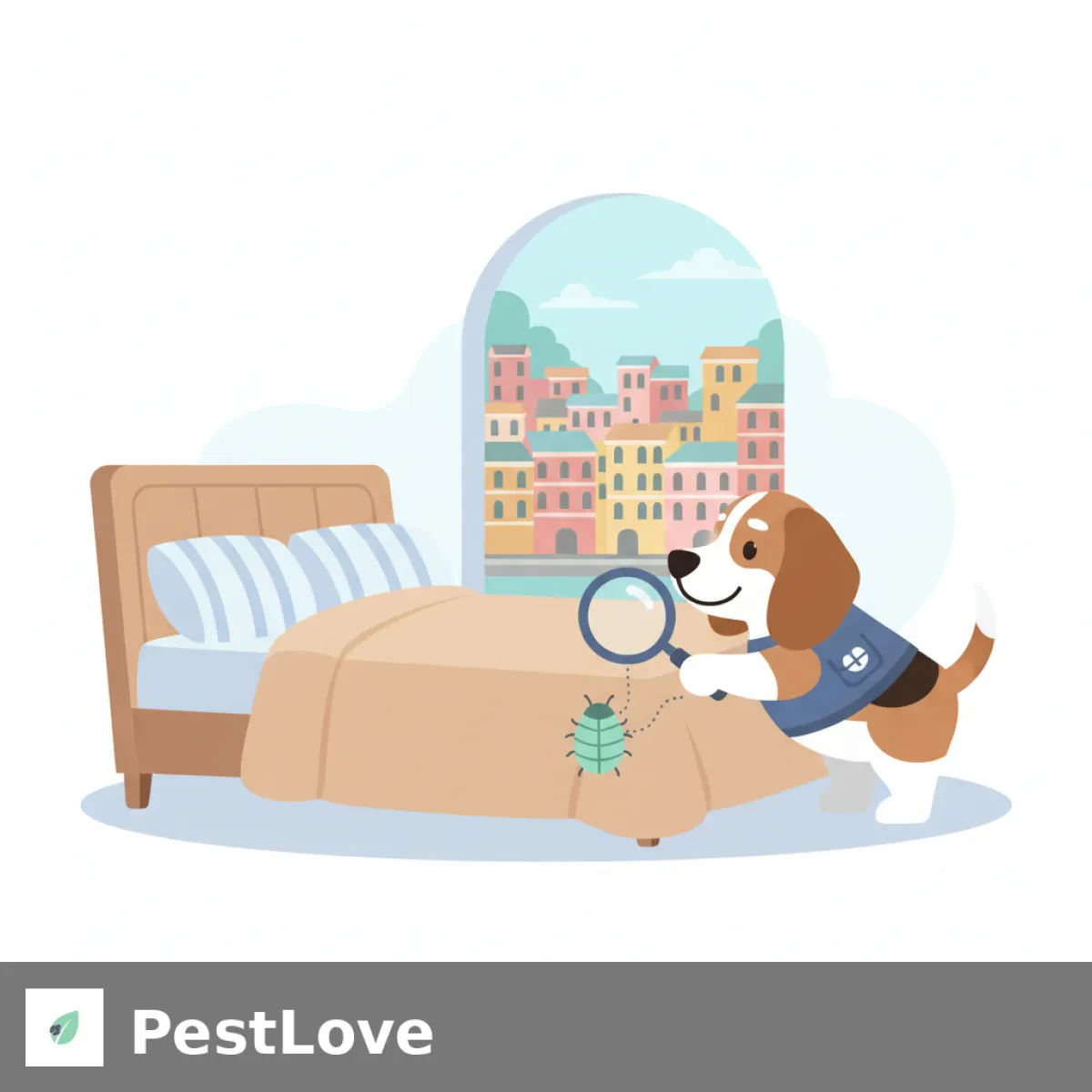
Key Takeaways
- Canine accuracy: Properly certified bed bug detection dogs can identify live Cimex lectularius infestations with reported accuracy exceeding 95% under controlled conditions, far surpassing visual-only inspections.
- Heritage constraints: Cinque Terre's stone-walled, multi-level inns with traditional wooden furniture demand non-invasive detection — dogs scan rooms without dismantling carved bed frames or disturbing UNESCO-listed structures.
- Confirmation rule: A canine alert must always be confirmed by a licensed human inspector before any treatment is initiated.
- Certification matters: Only engage handler-dog teams certified under NESDCA or comparable European standards (e.g., ECMA).
- Frequency: Pre-season sweeps in April–May and quarterly maintenance inspections protect Booking.com and TripAdvisor scores during peak tourism months.
Why the Cinque Terre Demands a Specialized Approach
The five villages of the Cinque Terre — Monterosso, Vernazza, Corniglia, Manarola, and Riomaggiore — host millions of overnight guests annually in affittacamere, boutique inns, and converted stone cottages. These structures, often centuries old and tightly clustered along the Ligurian coast, present unique bed bug (Cimex lectularius) detection challenges: irregular wall cavities, hand-hewn timber furnishings, layered textile décor, and continuous guest turnover during the April–October season.
Traditional visual inspections frequently miss low-level infestations harbored deep within stone joints or antique bed frames. Canine scent detection, when integrated into an Integrated Pest Management (IPM) framework, fills this gap by identifying live bed bugs and viable eggs through olfactory signatures — specifically pheromone aggregates such as histamine and (E)-2-octenal that humans cannot perceive.
Identification: Understanding the Pest the Dogs Are Seeking
Biology of Cimex lectularius
The common bed bug is a flat, reddish-brown, oval insect measuring 4–7 mm as an adult. Nymphs progress through five instar stages, requiring a blood meal between each molt. Females lay 1–5 eggs per day, producing roughly 200–500 eggs in a lifetime. At typical inn room temperatures of 20–25 °C, the egg-to-adult cycle completes in approximately 35–45 days.
Signs Properly Trained Dogs Detect
- Live adults and nymphs (the primary alert target)
- Viable eggs (a discriminator between active and historical infestations)
- Aggregation pheromones in harborages such as headboards, electrical outlets, and skirting boards
Critically, canines trained to NESDCA standards are expected to ignore cast skins, fecal spotting, and dead specimens — distinguishing active infestations from past, already-treated activity.
Behavior: Why Inns Are High-Risk Environments
Bed bugs are obligate hematophagous ectoparasites that disperse passively via luggage, clothing, and shared transport. The Cinque Terre's reliance on hiking-trail tourism, regional train arrivals from Genoa and La Spezia, and high room turnover creates a continuous introduction pressure. Research published by the University of Kentucky Entomology Department confirms that hospitality properties with average stays under three nights experience introduction rates several times higher than long-stay accommodation.
Once introduced, bed bugs prefer harborages within 1.5 meters of the host sleeping site, which is why canine sweeps prioritize beds, nightstands, and adjacent wall voids — though seasoned teams also inspect luggage racks, upholstered chairs, and curtain hems where Italian boutique inns often layer decorative textiles.
Prevention: Building a Canine-Supported IPM Program
1. Vendor Selection
Innkeepers should verify the following before contracting a canine detection team:
- Certification: NESDCA (North American Detector Dog Association) or European-equivalent credentials, renewed annually.
- Double-blind testing records: Vendor must provide audited proof of accuracy.
- Italian regulatory compliance: The pest control firm must hold a current authorization under Italian Legislative Decree 274/2005 governing service activities.
- Heat-management plan: Working dogs in coastal Liguria summer heat require climate-controlled rest periods; ethical operators schedule scans before 10:00 or after 18:00 in July–August.
2. Pre-Arrival Protocols
Innkeepers should implement standardized luggage racks (metal, away from walls), encasements on all mattresses and box springs, and routine inspection of housekeeping carts. Guidance aligned with the Professional Bed Bug Prevention standards for boutique hotels applies directly to Cinque Terre properties.
3. Inspection Frequency
- Pre-season baseline: Full property canine sweep in March or early April.
- Peak-season maintenance: Quarterly sweeps of all guest rooms, or monthly for properties exceeding 15 rooms.
- Reactive sweeps: Within 24–48 hours of any guest complaint or staff observation.
For properties experiencing rapid turnover, the framework outlined in proactive bed bug inspections for boutique hotels provides additional structural recommendations.
Treatment: What Follows a Positive Alert
A canine alert is a presumptive indicator, not a diagnosis. Every alert must be confirmed visually by a licensed pest control technician before treatment begins. Confirmation typically uses focused inspection of seams, tufts, and harborages, often supplemented by interception devices (ClimbUp-style monitors) placed under bed legs for 7–14 days.
Confirmed Infestation Response
- Whole-room heat treatment: Sustained 50 °C (122 °F) for 90 minutes is the EPA- and EFSA-recognized lethal threshold for all life stages including eggs. This is generally the preferred option for heritage properties because it leaves no chemical residue on traditional furnishings.
- Targeted residual insecticides: Applied only by licensed operators where heat is structurally inappropriate. Active ingredients should rotate to manage documented pyrethroid resistance in European C. lectularius populations.
- Steam treatment: Useful for seams, baseboards, and carved wooden details where heat penetration is uneven.
- Post-treatment canine verification: A follow-up scan at 21–30 days confirms eradication before the room returns to inventory.
Reputation and Guest Communication
Inns operating in the Cinque Terre rely heavily on online review scores. Documented canine inspection programs serve a dual function: they detect early-stage infestations, and they provide defensible evidence of due diligence should a guest later allege exposure. The principles outlined in bed bug liability and reputation management apply to small Italian inns governed by Italy's Codice del Turismo.
When to Call a Professional
Canine detection should never be deployed as a standalone DIY solution. Innkeepers should engage certified professionals when:
- Any live bed bug, nymph, or viable egg is observed by staff or guests.
- Two or more guest complaints reference bites originating in the same room within a 60-day window.
- Adjacent rooms in a multi-unit stone building show signs of activity, indicating possible movement through shared wall cavities.
- Heritage structural constraints prevent thorough visual inspection of furnishings.
For Italian hospitality operators preparing for the summer season, integrating canine detection with the broader practices described in spring bed bug detection and remediation protocols for Italian agritourism and boutique hotels creates a defensible, IPM-aligned program. Owners should always confirm that contracted vendors carry professional liability insurance and operate in accordance with EPA, EFSA, and Italian Ministry of Health guidance.