
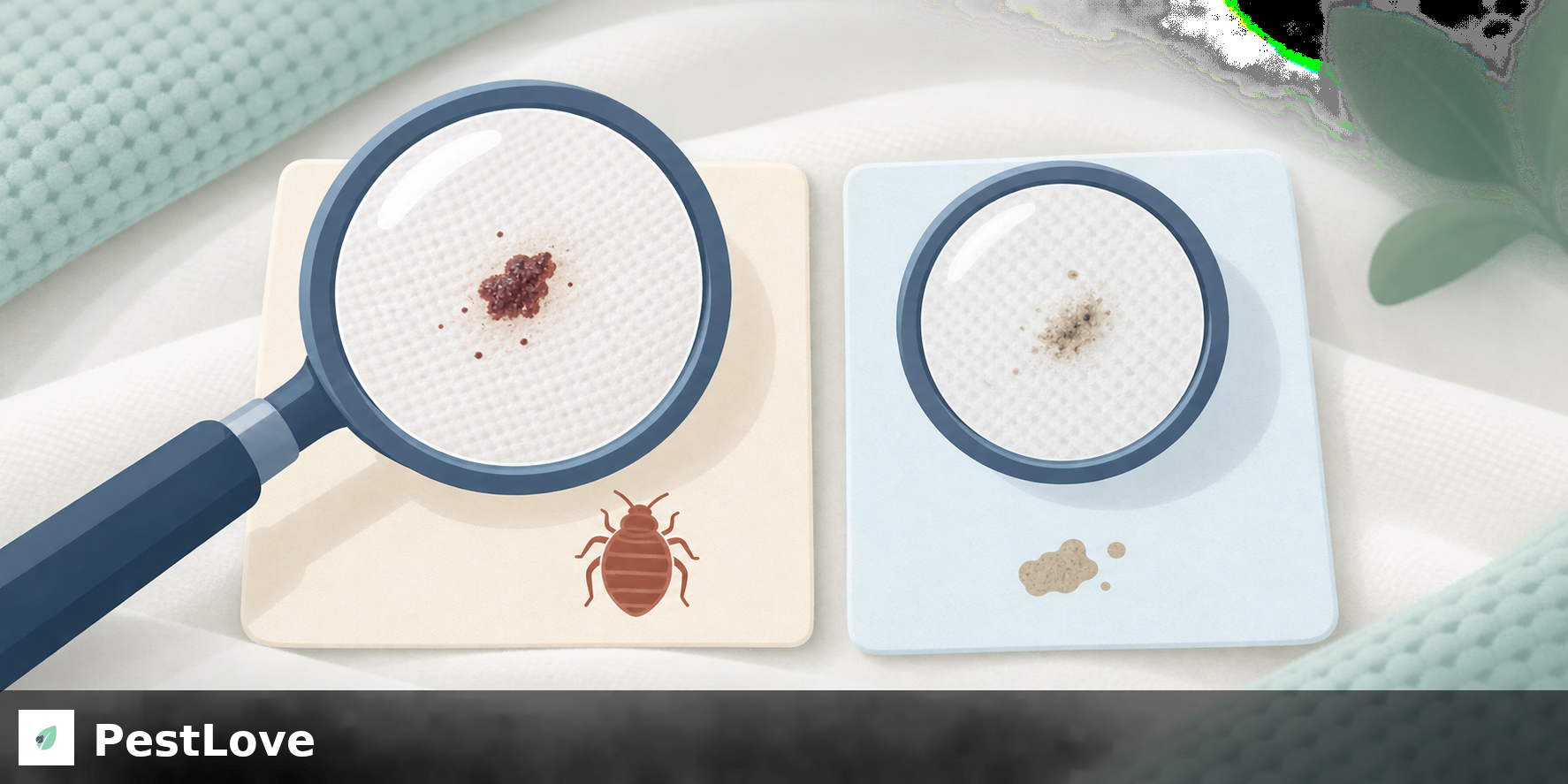
Short answer: A skin reaction, stain, or unidentified brown insect does not confirm bed bugs. The clearest evidence is an adult or nymph identified as a bed bug. Eggs, shed skins, fecal spots, and their location can strengthen the case, but each sign can be misread.
How strong is the evidence?
| Finding | Diagnostic value | What it means |
|---|---|---|
| Adult or nymph identified as a bed bug | Confirmatory for the specimen | An expert-confirmed specimen establishes that a bed bug was present. Further inspection is needed to determine whether there is an established infestation and how far it extends. |
| Live insects, eggs, shed skins, and fecal spots together | Strong evidence | A group of signs in a protected area near a bed, couch, or other resting place strongly supports current or recent bed bug activity. |
| Dark spots in mattress seams or furniture joints | Supporting evidence | Bed bug excrement can leave dark spots that soak into fabric. Similar marks can have other causes, so spots alone are not confirmation. |
| Pale eggs or empty eggshells | Supporting evidence | Bed bug eggs are about 1 mm long and pearl-white. Identification from an egg or shell alone can be difficult without magnification and experience. |
| Light-colored shed skins | Supporting evidence | Bed bug nymphs shed skins as they develop. Other household insects, including carpet beetle larvae, also leave shed skins. |
| Rusty or reddish stains on bedding | Weak evidence alone | Crushed bed bugs can leave stains, but reddish marks can have other causes. |
| Unusual odor | Weak evidence | An odor may occur in a heavy infestation. Its absence does not rule out bed bugs, and odor alone cannot identify the pest. |
| Itchy marks, lines, or clusters on skin | Not diagnostic | Bed bug reactions can resemble insect bites, hives, eczema, and other skin conditions. Some people show no reaction. |
What a bed bug looks like
The common bed bug, Cimex lectularius, is widely distributed. The tropical bed bug, Cimex hemipterus, occurs mainly in tropical and subtropical regions.
- Unfed adult: about 5 to 7 mm long, brown, wingless, oval, and flattened.
- Recently fed adult: more elongated, swollen, and reddish-brown.
- Nymph: broadly similar in shape to an adult but smaller and translucent or whitish-yellow.
- Movement: bed bugs crawl and do not fly.
Feeding changes the insect's color and outline. Small, damaged, or partly obscured specimens can be difficult to identify from a photograph.
Common bed bug lookalikes
| Possible identification | Clues that separate it from a bed bug | Why the distinction matters |
|---|---|---|
| Bat bug or swallow bug | These close relatives are similar in size, shape, and color. Distinguishing them can require a hand lens or microscope. The hairs behind the head are shorter than the diameter of the eye in a bed bug and longer in bat bugs and swallow bugs. Findings near bat roosts or bird nests add useful context. | Management of bat bugs and swallow bugs includes addressing their animal hosts and nearby nesting or roosting sites. A qualified pest or wildlife professional should investigate. |
| Carpet beetle larva | Carpet beetle larvae are tan to brown and densely covered with hairs or bristles. They also leave shed skins and may occur around wool, fur, feathers, stored textiles, lint, pet hair, or dead insects. | Carpet beetle larvae feed on susceptible materials rather than blood. Control focuses on finding and cleaning the material supporting them. |
| Adult carpet beetle | Adults are small, oval beetles. Depending on the species, they may be black or have mottled white, brown, yellow, and orange coloring. Adults often appear near windows. | An adult carpet beetle does not establish that bed bugs are present. |
Inspect without scattering the evidence
Begin where people sleep or remain still for extended periods. Low-level infestations can be difficult to detect, so one brief negative inspection does not conclusively rule them out.
- Preserve a suspected specimen. Contain it without crushing it. Record the date and exact location. A clear photograph beside a ruler can document size, but microscopic features may still require examination of the specimen.
- Start at the resting place. Use a flashlight to inspect mattress piping, seams and labels, the box spring, frame joints, screw holes, headboards, couch seams, and spaces between cushions.
- Look for grouped evidence. Record whether insects, eggs, shed skins, and dark spots occur together in a protected crack or seam.
- Expand carefully. If signs are found, inspect nearby furniture, baseboards, carpet edges, wall hangings, and cracks. Leave electrical or structurally unsafe areas to qualified personnel.
- Use suitable monitors. Interceptors beneath bed or upholstered-furniture legs can capture bed bugs moving to or from the furniture. They assist detection and follow-up but do not replace inspection.
- Request identification. A pest professional, government or university diagnostic service, or qualified entomologist may be able to examine the specimen. Available services differ by location.
Do not move loose bedding, furniture, or belongings into another room during an investigation. Seal suspected items before moving them. Do not discard furniture solely because bed bugs are suspected. Unnecessary movement or disposal can spread insects.
What bites can and cannot reveal
Skin reactions cannot identify bed bugs. Reactions vary between people, may appear after a delay, or may not appear at all. Similar marks can result from other insects or from non-insect skin conditions.
A clinician can assess a skin problem, but identifying an infestation requires environmental evidence. Bed bugs are not known to spread disease, although bites may cause itching or allergic reactions, and scratching can lead to infection. Seek medical care for a severe reaction, signs of infection, or another concerning symptom.
Response for hotels and other organizations
A suspected finding should trigger a documented assessment, not an automatic pesticide application. Preserve the specimen, record the precise room or area, notify the responsible manager, and limit unnecessary movement of linen, luggage, cleaning equipment, or furnishings until the finding is assessed.
A single confirmed bed bug does not by itself establish a breeding infestation, but it does justify prompt inspection. Staff should be trained to report suspected insects, and complaints should be handled without blame or stigma. Routine prevention and monitoring are covered further in Professional Bed Bug Prevention for Hotels and Hosts.
Offices, classrooms, shops, and other nonresidential sites may act as transfer points even when a breeding infestation does not develop there. Monitoring should focus on upholstered furniture, rest areas, coat storage, and places where belongings gather. Repeated sightings should be formally tracked and professionally investigated.
If bed bugs are confirmed
Bed bug control can be complex. Integrated pest management combines identification, inspection, containment, monitoring, nonchemical methods, and pesticide use when appropriate.
- Follow the pest professional's preparation instructions instead of moving or discarding belongings independently.
- In apartments and connected housing, notify the responsible property manager. Nearby units may need inspection. Responsibilities and housing rules vary by jurisdiction.
- Do not use rubbing alcohol, kerosene, gasoline, improvised heating equipment, or other hazardous methods. They can cause fires, harmful exposure, or ineffective treatment.
- Use only pesticides legally authorized for bed bugs in the country or jurisdiction where treatment occurs, and follow the entire label. US EPA registration applies only within the United States.
- Continue inspection and monitoring after treatment. Follow-up or repeated treatment may be necessary.
Correct identification is the decision point. Treating a carpet beetle or animal-associated bug as a human bed bug infestation can leave the actual source unresolved.