
Key Takeaways
- June is peak risk for bed bug (Cimex lectularius) introduction in Indian budget hotels due to summer vacation travel, wedding-season migration, and inter-city luggage transfer.
- Pre-stay inspections must be standardized across all properties using a 7-minute room-turn SOP focused on the bed, headboard, and luggage zone.
- Passive monitors (interceptors under bed legs) and active visual inspection together raise detection sensitivity above 90% per published IPM research.
- Escalation thresholds should trigger room isolation at the first confirmed live specimen, cast skin, or fecal spotting cluster.
- Engage a licensed pest management professional for confirmed infestations; chemical-only DIY treatment fails against pyrethroid-resistant Indian populations.
Why June Demands Heightened Vigilance
June marks the convergence of school summer holidays, the late wedding season, and Char Dham pilgrimage traffic across northern India. Budget hotel chains operating under brands such as OYO, FabHotel, Treebo, and unbranded regional networks experience occupancy spikes exceeding 80% in tourist circuits including Rajasthan, Himachal Pradesh, Uttarakhand, Kerala, and Goa. High guest turnover, frequent luggage transfers between trains, buses, and hotels, and rapid room-turn cycles create ideal conditions for Cimex lectularius introduction and establishment.
Entomological surveys published by the Indian Council of Medical Research and several state agricultural universities have documented widespread pyrethroid resistance in Indian bed bug populations, particularly in urban transit hubs. This resistance profile makes prevention through inspection, rather than reactive chemical treatment, the operationally and economically sound strategy for budget chains where margins are thin and online review damage is rapid.
Identification: What Inspectors Must Recognize
Adult and Nymph Morphology
Adult Cimex lectularius are reddish-brown, flattened, oval insects measuring 4 to 5 mm in length — comparable to an apple seed. Nymphs progress through five instars, starting nearly translucent at 1.5 mm and darkening as they feed. Eggs are pearl-white, approximately 1 mm, and are cemented in clusters within harborage cracks.
Indirect Evidence
- Fecal spotting: small dark brown to black dots resembling ink marks on mattress seams, box springs, and headboard backs.
- Cast skins (exuviae): translucent amber-colored shells left after molting; concentrated near harborage zones.
- Blood smears: rust-colored streaks on sheets from crushed engorged bugs.
- Sweet, musty odor: produced by aggregation pheromones in heavy infestations.
For visual reference and broader hospitality context, refer to proactive bed bug inspection protocols for boutique hotels.
Behavior: Why Standard Cleaning Misses Them
Bed bugs are nocturnal, thigmotactic (preferring tight contact with surfaces), and capable of surviving 6 to 12 months without a blood meal at typical room temperatures. They are not associated with poor hygiene; introduction occurs almost exclusively through infested luggage, secondhand furniture, or guest clothing. Standard housekeeping — sheet changes, vacuuming, surface wipe-downs — does not disturb their primary harborage zones inside mattress piping, behind headboards bolted to walls, within bed-frame joinery, or in luggage-rack webbing.
Egg-to-adult development takes approximately 5 weeks at 25–30 °C, the typical June ambient temperature in most Indian cities. A single fertilized female introduced in early June can produce a detectable infestation within the same calendar month if undetected.
The 7-Minute Pre-Stay Inspection SOP
This standardized procedure is designed for housekeeping supervisors during room-turn between guest checkout and the next check-in. It should be supplemented (not replaced) by a weekly deep-inspection by a trained pest control technician.
Step 1: Tools (30 seconds)
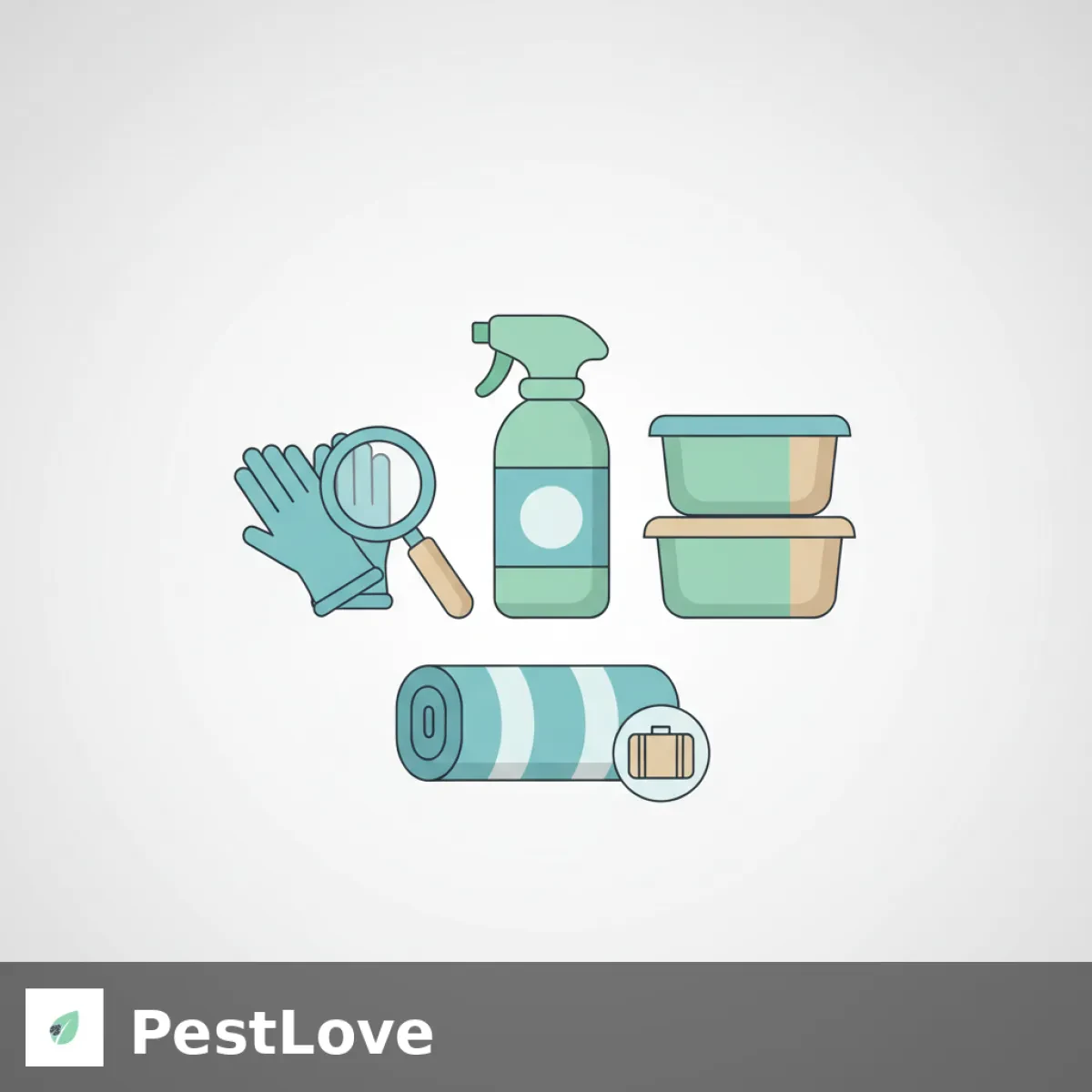
- LED flashlight (minimum 200 lumens)
- Plastic credit card or thin spatula for crevice probing
- Magnifying loupe (10x)
- White lint roller for collecting suspect specimens
- Digital inspection log (tablet or smartphone form)
Step 2: Bed Disassembly Inspection (3 minutes)
Strip all linens — sheets, pillowcases, mattress protector — and inspect each for live bugs, cast skins, or fecal spotting before transferring to laundry in sealed bags. Examine mattress seams, tufts, and piping on all six surfaces. Lift the mattress and inspect the box spring's stapled fabric underside, a primary harborage zone. Inspect bed-frame joints, screw holes, and slats.
Step 3: Headboard and Wall Zone (1.5 minutes)
Wall-mounted headboards in Indian budget hotels are the single highest-yield harborage zone. Detach or angle the headboard away from the wall and inspect the back surface, mounting brackets, and the wall directly behind. Check the upper edge of skirting boards within a 1-meter radius of the bed and any wall-mounted artwork or switchplates above the headboard.
Step 4: Surrounding Furniture (1.5 minutes)
Inspect nightstand drawers (especially joinery seams), under-bed storage, luggage racks (focus on webbing and bolt heads), and the back of any upholstered chair within 3 meters of the bed. Examine curtain hems where they touch the floor.
Step 5: Monitor Check and Log (30 seconds)
Inspect under-leg interceptor cups (ClimbUp-style passive monitors) for trapped specimens. Log inspection completion, anomalies, and photographs in the chain's digital pest management record.
Prevention: Building Chain-Wide Defenses
Engineering Controls
- Mattress and box-spring encasements: bed-bug-certified, zipper-locked encasements isolate any introduced bugs and dramatically simplify inspection.
- Sealed headboards: caulk all seams on wall-mounted headboards; specify joinery-free designs in renovation cycles.
- Hard-surface luggage racks: replace fabric-webbed racks with metal or sealed wood units.
- Interceptor cups under all bed legs: low-cost, high-sensitivity passive monitoring.
Administrative Controls
Train every housekeeping staff member annually in identification and SOP execution. Maintain a chain-wide pest management record meeting FSSAI hospitality hygiene expectations. Adopt clear staff luggage handling protocols at front desk and bell service to limit guest-luggage contact with upholstered lobby furniture. For broader hospitality programs, consult professional bed bug prevention standards for hospitality and high-volume detection protocols for peak travel.
Treatment Triggers and Escalation
Confirmed bed bug presence — defined as one or more live specimens, viable eggs, or a cluster of fresh fecal spotting — requires immediate response:
- Isolate the affected room and the two adjacent rooms (left, right, and the room directly above and below for multi-story properties).
- Block from sale in the property management system; do not relocate the displaced guest to a room within the isolation zone.
- Bag all removable textiles in sealed plastic; route directly to a commercial dryer at 60 °C for 30 minutes.
- Notify a licensed pest management operator within 24 hours; document the chain of custody and inspection findings.
For broader liability and reputation implications, review bed bug litigation risk reduction for hospitality management.
When to Call a Professional
Budget chain operators should engage a licensed pest management professional registered under the Central Insecticides Board & Registration Committee (CIB&RC) under the following conditions:
- Any confirmed live specimen, regardless of count.
- Repeated guest complaints from the same room or adjacent rooms within 30 days.
- Pre-season (May) baseline inspection of all units before June occupancy surge.
- Suspected pyrethroid resistance failure after prior treatment.
Professional remediation typically combines targeted steam treatment (lethal at 60 °C contact), residual non-pyrethroid insecticides (chlorfenapyr or neonicotinoid rotations), and follow-up inspections at 14 and 28 days to interrupt the egg-hatch cycle. Whole-room heat remediation is increasingly common at premium chains and is the most reliable single-treatment option against resistant populations.
Documentation Standards
Every inspection — clear or positive — should be logged with timestamp, inspector ID, room number, monitor status, and photographs of any anomalies. A 12-month rolling record supports audit defensibility, vendor accountability, and pattern analysis across the chain. This documentation aligns with general IPM principles outlined by the U.S. EPA and adapted for hospitality by university extension services worldwide.
