
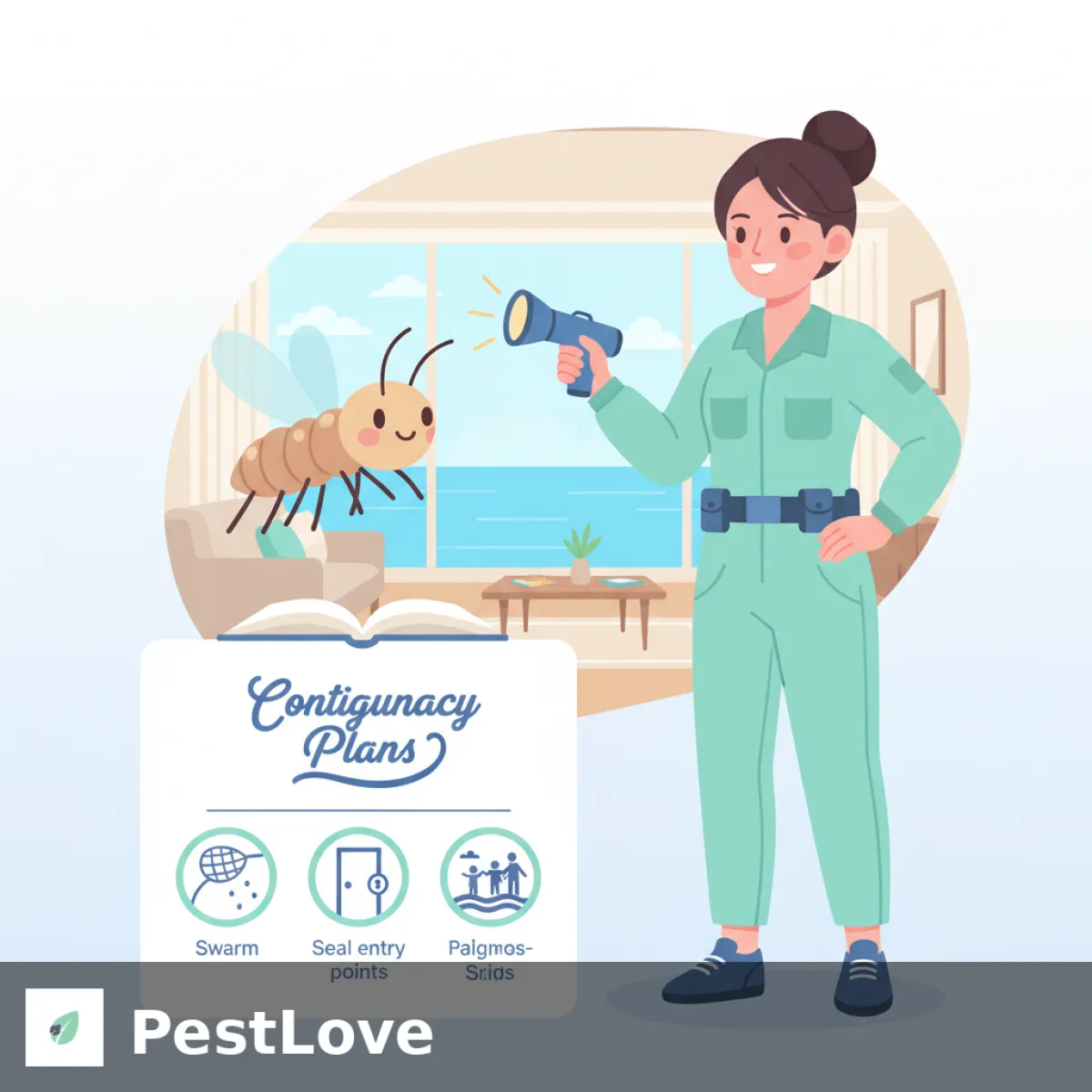
The Super Termite Threat to Coastal Hospitality
Coastal resorts face a unique and aggressive structural threat: the Formosan subterranean termite (Coptotermes formosanus). Often commonly referred to as the "super termite" due to its massive colony size—often exceeding several million individuals—and rapid consumption of cellulose, this invasive species thrives in the high-humidity environments typical of coastal hospitality zones. Unlike native subterranean species, Formosan termites build carton nests above ground, allowing them to bypass traditional soil barriers if moisture sources exist within the structure.
For resort managers, a swarm event is not merely a structural risk; it is an immediate operational crisis. Swarming typically occurs on warm, humid evenings from late spring to summer. The sheer volume of alates (winged swarmers) can overwhelm outdoor lighting, infiltrate guest rooms, and lead to negative guest experiences and reputational damage. A robust contingency plan, grounded in Integrated Pest Management (IPM) principles, is essential for maintaining business continuity.
Phase 1: Identification and Early Detection
Accurate identification is the first line of defense. Maintenance staff should be trained to distinguish Formosan swarmers from other insects, particularly flying ants and native termite species.
- Visual Characteristics: Formosan alates are yellowish-brown (golden) with a hairy head and two pairs of wings of equal length. Unlike ants, they lack a pinched waist.
- Swarm Behavior: Formosan swarms are massive and highly synchronized, often occurring at dusk on calm, humid evenings. They are strongly phototactic, meaning they are aggressively attracted to lights.
- Aftermath: The presence of thousands of discarded wings on windowsills, walkways, and pool decks is a definitive sign of a nearby colony.
For a detailed breakdown of visual markers, consult our guide on termite identification signs and appearance.
Phase 2: The "Lights Out" Protocol
Because Coptotermes formosanus swarmers are drawn to artificial light sources, lighting management is the most effective immediate countermeasure during a swarm event. Resorts should establish a "Dark Sky" or "Lights Out" protocol to be activated immediately upon detection of swarming activity.
Exterior Lighting Adjustments
Shift exterior lighting away from the building envelope. Floodlights pointing towards the façade act as beacons, drawing millions of insects directly onto balconies and into entryways. Instead, utilize directional lighting facing away from structures. Where possible, switch to yellow sodium vapor bulbs or warm-spectrum LEDs, which are less attractive to insects than cool-white or mercury vapor lights.
Interior Light Discipline
In public areas like lobbies and restaurants, close heavy drapes to prevent internal light from spilling out and attracting swarmers to windows. Instruct housekeeping to ensure blackout curtains are fully drawn in unoccupied rooms during peak swarm hours (dusk to 10 PM).
Phase 3: Exclusion and Physical Barriers
Preventing entry is critical for guest comfort. Formosan alates are poor flyers but can crawl through tiny gaps. A proactive maintenance schedule should focus on exclusion prior to the swarm season.
- HVAC Systems: Ensure all intake vents are screened with mesh fine enough to block termites. Air curtains (air doors) at main entrances create a positive pressure barrier that discourages flying insects from entering lobbies.
- Window Seals: Inspect weather stripping on sliding glass doors and windows annually. The high wind and salt air of coastal environments degrade seals faster than inland, creating entry points.
- Roof Maintenance: Formosan termites are known to establish aerial colonies on flat roofs where rainwater pools. Ensure drainage systems are clear to prevent the moisture accumulation that supports these above-ground nests.
For more on structural prevention, review strategies in protecting wooden structures from termite swarms.
Phase 4: Guest Communication and Crisis Management
A swarm event can be terrifying for guests unfamiliar with the phenomenon. Transparency and professional reassurance are key. Front desk staff should be equipped with a script that normalizes the event as a natural, seasonal occurrence rather than a sign of uncleanliness.
Recommended Protocols:
- Proactive Messaging: If a heavy swarm is forecast, place small tent cards in rooms advising guests to keep balcony doors closed and lights dimmed during twilight hours.
- Response Kits: Housekeeping should have portable vacuums ready. Do not use aerosol pesticides in occupied guest rooms; vacuuming is the safest and most effective method for removing swarmers that have breached the perimeter.
Phase 5: Long-Term Treatment and Monitoring
While exclusion handles the swarmers, the underlying colony poses the structural threat. Coastal resorts require commercial-grade protection systems. The choice between liquid termiticides and baiting systems often depends on the property's construction and environmental constraints.
Baiting Systems: Stations installed around the perimeter contain a chitin synthesis inhibitor. Foraging termites consume the bait and share it with the colony, leading to total elimination. This is often preferred in eco-sensitive coastal zones as it minimizes chemical leaching into groundwater.
Liquid Barriers: A non-repellent liquid termiticide creates a treated zone around the foundation. This is effective but can be challenging to maintain in sandy coastal soils or properties with complex landscaping.
For a comparative analysis of these methods in hospitality settings, refer to Termite Protection for Tropical Resorts: Baiting vs. Liquid Barriers.
Key Takeaways for Facilities Managers
- Trigger: Formosan swarms occur on warm, humid evenings in late spring/summer.
- Action: Implement light reduction protocols immediately; turn off façade lighting and close blinds.
- Prevention: Maintain rigorous exclusion (screens, door sweeps) and eliminate moisture sources on roofs to prevent aerial colonies.
- Treatment: Partner with a licensed pest management professional (PMP) for annual inspections and installation of baiting or barrier systems.
