
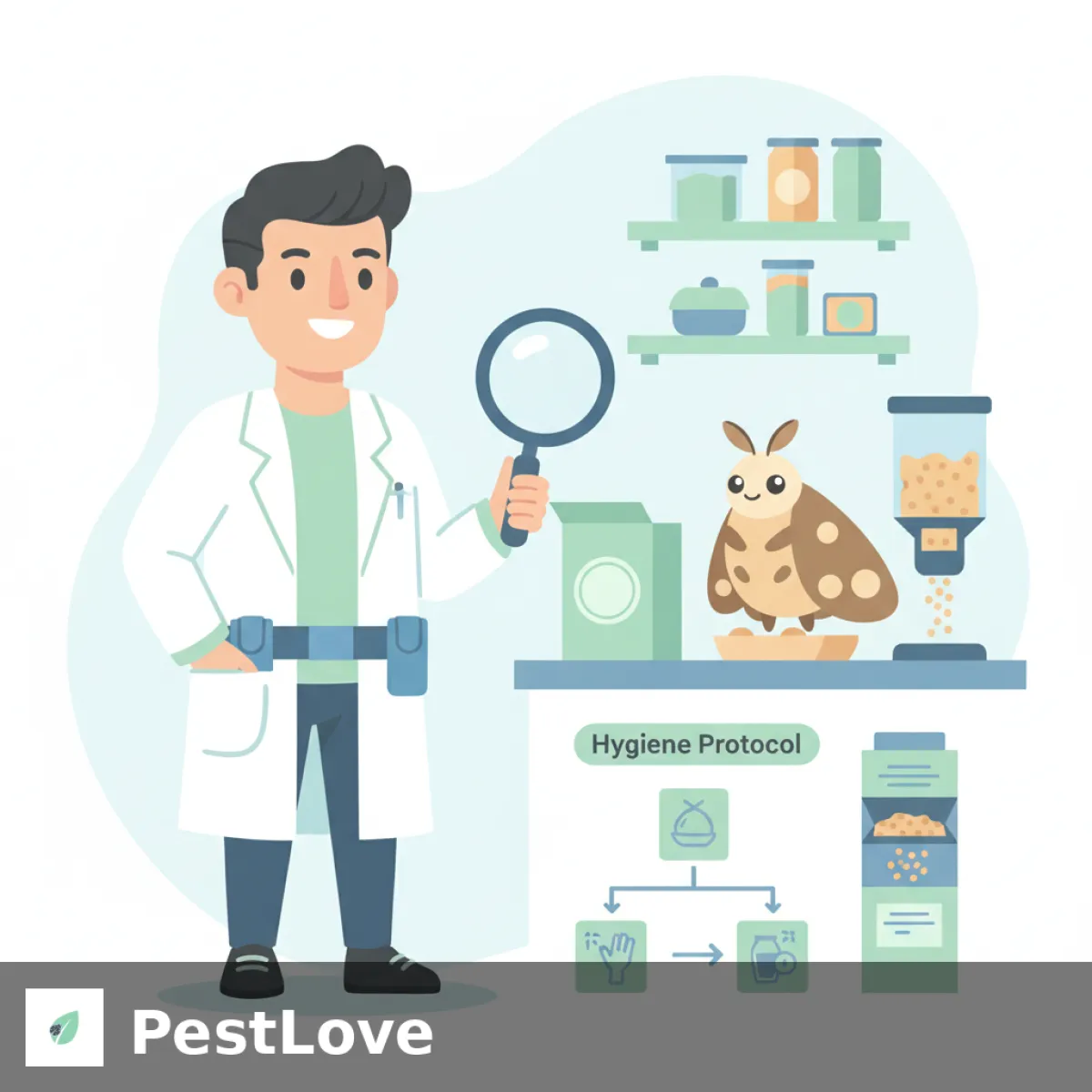
Key Takeaways
- Immediate Threat: The Indian Meal Moth (Plodia interpunctella) is the most economically damaging stored-product pest in retail environments, capable of penetrating sealed plastic and cardboard.
- Critical Vector: Gravity feeders and scoop bins in bulk aisles are high-risk zones for cross-contamination and larval development.
- Sanitation is Key: Vacuuming—not sweeping—is required to remove microscopic eggs and larvae from cracks and crevices.
- Monitoring: Pheromone traps targeting male moths are essential for early detection and identifying the epicenter of an infestation.
In the bulk food retail sector, the presence of the Indian Meal Moth (Plodia interpunctella) represents a direct threat to inventory integrity and brand reputation. Unlike packaged goods, where contamination is often contained within a single unit, bulk food aisles present a contiguous landscape for infestation. A single introduced female moth can lay up to 400 eggs, potentially compromising entire rows of high-value stock such as nuts, dried fruits, grains, and chocolate.
This guide outlines a rigorous hygiene and management protocol based on Integrated Pest Management (IPM) principles, designed to assist store managers and sanitation officers in maintaining a pest-free environment.
Identification and Biology
Effective management begins with positive identification. Misidentifying the Indian Meal Moth as a clothes moth or grain beetle can lead to ineffective treatment strategies.
Visual Identification
- Adults: The adult moth is approximately 8–10mm long with a wingspan of 16–20mm. It is distinctively bi-colored: the outer two-thirds of the wings are a reddish-copper or bronze, while the inner third (near the head) is whitish-gray.
- Larvae: The dirty-white, sometimes pinkish or greenish caterpillars are the destructive stage. They possess legs (unlike weevil larvae) and are often found crawling up walls or shelving to pupate.
- Signs of Infestation: The most obvious indicator is silk webbing. Larvae spin silk as they feed, causing grain, nuts, or flour to clump together or adhere to the sides of bins. Frass (granular excrement) may also be visible within these clumps.
Lifecycle and Vulnerability
The lifecycle from egg to adult can be completed in as little as 27 days under optimal conditions (warmth and humidity). In a climate-controlled retail store, breeding can occur year-round. The larvae are capable of chewing through soft plastic and cardboard, meaning unopened bulk sacks in storage are not immune to penetration.
The Risks of Gravity Feeders and Scoop Bins
Bulk food infrastructure is uniquely vulnerable. Gravity feeders, while hygienic for customer handling, often accumulate static dust and crumbs in the mechanical dispensing mechanisms. These undisturbed residues provide an ideal nursery for moth larvae.
Scoop bins pose a higher risk of cross-contamination. If a customer uses a scoop in an infested bin and transfers it to a clean bin, eggs are effectively seeded into new territory. Furthermore, the lids of scoop bins rarely form a hermetic seal, allowing adult moths to enter and lay eggs directly on the product surface.
Hygiene Protocol: The First Line of Defense
Chemical control is severely restricted in food retail areas. Therefore, sanitation and physical exclusion are the primary mechanisms of control.
1. The Vacuum Protocol
Sweeping or using compressed air to clean spills is counterproductive, as it disperses microscopic eggs and pheromones into the air and deeper into crevices. Retailers must employ HEPA-filtered industrial vacuums.
- Daily: Vacuum spills at the base of bulk bin fixtures immediately.
- Weekly: Vacuum the interior tracks of sliding doors, the crevices between bins, and the underside of shelving units.
- Monthly: Remove bins from the fixture to vacuum the wall behind the display, where flour dust and debris often accumulate.
2. Bin Sanitation Cycles
Never "top off" a bin indefinitely. Old product at the bottom of a gravity feeder can remain there for months, becoming a breeding ground. Implement a strict rotation policy:
- Empty the bin completely before refilling.
- Wash bins with hot, soapy water and allow them to dry completely before refilling. Moisture attracts pests and causes mold.
- Inspect the gaskets and dispensing mechanisms for webbing or pupal casings (cocoons).
Inventory Management and Stock Rotation
The majority of retail infestations originate from the supply chain—eggs or larvae arriving in infested shipments from distributors.
Inbound Inspection
Designate a quarantine area for inspecting high-risk goods (grains, bird seed, pet food, dried fruit) before they enter the main sales floor or storage room. Look for webbing on the outside of pallets and specifically check the seams of large paper sacks.
First-In, First-Out (FIFO)
Rigorous adherence to FIFO is non-negotiable. Ensure that stock in the backroom is dated. Any product that has exceeded its shelf life or has been stagnant for an extended period should be inspected and discarded if necessary. Stagnant inventory is a primary harborage site for Plodia interpunctella.
For further details on managing specific organic inventories, refer to our guide on Indian Meal Moth Eradication in Organic Warehouses.
Monitoring with Pheromone Traps
Pheromone traps are a surveillance tool, not a control measure. They release a sex pheromone that attracts male moths, disrupting the mating cycle and providing data on infestation levels.
- Placement: Place traps in a grid pattern in the warehouse and inconspicuously near bulk aisles (e.g., on top of shelving). Avoid placing traps directly next to open food, as the lure draws moths toward the product.
- Data Logging: Check traps weekly. A sudden spike in the catch count indicates a new emergence or a compromised shipment. Mapping these catches helps triangulate the source of the infestation.
When to Call a Professional
While hygiene protocols control low-level activity, a widespread infestation requires professional intervention. If you observe adult moths flying during the day, or if multiple bins show signs of webbing simultaneously, the population has likely exceeded the threshold for in-house management.
Licensed pest control professionals can offer:
- Ultra-Low Volume (ULV) Fogging: To knock down adult populations in storage areas (after hours).
- Insect Growth Regulators (IGRs): Hormonal treatments that prevent larvae from maturing into breeding adults, often applied to cracks and crevices away from food contact surfaces.
- Mating Disruption: Advanced pheromone systems that saturate the environment, making it impossible for males to find females.
For related stored product pest strategies, consult our guides on Mediterranean Flour Moth Control and Rice Weevil Management in Bulk Grain Silos.
