
Key Takeaways
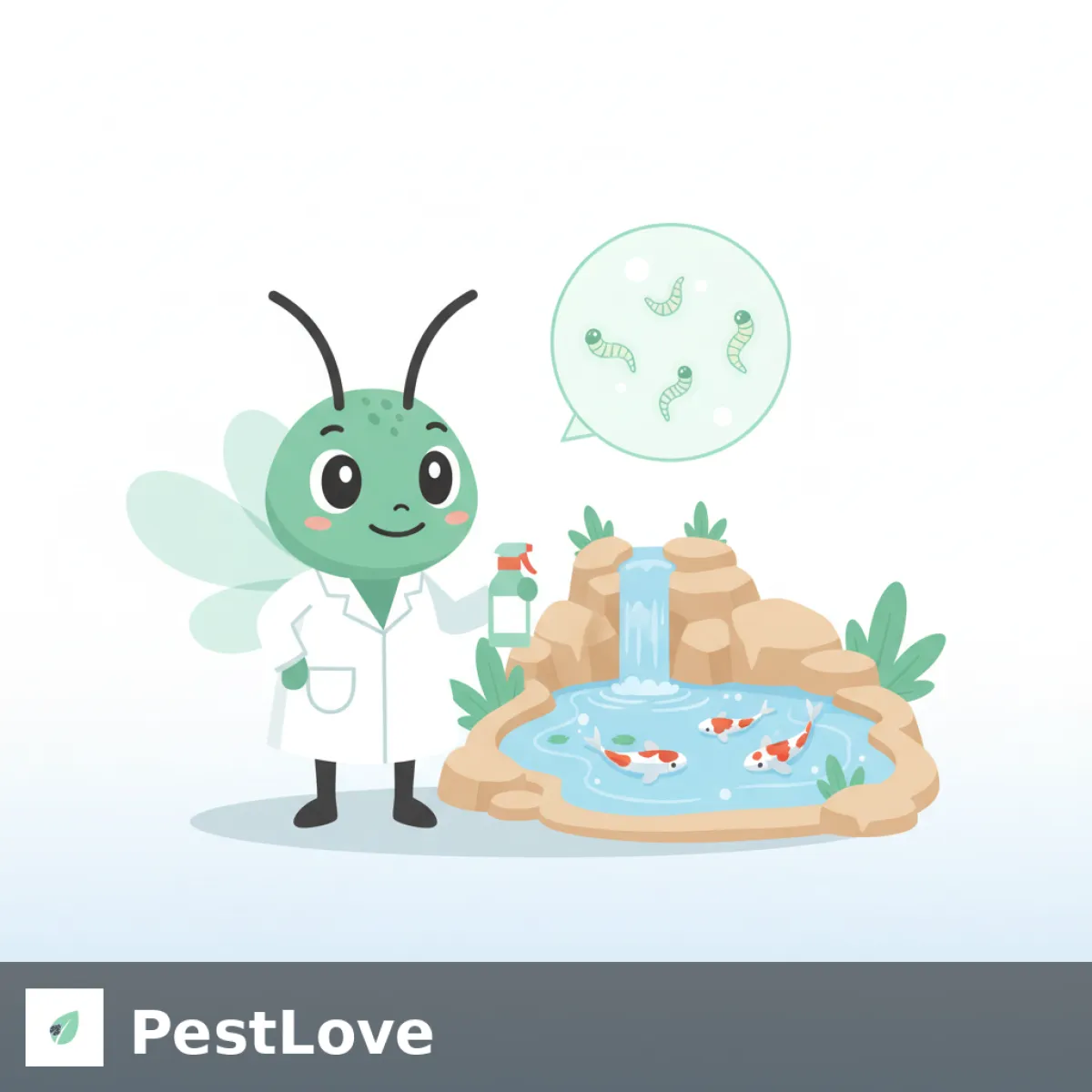
- Target Specificity: Bacillus thuringiensis israelensis (Bti) is the industry standard for aquatic features containing fish, offering high mortality for mosquito larvae with zero toxicity to Koi or guests.
- Liability & Guest Experience: Uncontrolled breeding sites in lobbies or courtyards lead to negative guest reviews and potential vector-borne disease transmission.
- Application Timing: Treatments must align with larval instars; applying larvicides to pupae is ineffective.
- IPM Integration: Larvicides are a secondary defense; mechanical circulation and vegetation management are the primary preventative measures.
For the hospitality industry, ornamental water features—from expansive Koi ponds to architectural fountains—serve as focal points of luxury and tranquility. However, without rigorous management, these static water sources become prime breeding grounds for vector mosquitoes, including Culex and Aedes species. A single untreated pond can produce thousands of biting adults per week, directly impacting guest satisfaction and operational reputation.
This guide outlines professional protocols for the application of mosquito larvicides in commercial settings, prioritizing efficacy, guest safety, and the health of aquatic life.
The Biology of Breeding in Ornamental Water
Mosquitoes require standing water to complete their life cycle. In hotel environments, water features often provide the ideal conditions: still water, organic debris (leaves, fish waste), and a lack of surface turbulence. Female mosquitoes lay eggs on the water surface or on damp edges. Once hatched, larvae (wrigglers) feed on microorganisms in the water column.
Effective control intervenes at this aquatic stage. Eliminating larvae before they emerge as flying adults is the cornerstone of Integrated Mosquito Management (IMM). Unlike adulticiding (fogging), which has a broader environmental impact and lower public acceptance in high-traffic areas, larviciding is discrete, targeted, and highly effective.
Selecting the Right Agent: Safety for Koi and Wildlife
In water features containing Koi, Goldfish, or other aquatic life, chemical selection is critical. Broad-spectrum insecticides (such as pyrethroids) are highly toxic to fish and must never be applied to water features.
1. Bacillus thuringiensis israelensis (Bti)
Bti is a naturally occurring soil bacterium and constitutes the primary biological control agent for commercial water features. Upon ingestion by mosquito larvae, Bti produces protein crystals that specifically target the gut receptor cells of dipteran pests. Crucially, Bti is non-toxic to:
- Fish: Koi and other ornamental fish are unaffected.
- Non-target Insects: Dragonflies and pollinators are safe.
- Mammals: Safe for pets and humans, adhering to EPA safety standards for treated water.
2. Bacillus sphaericus (Bs)
For water with high organic content (e.g., heavily stocked ponds or features with significant leaf litter), Bacillus sphaericus may be preferred. It persists longer in the water column than Bti and remains effective in polluted conditions.
3. Insect Growth Regulators (IGRs)
Methoprene is an IGR that mimics the mosquito's juvenile hormone, preventing larvae from maturing into adults. While generally safe, formulations must be carefully selected for fish-inhabited waters. Professionals often use IGRs in conjunction with bacterial agents for resistance management.
Application Protocols for Hospitality Managers
To ensure efficacy and compliance, maintenance teams must follow strict application protocols.
Assessing Water Volume and Flow
Dosage is determined by surface area and water depth. Over-application is wasteful, while under-application fails to achieve control. Maintenance logs should accurately record the volume of every water feature on the property.
Formulations and Delivery
- Granules: Best for scattering over large surface areas or into dense vegetation at the pond's edge where larvae congregate.
- Briquettes/Dunks: Slow-release formulations that float or sink, providing residual control for 30 to 180 days. These are ideal for maintenance reduction in stable water features.
- Liquid Concentrates: Used for immediate knockdown of high larval populations.
Monitoring and Thresholds
Blind application is inefficient. Staff should perform weekly "dip tests" using a standard 350ml dipper to check for larval activity. Treatment is warranted when larval counts exceed established thresholds (e.g., >3 larvae per dip).
Complementary IPM Strategies
Larvicides should support, not replace, mechanical and cultural controls.
- Circulation: Mosquitoes prefer stagnant water. Ensuring pumps and aerators are functioning eliminates breeding viability.
- Vegetation Management: Larvae hide in aquatic plants to escape fish predation. Trimming marginal vegetation reduces harborage. For broader strategies on managing resort environments, consult our guide on Integrated Mosquito Management for Tropical Resorts.
- Biological Predation: Koi and Gambusia (mosquitofish) are natural predators. However, if fish are overfed, they will ignore mosquito larvae. Feeding schedules should be adjusted during peak mosquito season.
Regulatory Compliance and Documentation
Commercial application of pesticides, even biological ones like Bti, often requires certification depending on local jurisdiction. Hotels must maintain Safety Data Sheets (SDS) for all stored products and keep detailed logs of application dates, locations, and product quantities. This documentation is essential for health inspections and corporate liability audits.
For managers overseeing extensive grounds, specifically those with golf amenities, similar protocols apply. See our Superintendent's Guide to Golf Course Water Features for specialized turf and water management strategies.
When to Call a Professional
While maintenance staff can handle routine dunk placement, professional pest management is required when:
- Volume is High: Large ornamental lakes require boat or drone-based application.
- Disease Risk is Elevated: During outbreaks of West Nile Virus, Dengue, or Zika, specialized ULV (Ultra Low Volume) adulticiding may be needed to complement larviciding. See our protocol for Asian Tiger Mosquito Control.
- System Complexity: Automated misting systems or injection units require licensed calibration.
