
Key Takeaways
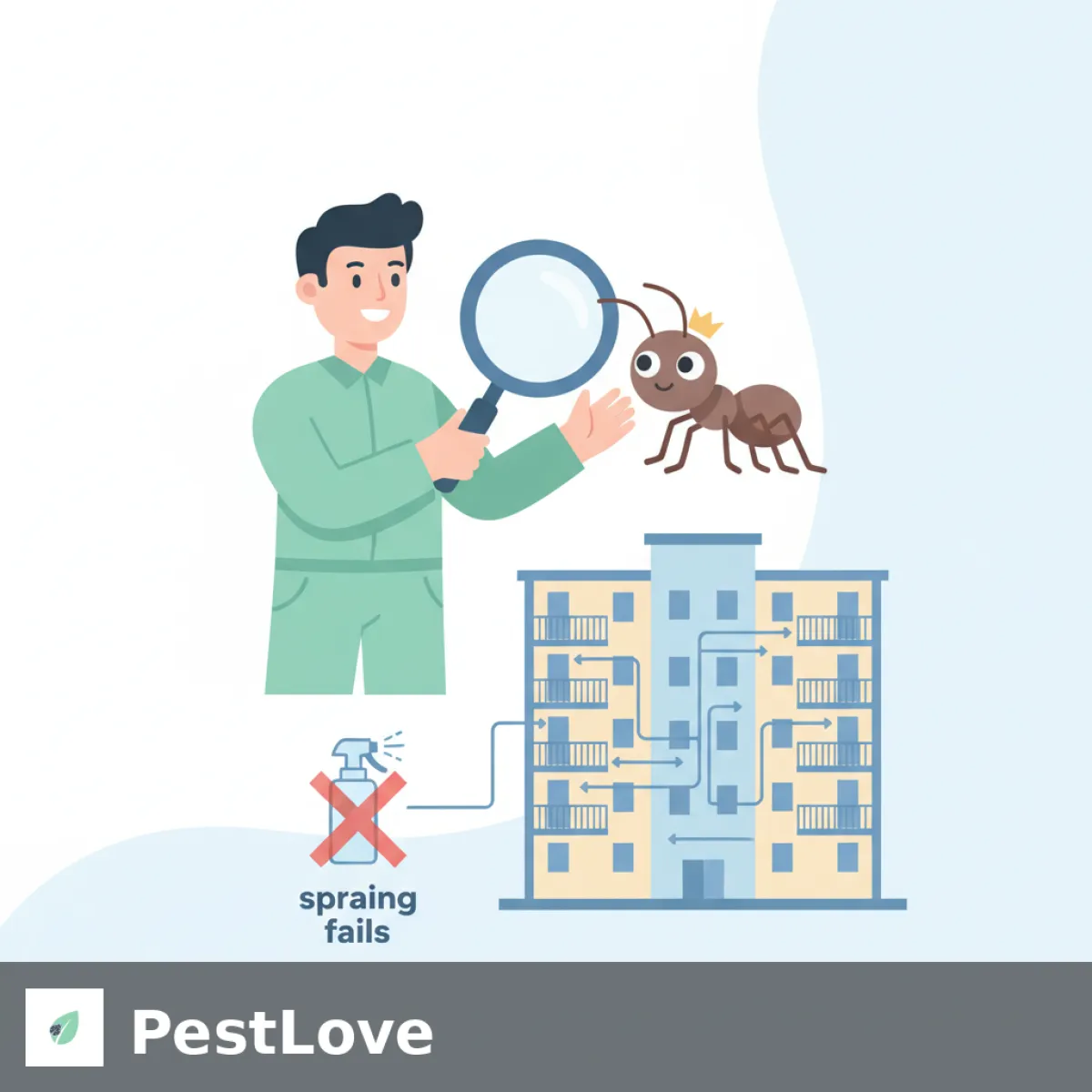
- Stop Spraying Immediately: Repellent sprays (like common hardware store aerosols) trigger a defense mechanism called "budding," causing the colony to split and spread throughout the building.
- Identification is Critical: Monomorium pharaonis are tiny (1/16 inch), yellow to light brown, and distinct from common sugar ants.
- The Solution is Bait: The only way to eliminate a colony is to let workers carry slow-acting poison back to the multiple queens hiding deep in wall voids.
- Community Effort: In multi-unit housing, treating a single unit often pushes the ants into neighboring apartments. Building-wide cooperation is essential.
In my years of servicing large apartment complexes and commercial facilities, few calls are as frantic as the one regarding Pharaoh ants (Monomorium pharaonis). Usually, the story is the same: a tenant saw a few ants in the kitchen, sprayed them with a generic contact killer, and two weeks later, the infestation has exploded into the bedrooms, the bathroom, and the unit upstairs.
Unlike most structural pests that invade from the outside, Pharaoh ants are uniquely adapted to live inside our heated structures. They are the ultimate survivors of the multi-unit environment, utilizing our plumbing lines and electrical wiring as superhighways. This guide explains why your instinct to spray is wrong and how professional Integrated Pest Management (IPM) protocols solve what chemical warfare cannot.
The Biology of Failure: Understanding "Budding"
To defeat Pharaoh ants, you must understand their survival strategy. Most ant species engage in a "nuptial flight" where winged queens leave the nest to mate and start new colonies. Pharaoh ants rarely swarm. Instead, they reproduce through a process called budding.
A single Pharaoh ant colony can house dozens, sometimes hundreds, of queens (polygyny). When these ants sense a threat—specifically a repellent insecticide or a sudden drop in worker population—a sub-group of queens and workers will detach from the main colony. They pick up their eggs and larvae, migrate through a wall void or along a heating pipe, and establish a new satellite colony.
The Spraying Paradox
When you spray a line of foraging ants with a standard pyrethroid insecticide, you kill the foragers instantly. However, the chemical residue acts as a "Do Not Enter" sign. The surviving colony detects this chemical barrier and instantly goes into emergency fracture mode. One colony becomes two. Two become four. By trying to kill them, you have effectively farmed them.
Identification: Is It Actually a Pharaoh Ant?
Before implementing a treatment plan, confirmation is mandatory. I have seen property managers waste thousands on carpenter ant treatments for a Pharaoh ant problem.
- Size: Extremely small, approximately 1.5 to 2 mm (1/16 inch) long.
- Color: Pale yellow to reddish-brown with a darker abdomen (gaster).
- Antennae: 12 segments with a 3-segmented club.
- Location: They crave heat and moisture. Look near hot water pipes, behind refrigerator insulation, and around electrical outlets.
The Multi-Unit Challenge: A Building-Wide Threat
Pharaoh ants do not respect lease boundaries. In a multi-unit setting, they travel freely through:
- Electrical Conduits: Using wires as bridges between units.
- Plumbing Voids: Traveling vertically from floor to floor along water pipes.
- Heating Ducts: Moving easily through central HVAC systems.
For property managers, this means a "complaint-based" approach—treating only the unit that complains—is destined to fail. If Unit 304 sprays, the ants will migrate to Unit 303 and 305. Effective control requires a block-wide or building-wide inspection and treatment strategy. For more on managing pests in commercial structures, see our guide on preventing ant invasions in office buildings.
The Professional Solution: Baits and IGRs
If we can't spray, how do we kill them? We use their own biology against them via trophallaxis—the sharing of food.
1. Non-Repellent Baits
We use high-quality protein and sugar-based baits that contain slow-acting toxicants. The goal is not to kill the worker immediately. We need the worker to survive long enough to return to the nest and regurgitate the poisoned food to the larvae and the queens. This process takes weeks, not hours. Patience is the hardest part of this protocol for tenants to accept.
2. Insect Growth Regulators (IGRs)
For severe infestations, we incorporate IGRs. These compounds simulate insect hormones, essentially sterilizing the queens and preventing larvae from developing into adults. It is a long-term strategy that ensures the colony collapses from the inside out.
Professional Prevention Protocol
Once the active infestation is eliminated, preventing re-entry is vital. While exclusion is difficult given their size, reducing resources is key.
- Sanitation: Pharaoh ants can survive on grease spots, dead insects, and crumbs. impeccable sanitation denies them the resources needed for rapid colony expansion.
- Moisture Control: Fix leaking faucets and insulate sweating pipes. Like all pests, they need water.
- Inspection: Routine monitoring in high-risk areas (laundry rooms, kitchens) allows for early detection before budding occurs.
Similar to perimeter defense in office complexes, establishing a monitoring zone helps catch activity early. However, with Pharaoh ants, the battle is almost always interior.
When to Call a Professional
Pharaoh ants are classified as a "structure-infesting" pest that poses genuine health risks, especially in healthcare and food service environments, as they are known vectors for pathogens like Salmonella and Streptococcus. If you are a property manager or tenant in a multi-unit building, DIY attempts are rarely successful and often exacerbate the issue.
Professional intervention provides access to commercial-grade baits and the expertise to map out the infestation's network throughout the building structure. Successful eradication requires a coordinated effort that only a certified pest control operator can manage effectively.
