
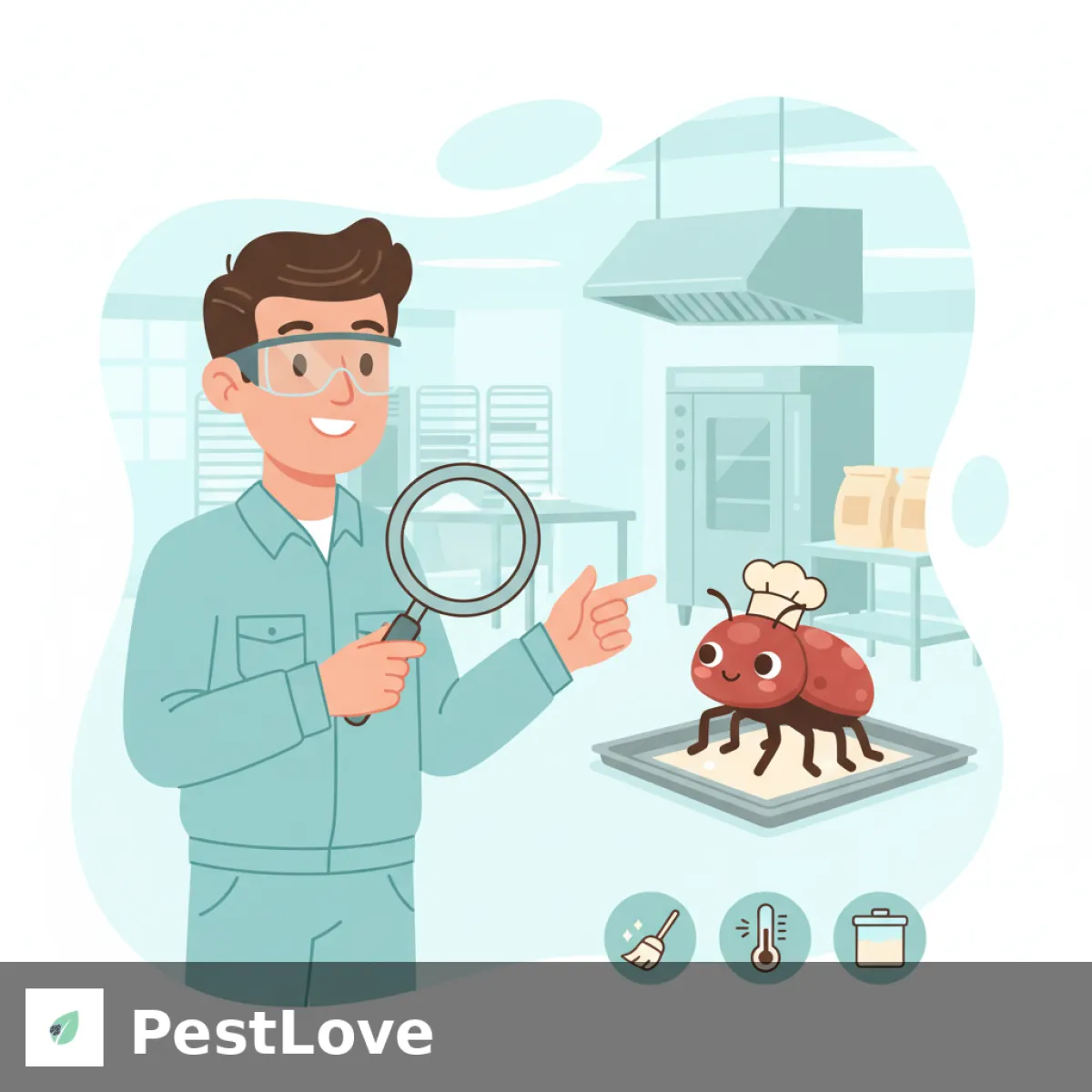
The Silent Threat to Your BRCGS Score
In the high-stakes environment of industrial baking, the Red Flour Beetle (Tribolium castaneum) is more than a nuisance; it is a direct threat to your brand's integrity and your bottom line. I have walked through facilities where a single discovery of this pest halted production lines costing thousands of dollars per hour. Unlike seasonal invaders, these beetles thrive in the warm, stable conditions of a bakery, turning your climate-controlled environment into a year-round incubator.
For facility managers and QA directors, the goal is not just 'killing bugs'; it is maintaining a zero-tolerance sanitary zone that passes AIB International, BRCGS, and FDA inspections without question. This guide outlines the professional protocols required to manage and eliminate this persistent stored product pest.
Identification: Red Flour Beetle vs. Confused Flour Beetle
Correct identification is critical because it dictates your treatment strategy. While they look nearly identical to the untrained eye—reddish-brown, about 1/8 inch long—there is a crucial operational difference.
- Red Flour Beetle (Tribolium castaneum): These beetles can fly. This capability allows them to bypass ground-level barriers and spread contamination rapidly across different zones of your facility, from raw ingredient storage to packaging lines.
- Confused Flour Beetle (Tribolium confusum): These cannot fly. Infestations are typically localized to where they crawled or were carried.
Field Tip: Under magnification, look at the antennae. The Red Flour Beetle's antennae end in a distinct three-segmented club, whereas the Confused Flour Beetle's antennae gradually thicken. If you see beetles flying near high-bay lights in your warehouse, you are almost certainly dealing with Tribolium castaneum.
The Biology of Infestation in Bakeries
Industrial bakeries are practically designed for Red Flour Beetles. They feed on grain dust, flour, and broken kernels. They do not need whole grains; they actually prefer the fine dust found in cracks, dead spaces in machinery, and overhead beams.
A female can lay up to 450 eggs, which are covered in a sticky secretion that collects flour dust, making them nearly invisible. I often find the heaviest populations not in the open, but inside the machinery itself—inside conveyor rollers, accumulation tables, and the hollow legs of prep tables. If your sanitation crew uses compressed air to 'clean' machinery, they may actually be blowing eggs deep into these crevices, effectively seeding the next generation.
Phase 1: Exclusion and Receiving Protocols
Prevention starts at the loading dock. Pests are rarely 'born' in a bakery; they are shipped in on pallets of raw ingredients.
- Pheromone Monitoring Grid: Install dome traps with specific Tribolium pheromones in your receiving area. Inspect these weekly. A spike in captures here indicates a supplier issue.
- Pallet Inspection: Reject shipments showing signs of webbing (though less common with beetles than moths) or visible movement on shrink wrap.
- Door Seals: Ensure dock levelers and pedestrian doors have tight-fitting sweeps. Remember, these beetles can fly, but they often enter by crawling through gaps as small as a credit card.
For more on managing pests in raw material storage, refer to our guide on Preventing Grain Beetle Infestations in Bulk Storage.
Phase 2: Sanitation as a Control Method
Sanitation is 70% of the battle. In an industrial bakery, 'clean' means free of organic dust in the micron range.
The Danger of Flour Dust
Never underestimate the risk of accumulated flour. Beyond being a food source, it reduces the efficacy of pesticides by absorbing them before they contact the insect. Furthermore, aggressive sweeping can create airborne dust, which is an explosion hazard. Use explosion-proof industrial vacuums (HEPA filtered) rather than brooms or compressed air.
Focus Areas for Deep Cleaning
- Overhead Beams and Pipes: Flour dust settles here, allowing beetles to breed above the food line.
- Motor Housings: The heat from electric motors accelerates the beetle's life cycle.
- Static Dead Spots: The boots of bucket elevators and the interior of screw conveyors.
Implementing strict hygiene standards is similar to the protocols discussed in Mediterranean Flour Moth Control for Artisan Bakeries.
Phase 3: Treatment Protocols
When monitoring indicates an established population, immediate action is required. We prioritize methods that minimize chemical exposure to food surfaces.
Heat Treatment (Thermal Remediation)
This is the gold standard for industrial bakeries. Red Flour Beetles cannot survive temperatures above 122°F (50°C). Heating the facility or specific processing equipment to 130°F-140°F for 24 hours kills all life stages, including the chemical-resistant eggs. This method penetrates complex machinery where sprays cannot reach.
Insect Growth Regulators (IGRs)
For ongoing maintenance, we apply IGRs like Hydroprene or Methoprene in cracks and crevices. These do not kill adults immediately but prevent larvae from maturing into reproducing adults, effectively breaking the life cycle. This is a long-term strategy essential for protecting inventory and reputation.
Fumigation
Structural fumigation (using sulfuryl fluoride) is a last resort due to cost and downtime (usually 2-3 days). However, for severe, facility-wide infestations where heat is not viable, it is the only way to hit the 'reset button'.
Monitoring and Documentation
For audit purposes, you must maintain a log of trap catches. A rising trend in a specific zone helps pinpoint the source—perhaps an old bag of mix falling behind a rack or a crack in a silo. Documentation proves to auditors that your IPM program is active and responsive.
When to Call a Professional
While daily sanitation is your team's responsibility, chemical applications and fumigation must be handled by licensed professionals. You need a partner who understands the specific volatility of bakery environments.
Contact a specialist if:
- You find beetles in finished, packaged product (Consumer complaint risk).
- Trap counts are increasing despite deep cleaning.
- You are preparing for a major third-party audit (AIB, SQF, BRCGS).
