
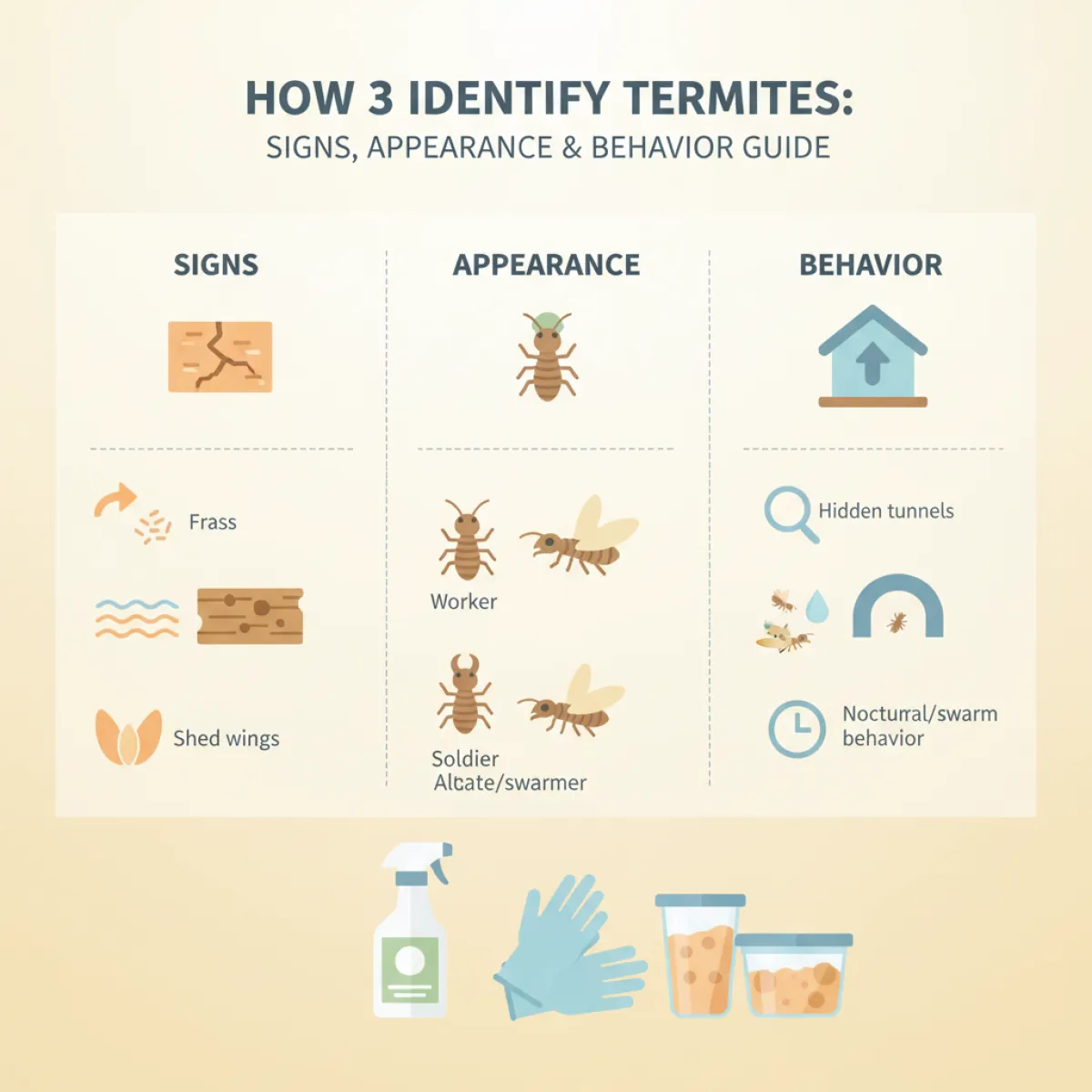
Key Takeaways: Identifying the Silent Destroyer
- Termites cause billions in structural damage annually, often going undetected for years.
- Identify termites by their straight antennae, broad waists, and equal-length wings.
- Look for mud tubes, hollow-sounding wood, and discarded wings near light sources.
- Professional IPM strategies focus on moisture control and structural barriers.
In my 15 years of pest control experience, I’ve walked into countless homes where the owners had no idea they were sharing their space with hundreds of thousands of termites. Termites are biologically fascinating but structurally devastating. As a certified professional, my goal is to teach you how to see what they try so hard to hide. This guide utilizes Integrated Pest Management (IPM) principles to help you identify, understand, and prevent termite damage effectively.
The Anatomy of a Termite: Ants vs. Termites
Misidentification is the number one reason homeowners fail to catch infestations early. People often mistake "flying ants" for termite swarmers. Here is the professional breakdown of how to tell the difference:
Antennae Shape
Termites have straight, bead-like antennae. Ants have distinctly elbowed or bent antennae.
The Waistline
Termites have a thick, "rectilinear" waist. They lack the narrow constriction found in ants, which have a very defined, thin waist between the thorax and abdomen.
Wing Symmetry
Termite swarmers (alates) have four wings of equal length. Flying ants have two large front wings and two smaller hind wings. Additionally, termite wings are often twice as long as their bodies.
Understanding Termite Castes and Behavior
Termites belong to the order Isoptera (now classified under Blattodea). They are social insects with a highly organized hierarchy:
- Workers: These are the ones doing the damage. They are cream-colored, blind, and work 24/7 to gather cellulose (wood) to feed the colony.
- Soldiers: Identifiable by their large, brownish heads and powerful mandibles, they protect the nest from invaders like ants.
- Alates (Swarmers): These are the reproductive members. When a colony reaches a certain size, they swarm to find mates and start new colonies. Finding these indoors is a major red flag.
Critical Signs of a Termite Infestation
While professionals use acoustic sensors and thermal imaging, you can perform a basic inspection by looking for these four indicators:
1. Mud Tubes
Subterranean termites (such as Reticulitermes flavipes) require moisture to survive. They build pencil-sized mud tubes on foundations and walls to travel between the soil and the wood of your home. If you break a tube and see small white insects scurrying inside, you have an active infestation.
2. Damaged or Hollow Wood
Termites eat wood from the inside out, leaving a thin veneer of wood or paint. If you tap on a timber and it sounds hollow or papery, it’s likely been hollowed out. In advanced cases, you might even see the "galleries" they’ve excavated along the grain.
3. Discarded Wings
After swarmers find a mate, they shed their wings. You might find piles of small, translucent wings on windowsills, near doors, or caught in spider webs. This is often the first sign homeowners notice in the spring.
4. Frass (Termite Droppings)
Drywood termites (common in warmer climates) push their fecal pellets out of small holes. These pellets, known as frass, look like tiny grains of sand or coffee grounds and often accumulate in small mounds below infested wood.
Professional Prevention and IPM Strategies
The EPA and major university extensions (like Texas A&M or UF) emphasize prevention through environmental modification. Here is what I recommend to my clients:
- Eliminate Wood-to-Ground Contact: Ensure there is at least a 6-inch gap between the soil and any wood siding or framing.
- Manage Moisture: Termites thrive in damp environments. Fix leaky pipes, ensure gutters drain away from the foundation, and ventilate crawl spaces.
- Remove Food Sources: Keep mulch, firewood, and scrap lumber away from the house foundation.
When to Call a Professional
Termite treatment is NOT a DIY project. The chemicals required, such as liquid termiticides or advanced baiting systems (like Sentricon), must be applied precisely to be effective. If you attempt to treat a colony yourself with over-the-counter sprays, you may only kill a few workers while the rest of the colony moves deeper into your structure. If you find mud tubes or structural wood damage, contact a certified professional immediately for a comprehensive inspection and treatment plan. Your home is likely your largest investment—don't risk it.