
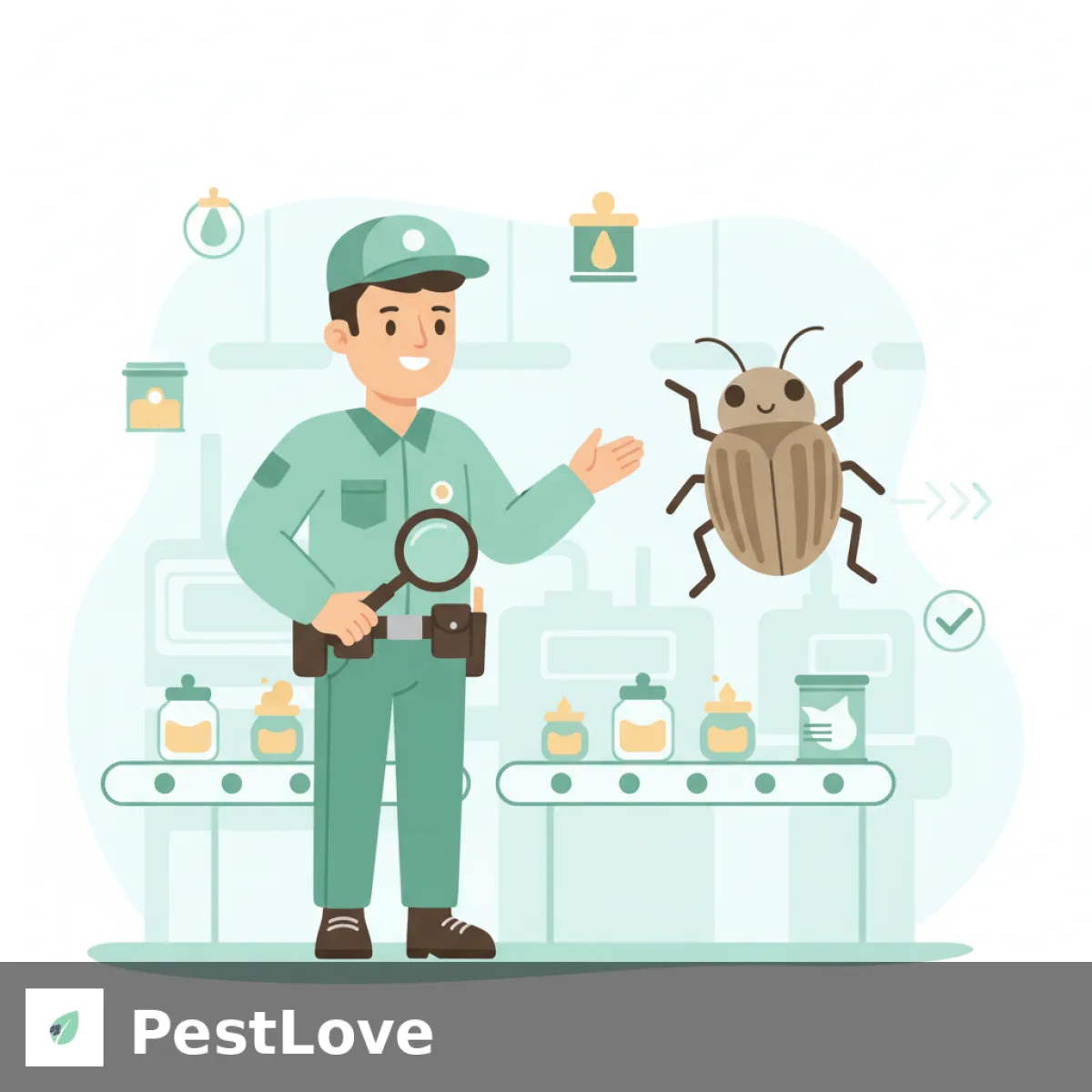
- Ang warehouse beetle (Trogoderma variabile) at mga kaugnay na dermestid ay pangunahing banta sa mga pasilidad ng infant formula at pagkain ng sanggol.
- Ang larval hastisetae (mga buhok na may simit) — hindi ang mga adultong beetle — ang pangunahing panganib ng kontaminasyon; nagdudulot ito ng pinsala sa tiyan at sanhi ng mga FDA recall.
- Ang FSMA Preventive Controls at CODEX HACCP guidelines ay nag-uutos ng dokumentadong IPM program sa buong pasilidad.
- Ang pag-iwas ay nakadepende sa structural exclusion, quarantine ng mga dumarating na materyales, climate control, at pheromone-trap monitoring grids.
- Anumang kumpirmadong peste sa produksyon o imbakan ay nangangailangan ng agarang product hold, fumigation assessment, at regulatory notification.
Bakit Kritikal na Banta ang Warehouse Beetle sa Produksyon ng Pagkain ng Sanggol
Ang mga pasilidad na gumagawa ng pagkain at formula para sa mga sanggol ay sumusunod sa pinakamahigpit na pamantayan sa kaligtasan ng pagkain sa industriya. Ang mga sanggol (0-12 buwan) ay wala pang malakas na immune system, kaya ang kontaminasyong maituturing na maliit sa ibang sektor ay isang emergency sa public health dito.
Sa mga insektong sumisira sa nakaimbak na produkto, ang warehouse beetle (Trogoderma variabile Ballion) at ang pamilyang Dermestidae ay isang espesyalisadong panganib. Hindi tulad ng ibang beetle, ang mga larva ng dermestid ay naaakit sa mga materyales na mayaman sa protina: dried milk powder, whey concentrate, at iba pang sangkap ng modernong infant formula. Ang isang babaeng beetle ay maaaring magsimula ng peste na mananatiling tago sa mga dingding at kisame sa loob ng maraming cycle ng produksyon bago ito mapansin.
Para sa pamamahala ng iba pang peste sa mga high-compliance na setting, ang mga protocol sa pag-iwas sa peste sa imbakan ng bigas at zero-tolerance pest protocols para sa pharmaceutical manufacturing ay nagbibigay ng mga balangkas na magagamit din sa sektor ng pagkain ng sanggol.
Identification: Pagkilala sa Trogoderma at mga Kaugnay na Dermestid
Warehouse beetle (Trogoderma variabile): Ang mga adulto ay may habang 2–3 mm, hugis bilog, at may batik-batik na kulay kape at abo. Maikli lang ang buhay nila (2-3 linggo) at karaniwang makikita malapit sa ilaw o sa mga ibabaw na malapit sa imbakan ng pagkain.
Larva: Ito ang pinakadelikadong yugto. Ang mga larva ng Trogoderma ay may habang 4–6 mm, patulis ang hugis, at balot ng kulay kapeng balahibo. Ang dulo nito ay may mga hastisetae — mga buhok na parang pana na tumutusok sa malambot na tissue kapag nakain at hindi agad mapapansin sa mga pulbos na produkto. Kaya nilang butasin ang mga packaging gaya ng plastic film at karton.
Iba pang species na dapat bantayan:
- Trogoderma inclusum (larger cabinet beetle) — katulad ng warehouse beetle at mahilig din sa protina.
- Anthrenus verbasci (varied carpet beetle) — ang mga larva nito ay tinatawag na "woolly bears"; mapanganib din ang mga buhok nito.
- Attagenus unicolor (black carpet beetle) — mahilig sa mga grain-protein blends at pinatuyong prutas.
Biyolohiya at Pag-uugali: Pag-unawa sa Ikot ng Peste
Ang Trogoderma variabile ay mabilis dumami sa temperaturang 25°C hanggang 35°C. Sa loob ng 30–50 araw, ang isang babae ay nangingitlog ng 40–90 piraso sa mga siwang malapit sa pagkain. Isang kritikal na katangian nila ang "facultative diapause" — kung saan ang mga larva ay tumitigil sa paglaki kapag mahirap ang kondisyon, dahilan upang mabuhay sila ng higit sa isang taon nang hindi napapansin.
Ang kakayahang ito ay nangangahulugan na ang paglilinis o pansamantalang pagsasara ng pasilidad ay hindi garantiya ng pagkapuksa nila. Maaaring magising ang mga natutulog na larva kapag bumuti ang temperatura at supply ng pagkain, na nagdudulot ng biglaang pagdami ng peste sa gitna ng produksyon.
Ang Pamantayan ng Regulasyon: FSMA at CODEX
Sa ilalim ng FSMA ng FDA (21 CFR Part 117), ang mga pabrika ng pagkain para sa mga bulnerableng populasyon ay dapat mayroong Hazard Analysis and Risk-Based Preventive Controls (HARPC). Ang pest control ay itinuturing na isang sanitation preventive control na nangangailangan ng kumpletong dokumentasyon at monitoring.
Ang mga pamantayan ng Codex Alimentarius para sa infant formula (CODEX STAN 72-1981) ay nag-uutos na ang lahat ng sangkap at tapos na produkto ay dapat walang kahit anong insekto. Walang tinatanggap na "minimum threshold" dito: anumang insekto sa produkto ay itinuturing na paglabag sa batas (adulterant) at magreresulta sa mandatory recall.
Pag-iwas: Isang Multi-Layered na IPM Approach
Structural Exclusion at Integridad ng Pasilidad
Ang pundasyon ng pag-iwas sa dermestid ay ang pagharang sa kanilang pagpasok. Dapat suriin ang mga door sweep, loading dock seal, at mga butas sa dingding para sa mga kable. Ang mga screen sa bintana at bubong ay dapat may mesh size na hindi hihigit sa 0.8 mm para hindi makapasok ang mga adultong beetle.
Protocols sa Pagtanggap ng Materyales at Quarantine
Maraming kaso ng warehouse beetle ang nagmumula sa mga dumarating na sangkap gaya ng dried milk powder at cereal flour. Dapat suriin ang lahat ng packaging gamit ang UV light (dahil ang mga dumi at balat ng larva ay madaling makita dito). Ang paggamit ng 250-micron sieve sa mga pulbos na sangkap ay makakatulong upang makita ang mga larva bago pa man sila makapasok sa production line.
Kontrol sa Imbakan
Ang pagpapanatili ng bodega sa temperaturang 15°C pababa at humidity na mas mababa sa 35% ay mabisang paraan upang pigilan ang pagdami ng peste. Importante rin ang pagpapatupad ng strict first-in, first-out (FIFO) policy, lalo na sa mga protein powder na hindi dapat lumalampas ng 90 araw sa imbakan.
Programa sa Monitoring at Detection
Ang pheromone-based monitoring ang pinakamabisang paraan para sa maagang pagtuklas ng Trogoderma. Ang mga pheromone trap ay kayang makahuli ng mga beetle kahit kakaunti pa lang sila. Dapat maglagay ng trap sa bawat 50–75 m² sa mga area ng imbakan at malapit sa mga pinto at HVAC system.
Opsyon sa Paggamot Kapag Nakakita ng Beetle
Kapag nakumpirma ang peste sa bodega, dapat agad i-hold ang mga apektadong batch ng produkto. Maaaring gumamit ng mga aprubadong insecticide o diatomaceous earth sa mga pinagtataguan ng peste.
Sa mga production area, ang pagtuklas ng peste ay nangangailangan ng agarang pagtigil ng operasyon. Ang heat treatment — kung saan itinataas ang temperatura sa 52°C sa loob ng 30 minuto — ay isang epektibong paraan na ligtas sa mga machine surfaces at kayang pumatay sa lahat ng yugto ng buhay ng beetle, kabilang ang mga larva sa diapause.
Kailan Dapat Tumawag ng Propesyonal na Pest Control
Ang mga manufacturer ng pagkain ng sanggol ay dapat mayroong kontrata sa isang pest management firm na may food-facility certification. Huwag maghintay na magkaroon ng peste bago kumuha ng serbisyo.
Kailangang tumawag ng propesyonal kung: may nakitang buhay na larva sa production area; ang pheromone trap counts ay patuloy na tumataas; o may nakitang mga buhok ng larva sa tapos na produkto. Ang mga lisensyadong propesyonal ay may sapat na kagamitan para sa fumigation at heat treatment, pati na rin ang mga dokumentasyong kailangan para sa mga audit gaya ng EU food contact surface IPM frameworks.