
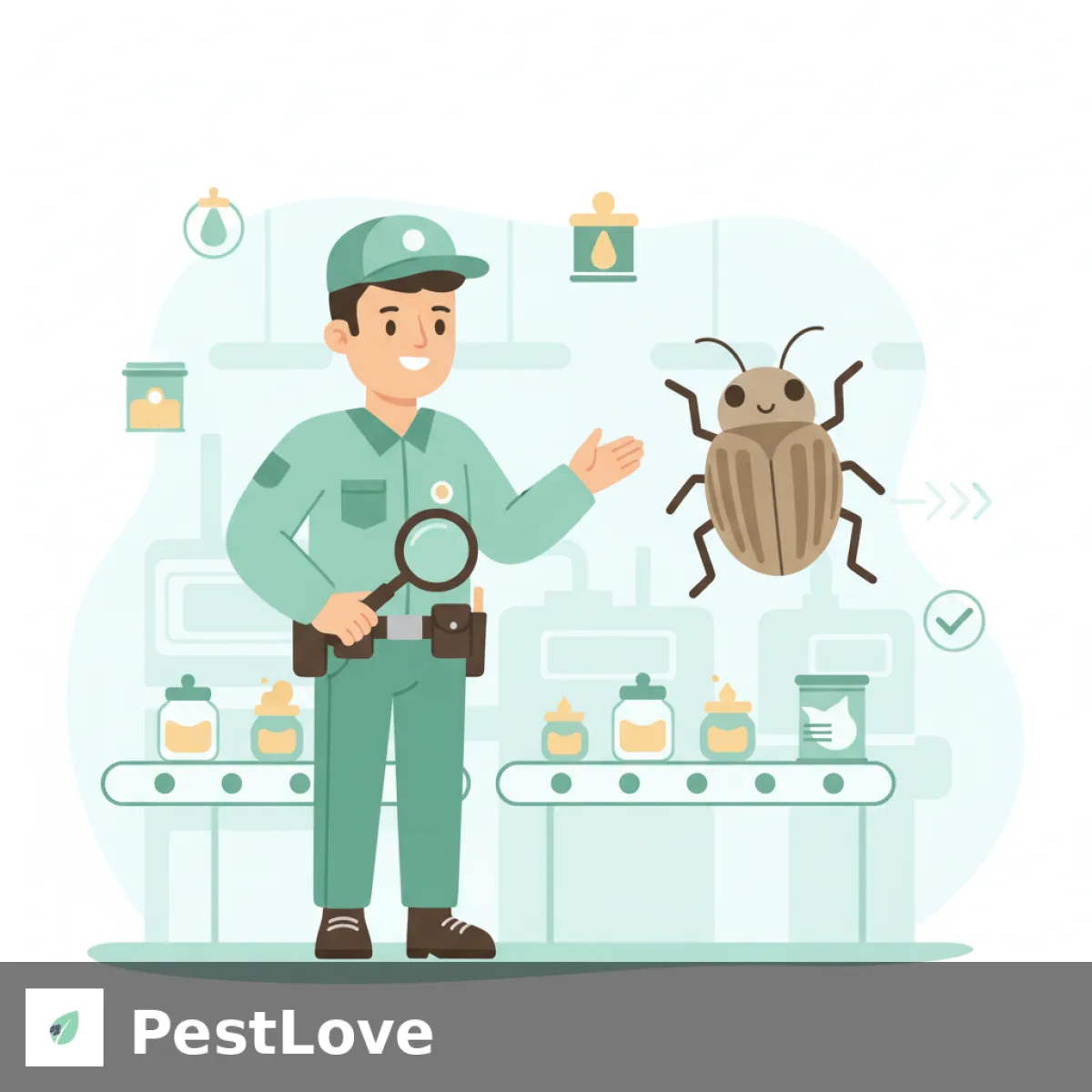
- The warehouse beetle (Trogoderma variabile) and related dermestids are primary stored-product threats in infant formula and baby food facilities.
- Larval hastisetae (barbed hairs) — not adult beetles — are the principal contamination hazard; they cause gastrointestinal injury and trigger FDA recalls.
- FSMA Preventive Controls for Human Food (21 CFR Part 117) and CODEX HACCP guidelines mandate documented, facility-wide IPM programs.
- Prevention relies on structural exclusion, incoming material quarantine, climate control, and pheromone-trap monitoring grids.
- Any confirmed infestation in a production or storage zone warrants immediate product hold, professional fumigation assessment, and regulatory notification review.
Why Warehouse Beetles Are a Critical Threat in Infant Food Production
Manufacturing facilities producing baby food, infant formula, and follow-on formula operate under the most stringent food safety standards in the industry. The end consumer — infants aged zero to twelve months — lacks the immunological and physiological defenses of older populations, making contamination events that might constitute a minor quality failure elsewhere a potential public health emergency here.
Among stored-product insects, the warehouse beetle (Trogoderma variabile Ballion) and its close relatives in the family Dermestidae represent a specialized hazard. Unlike grain beetles that feed primarily on starchy substrates, dermestid larvae are attracted to protein-rich materials: dried milk powders, whey concentrates, hydrolyzed casein, cereal-grain blends, and the high-lipid, high-protein matrices that define modern infant formula. A single reproductive female can initiate an infestation that persists undetected in wall voids, false ceilings, and equipment harbourages for multiple production cycles before visible evidence emerges on the processing floor.
For context on managing other stored-product beetles in high-compliance settings, the protocols outlined in preventing grain beetle infestations in bulk rice storage facilities and zero-tolerance pest protocols for sterile pharmaceutical manufacturing provide useful regulatory frameworks that translate directly to the infant food sector.
Identification: Recognizing Trogoderma and Related Dermestids
Warehouse beetle (Trogoderma variabile): Adults measure 2–3 mm in length, oval in profile, with a mottled brown-and-grey pattern formed by banded setae on the elytra. Antennae terminate in a 3- to 5-segmented club. Adults are short-lived (two to three weeks) and consume little; they are primarily encountered near light sources or on structural surfaces adjacent to food stores.
Larvae: The critical identification stage. Trogoderma larvae are 4–6 mm at maturity, distinctly tapered, and covered in bands of brown setae. The posterior end bears a characteristic tuft of long, barbed hastisetae — arrow-shaped hairs that embed in soft tissue on ingestion and cannot be detected organoleptically in powdered product. Larvae are highly mobile, capable of penetrating packaging film, cardboard laminate, and poorly sealed seams in flexible pouches.
Related species of regulatory concern include:
- Trogoderma inclusum (larger cabinet beetle) — morphologically similar, equally attracted to high-protein powders
- Anthrenus verbasci (varied carpet beetle) — larvae known as "woolly bears"; hastisetae equally hazardous; infests nut-based and legume-flour ingredients common in organic baby food lines
- Attagenus unicolor (black carpet beetle) — elongated larvae; feeds on grain-protein blends and dried fruit pieces in stage-2 foods
Distinguishing these species from flour beetles (Tribolium spp.) or grain weevils is essential because dermestid larvae require different fumigant strategies and their detection in finished product triggers distinct FDA recall categories.
Behavior and Biology: Understanding the Infestation Cycle
Trogoderma variabile thrives at temperatures between 25°C and 35°C with relative humidity above 40%. Under optimal conditions, the lifecycle from egg to adult completes in 30–50 days, with females depositing 40–90 eggs in crevices adjacent to food material. Under suboptimal or stressed conditions — a critical consideration for pest managers — larvae enter facultative diapause, dramatically extending the lifecycle to over a year and rendering standard detection intervals unreliable.
This diapausing capacity means that population suppressions achieved during facility shutdowns or deep-clean cycles do not guarantee eradication. Dormant larvae resume development when food and temperature conditions recover, producing a resurgence that can coincide with peak production periods.
Adult warehouse beetles are strong fliers and are attracted to ultraviolet light. In multi-story production facilities, adults originating in raw material warehouses on lower floors can disperse to packaging areas, finished-goods storage, and even administrative zones through HVAC ducting, utility conduits, and unsealed floor penetrations.
The Regulatory Stakes: FSMA, CODEX, and Infant Food Standards
Under the FDA's Food Safety Modernization Act (FSMA) — specifically the Preventive Controls for Human Food rule (21 CFR Part 117) — facilities manufacturing food for vulnerable populations must implement written Hazard Analysis and Risk-Based Preventive Controls (HARPC) plans. Pest control is explicitly identified as a sanitation preventive control requiring documented procedures, monitoring records, corrective action logs, and verification activities.
Codex Alimentarius standards for processed cereal-based foods and baby foods (CODEX STAN 74-1981, revised) and infant formula (CODEX STAN 72-1981) require that all ingredients and finished products be free from insects at any life stage. Unlike general food standards, these standards carry no minimum action threshold: any confirmed insect contamination in finished infant product constitutes an adulterant under U.S. law (21 U.S.C. § 342) and triggers mandatory recall consideration.
The EU's Regulation (EC) No 1881/2006 on contaminants and the specific delegated regulations governing processed cereal-based foods for infants (Commission Delegated Regulation (EU) 2016/127) impose equivalent zero-tolerance frameworks across European manufacturing operations. For manufacturers preparing for third-party audits, the GFSI pest control audit compliance checklist provides a practical audit-readiness framework applicable to SQF, BRC, and IFS certification schemes.
Prevention: A Multi-Layered IPM Approach
Structural Exclusion and Facility Integrity
The foundation of any dermestid prevention program is denying entry. Facility managers should conduct semiannual perimeter audits targeting: door sweeps and loading dock seals (replace any with visible light gaps); utility penetrations through exterior walls (seal with fire-rated expanding foam or copper mesh backed with mortar); roof ventilation screens (minimum 0.8 mm mesh to exclude adult beetles); and window screening in warehouses where seasonal ventilation is practiced.
Internal structural integrity is equally important. Wall-floor junctions in raw material storage areas should be coved and sealed. Suspended ceiling panels adjacent to grain ingredient silos or powder-tote storage represent high-risk harbourage zones and should be inspected quarterly, with any insect debris, frass, or cast larval skins documented and photographed as part of the HARPC verification record.
Incoming Material Receiving and Quarantine Protocols
A significant proportion of warehouse beetle introductions in food manufacturing trace to infested incoming ingredients, particularly imported dried milk powders, cereal flours, maltodextrin, and vegetable oils in bulk bag formats. Quarantine inspection protocols should include: visual examination of all external packaging surfaces under UV light (adult warehouse beetles fluoresce weakly; larval frass and shed skins are more readily visible); tactile inspection of bag seams and bottom folds where eggs are preferentially deposited; and snap-sample sieving of powder ingredients through a 250-micron sieve to detect larvae, frass, or hastisetae fragments before materials enter the production zone.
Suppliers of high-risk materials (dried proteins, cereal bases, nut flours) should be required to provide pest control monitoring records and Certificate of Analysis documentation confirming freedom from insect contamination as a purchasing prerequisite. This supplier qualification step is explicitly required under FSMA's supply-chain program provisions.
Storage Environment Controls
Temperature and relative humidity management is the most reliable passive deterrent against dermestid population establishment. Maintaining raw material warehouses at or below 15°C with relative humidity below 35% suppresses both adult reproduction and larval development. While this is energy-intensive, it aligns with quality requirements for formula-grade dried milk powders, which are hygroscopic and require low-humidity storage to prevent caking.
Where refrigerated warehousing is impractical for bulk storage, stock rotation using strict first-in, first-out (FIFO) protocols and maximum storage age policies — typically 90 days for high-risk protein powders — reduces the dwell time available for population establishment. Prolonged storage under ambient conditions is the single largest risk factor for dermestid infestation in ingredient warehouses.
Monitoring and Detection Programs
Pheromone-based monitoring is the cornerstone of early detection for Trogoderma species. Commercial aggregation pheromone lures (blends of Z-14-methyl-8-hexadecenal and related compounds) are species-selective and highly sensitive, capable of detecting adult male beetles at population densities too low to be found through visual inspection. Trap grids should be installed at a density of one trap per 50–75 m² in raw material storage areas, with additional traps at all points of entry, near HVAC intakes, and adjacent to ingredient discharge points.
Trap counts should be recorded weekly during warm months and biweekly during cooler periods. Trend analysis — not single-count thresholds — drives action decisions: a consistent upward trend in catches over three consecutive monitoring intervals warrants investigation even when absolute counts remain low. Light traps (UV insect light traps) should be installed in finished-goods packaging areas as a secondary detection layer; they do not attract larvae but will intercept dispersing adults. Comparable multi-layer monitoring approaches for other stored-product insects are detailed in the guide on Indian meal moth eradication for organic food warehouses.
Treatment Options When Beetles Are Detected
When monitoring indicates an established dermestid population, response must be proportionate to detection zone. In raw material warehouses, confirmed catches above facility action thresholds trigger a product hold on affected lot codes, targeted residual insecticide application to harbourage zones (using EPA-registered pyrethroid or diatomaceous earth formulations labeled for food facilities), and a root-cause investigation of incoming material records.
In production or finished-goods zones, any detection above background levels requires immediate production suspension in the affected area, quarantine of all in-process and finished goods produced within the preceding 72 hours, and engagement of a licensed pest management professional to conduct a comprehensive harbourage survey. Heat treatment — raising the ambient temperature in an isolated production module to 52°C for a minimum of 30 minutes — is a non-residue option compatible with food contact surfaces and is effective against all life stages including diapausing larvae. Phosphine fumigation of ingredient silos or tote bays may be indicated for persistent infestations but requires regulatory notification under FIFRA Section 18 protocols if conducted inside an occupied food processing building.
For comparable approaches to zero-tolerance treatment in ingredient storage, the protocols outlined in cigarette beetle management in export-grade spice warehouses and red flour beetle control protocols for industrial bakeries offer methodologically similar frameworks.
When to Call a Licensed Pest Control Professional
Infant food manufacturers should maintain a contracted relationship with a pest management firm holding food-facility certification (e.g., QualityPro Food Safety, AIB International, or equivalent national scheme) before any infestation is detected. Reactive procurement of pest control services following a confirmed detection introduces delays that can extend product hold periods and complicate FSMA corrective action timelines.
Professional engagement is mandatory — not optional — in the following scenarios: any detection of live larvae in a production, packaging, or finished-goods area; pheromone trap counts exceeding facility action thresholds in two consecutive monitoring intervals; identification of dermestid hastisetae in finished product during quality control sieving; evidence of dermestid activity within HVAC systems or overhead structural voids; and any pre-regulatory audit period where monitoring records show trend reversals. Licensed professionals bring species-specific fumigant registration, heat treatment equipment, and the regulatory documentation (fumigation certificates, application records) required to close out HARPC corrective action records and satisfy auditor requirements under EU food contact surface IPM compliance frameworks.