
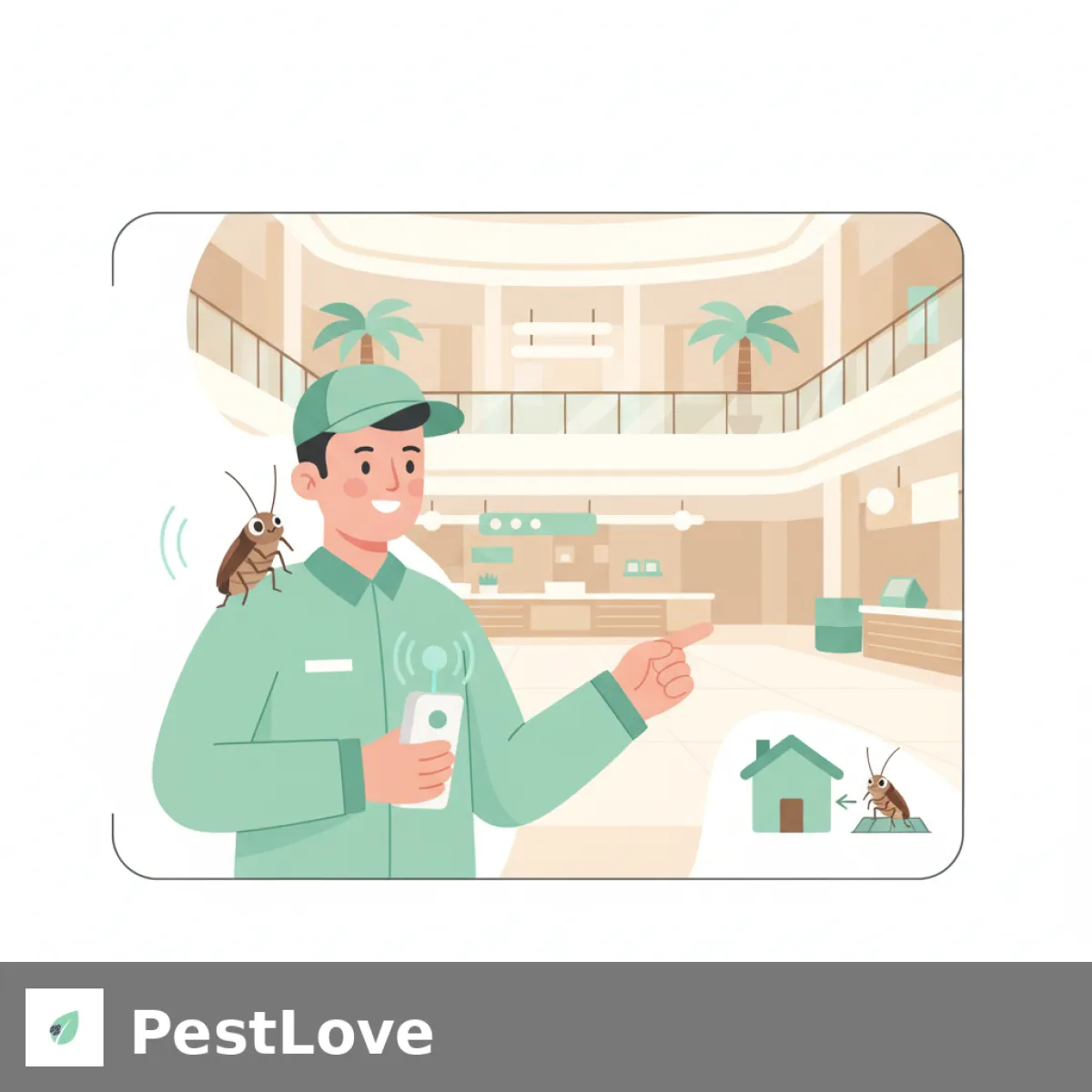
The Intersection of Luxury Retail and Pest Vulnerability
In the ecosystem of high-end retail, the presence of a single American cockroach (Periplaneta americana) can cause disproportionate reputational damage. Unlike industrial environments where tolerance thresholds may be marginally higher, luxury shopping centers rely on an atmosphere of pristine sanitation and exclusivity. A sighting in a food court or, worse, a designer atrium, undermines consumer confidence and can lead to immediate social media backlash. For facility managers, the challenge lies in the biology of the pest itself: the American cockroach is a creature of high humidity and organic decay, conditions often inadvertently created by the complex infrastructure of modern malls.
This guide outlines a rigorous Integrated Pest Management (IPM) framework specifically designed for the unique architectural and operational constraints of luxury shopping centers, focusing on food courts and botanical atriums.
Identification and Biological Behavior in Commercial Spaces
Effective mitigation begins with precise identification. The American cockroach is distinct from the smaller, kitchen-dwelling German cockroach (Blattella germanica). It is the largest common structure-infesting species, reaching lengths of up to 50mm. They are reddish-brown with a pale yellow band around the edge of the pronotum.
While German cockroaches typically infest equipment motors and crevices within food preparation areas, American cockroaches are primarily invaders from the periphery—sewers, drainage systems, and basements. In a mall setting, they utilize the vast network of utility tunnels and plumbing chases to travel between the humid subsurface and public areas. Understanding this movement pattern is critical; treatment must focus on interception points rather than just surface application.
The Atrium Paradox: Aesthetic Beauty as Harborage
Luxury malls frequently feature expansive atriums with live tropical plantings, water features, and imported soil. While aesthetically essential, these environments mimic the American cockroach’s natural habitat. The combination of warmth, constant irrigation, and organic mulch creates an ideal breeding ground.
Landscaping IPM Protocols
- Soil and Mulch Management: Avoid excessive mulch depth, which retains moisture and hides populations. utilize inorganic ground cover (gravel or stone) near building perimeters where possible.
- Irrigation Control: Over-watering is a primary driver of infestation. Smart irrigation systems should be calibrated to prevent standing water.
- Botanical Inspection: New plant arrivals should be quarantined and inspected. Pests are frequently introduced via the root balls of large decorative palms or trees.
For managers dealing with pests in these green zones, cross-referencing strategies from landscape pest management can provide additional insights into protecting ornamental plants without aggressive chemical use.
Food Court Defense: Drainage and Sanitation
Food courts present a continuous attractant due to high volumes of organic waste and complex plumbing networks. American cockroaches are thigmotactic (seeking contact with surfaces) and prefer dark, moist environments, making floor drains and grease traps their primary harborage zones within the food court.
Drainage Sanitation
The biofilm that accumulates in drains provides both a food source and a breeding site. Pouring bleach is rarely effective as it flows quickly past the pest without penetrating the biofilm.
- Bio-Enzymatic Cleaners: Use heavy-duty bacterial digestant cleaners that eat away the organic buildup in drain lines.
- Physical Scrubbing: Drains must be mechanically brushed on a scheduled basis to remove hardened organic matter.
- Trap Seals: Install trap guards that allow water to flow down but prevent pests from crawling up.
For a deeper technical analysis of drainage issues, consult our guide on controlling American cockroaches in commercial drainage systems.
Structural Exclusion and Proofing
Exclusion is the most effective long-term defense. Malls have vast subterranean footprints, and sealing every entry point is impossible, but strategic proofing of high-risk zones is mandatory.
- Door Sweeps: Install industrial-grade bristles or rubber sweeps on all loading dock doors and service entrances. A gap of 1/16th of an inch is sufficient for entry.
- Utility Penetrations: Seal gaps around plumbing and electrical conduits entering the food court from the main utility chases using copper mesh and elastomeric sealant.
- Trash Compactors: The loading dock compactor is a major ingress point. Ensure the unit is self-contained and the surrounding area is pressure-washed daily. Similar sanitation rigor is discussed in our guide on waste transfer station management.
Chemical Remediation Strategies
In a luxury retail environment, broadcast spraying of pesticides is discouraged due to air quality concerns and customer perception. The IPM approach favors targeted, low-volatility applications.
- Cockroach Baits: Gel baits placed in cracks and crevices near harborage areas allow pests to ingest the toxicant and return to the nest, causing a cascade effect. This is similar to methods used for managing resistant German cockroaches.
- Insect Growth Regulators (IGRs): IGRs disrupt the reproductive cycle, preventing nymphs from maturing into breeding adults. This provides long-term population suppression.
- Dusts: Silica aerogel or boric acid dusts can be applied into wall voids and behind cabinetry where wet sprays cannot reach.
When to Call a Professional
While maintenance staff can handle sanitation and minor proofing, a licensed Pest Management Professional (PMP) is required for chemical applications and comprehensive audits. Immediate professional intervention is necessary if:
- Cockroaches are seen during daylight hours (indicating high population pressure).
- Installations of new atrium landscaping are scheduled.
- Tenants report recurring drainage backups.
Key Takeaways
- Zero Tolerance: Luxury environments require a proactive, zero-tolerance approach to protect brand reputation.
- Source Reduction: Focus on removing moisture in atriums and biofilm in food court drains.
- Exclusion: Seal utility penetrations and loading dock entries to prevent ingress from municipal sewers.
- Targeted Treatment: Use baits and IGRs rather than aerosol sprays to maintain air quality and safety.
