
Key Takeaways
- Target Species: The Black Garden Ant (Lasius niger) is driven primarily by sugary food sources (honeydew) and poses a contamination risk to retail inventory.
- Primary Ingress: Ground-level units are uniquely vulnerable via automatic door thresholds, utility penetrations, and pavement cracks.
- Exclusion Strategy: Physical barriers (door sweeps, sealants) combined with chemical perimeter treatments form the most effective defense.
- Sanitation: Immediate removal of spillages and rigorous breakroom hygiene disrupt foraging pheromone trails.
Understanding Lasius niger in the Retail Environment
For ground-level retail units—ranging from high-street boutiques to convenience stores—the Black Garden Ant (Lasius niger) represents a significant operational threat during the spring and summer months. Unlike structural pests such as termites, L. niger does not consume building materials; however, their presence signals a breach in sanitation or structural integrity to customers, potentially resulting in reputational damage and failed health inspections.
These ants are monomorphic (workers are all the same size, roughly 3-5mm) and typically nest outdoors in soil, under paving stones, or within wall voids. Their foraging behavior is characterized by well-defined pheromone trails leading from the nest to a food source. In a retail setting, this source is often spilled beverages, unsealed confectionery, or organic waste in employee areas.
Structural Exclusion Protocols: Hardening the Perimeter
The core of Integrated Pest Management (IPM) for ground-level retail is exclusion—physically preventing pests from entering the facility. Because retail units often have high foot traffic and frequently opening doors, maintaining a secure perimeter requires specific architectural hardening.
1. Threshold Management
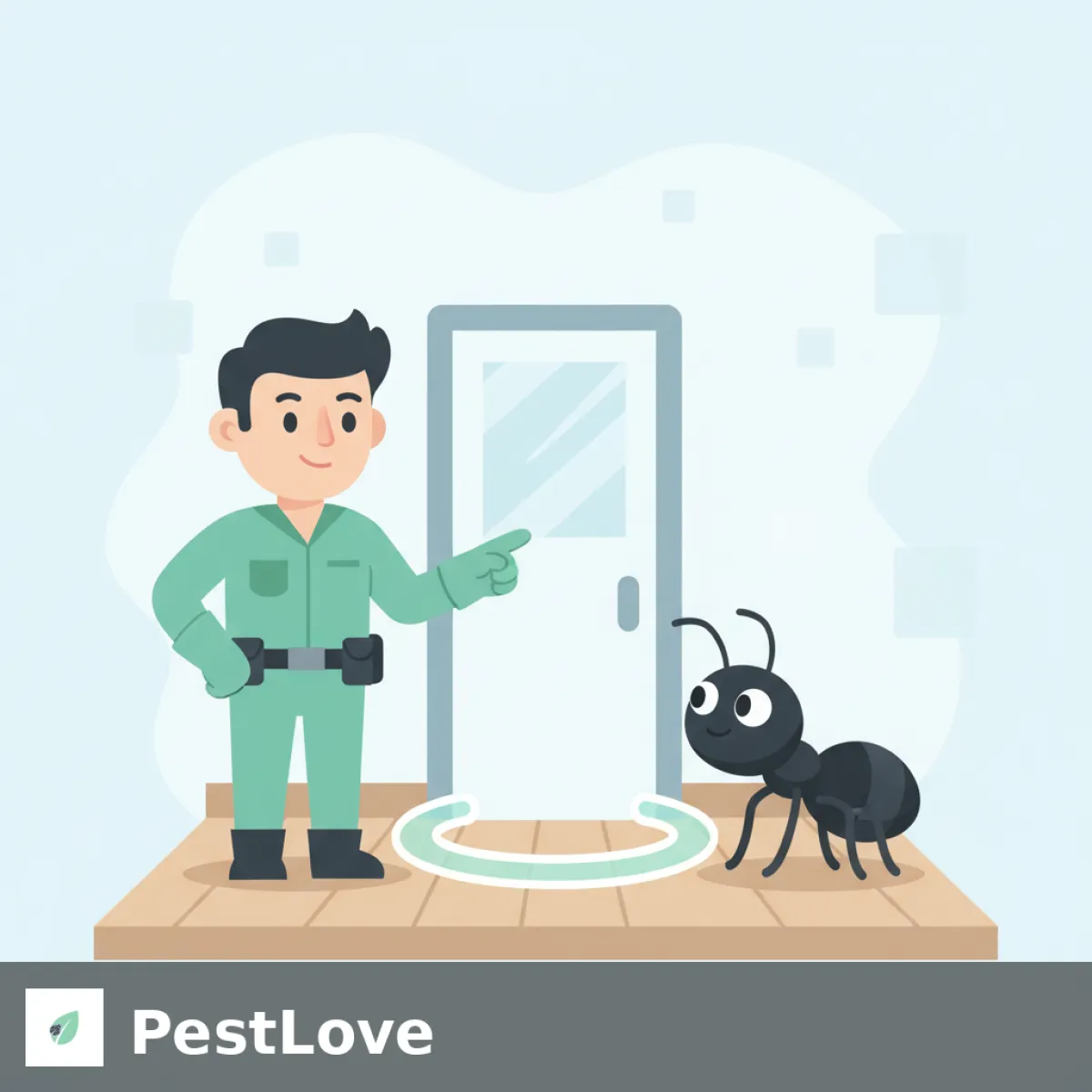
The primary entry point for L. niger is the gap beneath entry doors. Standard weather stripping often degrades rapidly in high-traffic retail environments.
- Automatic Doors: Install brush-strip sweeps rather than rubber seals, which can warp or tear. Brush strips provide a flexible barrier that conforms to uneven floor surfaces while blocking ant ingress.
- Air Curtains: While primarily used for climate control and flying insect exclusion, properly calibrated air curtains can deter foraging workers when directed outward at a 45-degree angle.
For broader context on perimeter defense, consult our guide on early spring perimeter defense strategies.
2. Utility Penetration Sealing
Retail units contain numerous utility lines (HVAC, electrical, plumbing) that penetrate the building envelope. L. niger scouts exploit the annular space around these pipes.
- Sealant Selection: Use silicone-based or elastomeric sealants for gaps smaller than 5mm. For larger voids, use copper mesh packing followed by expanding foam. Ants cannot chew through copper mesh, providing a permanent physical barrier.
- Exterior Inspection: Managers should conduct monthly inspections of the exterior façade, focusing on areas where gas lines or conduit enter the structure.
Sanitation and Cultural Controls
Exclusion is ineffective if internal attractants draw pests inside. Pheromone trails laid by scout ants can persist even after the food source is removed if surfaces are not properly treated.
Disrupting Pheromone Trails
Cleaning with standard water and soap may not fully degrade the chemical markers in pheromone trails. Retail cleaning crews should use an enzymatic cleaner or a solution of vinegar and water to wipe down known foraging paths. This blinds the colony to the location of the food source.
Stock Rotation and Waste Management
For retailers stocking food items, strict First-In-First-Out (FIFO) stock rotation is mandatory to prevent package degradation. Leaking juice boxes or crushed candy wrappers are potent attractants.
- Waste Receptacles: Bins should have tight-fitting lids and be lined with heavy-duty bags.
- Exterior Waste: Dumpsters and compactors must be located at least 15 meters from the building entrance where possible, and placed on concrete pads that are regularly power-washed to remove leachate.
Proper sanitation is also critical for preventing other structural pests. See our guide on preparing for GFSI pest control audits for a comprehensive sanitation checklist.
Chemical Barriers and Professional Treatment
While DIY sprays are common, they are often counterproductive in a commercial setting. Repellent sprays (like those containing pyrethroids) can cause "budding," where a colony fragments into multiple smaller satellite colonies, exacerbating the infestation. This phenomenon is frequently observed in Pharaoh ant infestations, but improper treatment of Garden Ants can also lead to erratic foraging behavior.
Non-Repellent Residuals
Professional Pest Control Operators (PCOs) utilize non-repellent liquid insecticides applied to the exterior foundation (perimeter band). Foraging ants cross this treated zone without detecting the chemical, returning to the nest and transferring the active ingredient to the queen and brood via trophallaxis (communal feeding). This method ensures colony elimination rather than mere displacement.
Gel Baits
For interior activity, gel baits placed in cracks and crevices are the standard for sensitive retail environments where sprays are unsafe or unsightly. These baits mimic the honeydew or protein sources ants crave.
When to Call a Professional
Retail managers should engage a licensed professional when:
- Foraging trails are visible daily despite sanitation improvements.
- Ants are emerging from electrical sockets or light fixtures (indicating a nesting site within the wall void).
- Flying ants (alates) are observed inside the premises, indicating a mature colony is swarming nearby.
For businesses operating in multi-tenant buildings, coordinated treatment with neighboring units is often necessary to prevent the "ping-pong" effect of pests moving between spaces. Similar challenges are discussed in our business owner's guide to preventing ant invasions.
