
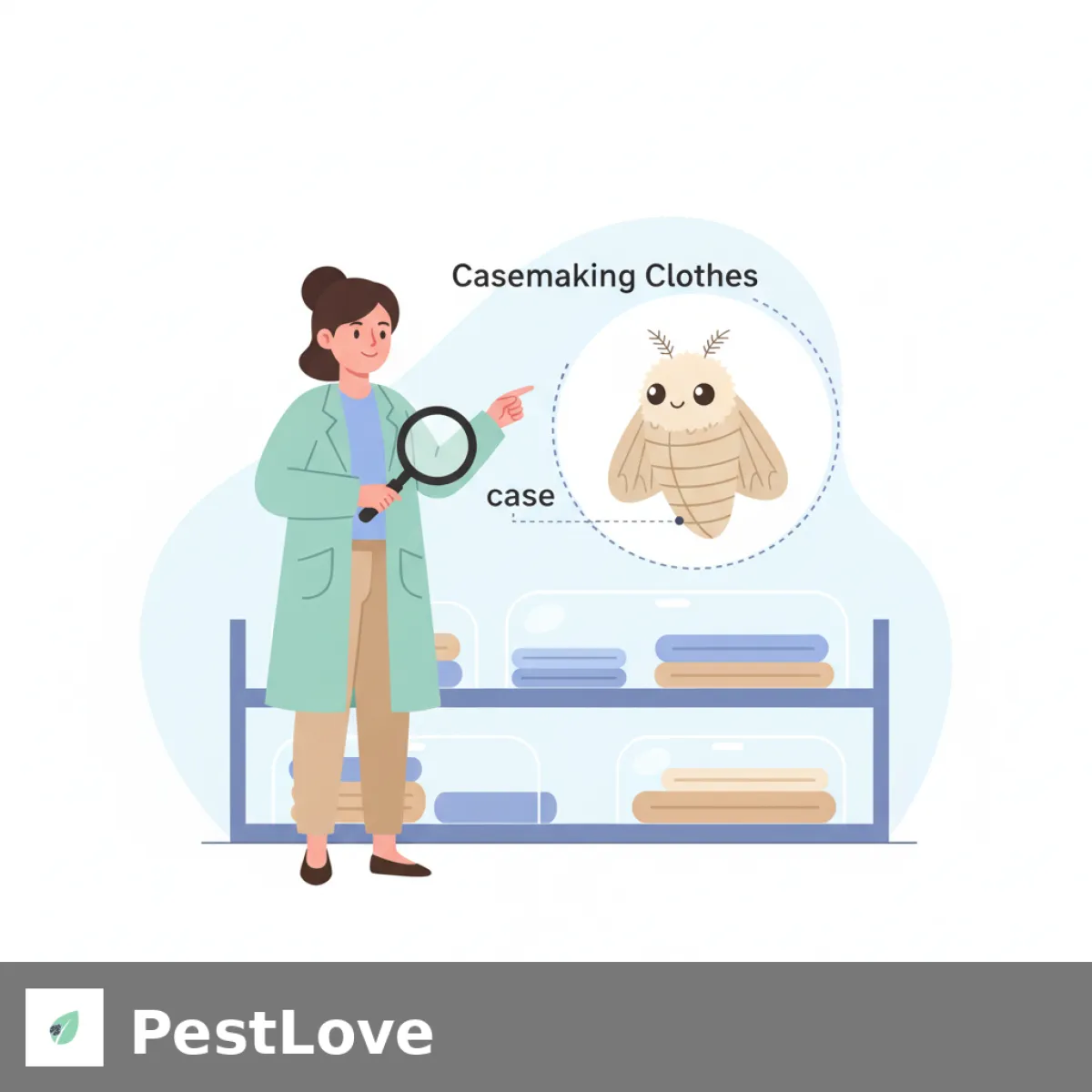
Key Takeaways for Collection Managers
- The Case is Key: Unlike the Webbing Clothes Moth, Tinea pellionella larvae carry a portable silken case incorporating fibers from the artifact they are consuming, making them incredibly difficult to spot.
- Specific Diet: They target keratin-rich materials: wool, fur, feathers, silk, and taxidermy. Plant-based fibers (cotton, linen) are usually only at risk if soiled or blended with wool.
- Environment: They thrive in micro-climates with slightly higher humidity and darkness. Inspect the underside of rugs, folded tapestries, and taxidermy bases.
- Immediate Action: Isolation is the first step. Treatment in museums typically involves freezing or anoxia, not chemical sprays on artifacts.
In my years of consulting for heritage institutions, I have seen few pests cause as much heartache as the Casemaking Clothes Moth (Tinea pellionella). While termites destroy structure, clothes moths destroy history. I recall a specific inspection at a small county museum where a 19th-century military uniform looked pristine from a distance. Upon closer inspection, the wool felt had been grazed thin, and what looked like lint was actually hundreds of moving cases, perfectly camouflaged because they were built from the red wool of the uniform itself.
For museum professionals, identification is not just about knowing the bug; it is about knowing the damage profile. This guide covers the identification, behavior, and IPM (Integrated Pest Management) protocols specifically for the Casemaking Clothes Moth in a collection environment.
Scientific Identification: Tinea pellionella
Correctly identifying the species is critical because their behavior differs slightly from the more common Webbing Clothes Moth (Tineola bisselliella). Misidentification can lead to looking for the wrong signs (e.g., webbing tunnels vs. portable cases).
1. The Adult Moth
Adult moths are often the first sign a curator notices, usually fluttering weakly near a display case or caught in a pheromone trap.
- Size: Small, approximately 6-7mm long.
- Color: Brownish-gold to metallic sheen.
- Distinctive Markings: Unlike the solid gold Webbing Clothes Moth, the Casemaking moth usually has three faint dark spots on its forewings. However, in older specimens found in traps, these scales may have worn off.
- Behavior: They are photophobic (avoid light). If you see them flying, it is likely a male searching for a mate. Females prefer to run or hop across surfaces and rarely fly far from the infestation source.
2. The Larva (The Damaging Stage)
The larva causes 100% of the damage. The adult mouthparts are atrophied; they do not eat.
- Appearance: Cream-colored body with a dark brown head capsule.
- The Case: This is the defining feature. The larva spins a silken tube around its body, open at both ends. It carries this house wherever it goes. Crucially, it weaves fibers from the food source into the case. If it eats a blue tapestry, the case is blue. If it eats a brown taxidermy pelt, the case is brown.
- Camouflage: Because of this construction method, the larvae are almost invisible against the artifact. I always advise curators to look for "lint that moves."
Damage Assessment and Signs of Infestation
In a museum setting, you rarely see the insects before you see the damage. Regular monitoring is essential.
Frass (Insect Droppings)
Frass is often mistaken for dust or sand. However, under magnification, moth frass is distinct.
- Color: The frass will be the exact color of the textile being consumed. If you find blue granules under a blue wool coat, that is likely frass.
- Shape: It is pelleted and uniform, unlike the irregular debris of general dust.
Grazing vs. Holes
Casemaking larvae often "graze" on the surface of fabrics, thinning the nap without necessarily chewing distinct holes right away. This can result in bald patches on velvet or wool. On fur and taxidermy, you may see "hair slip," where clumps of fur fall out because the larvae have severed the follicles at the base.
Habitat and Biology within Museums
Understanding the biology of Tinea pellionella helps in locating their hideouts.
Dietary Requirements
They require animal protein (keratin). Common targets include:
- Woolen uniforms and tapestries
- Feathered headdresses
- Taxidermy mounts
- Felt liners in display cases (a common oversight)
- Horsehair stuffing in antique furniture
They generally ignore clean cotton or linen unless it is heavily soiled with sweat or food, which provides the necessary nutrients. For broader protection of mixed materials, see our guide on Protecting Heritage Textiles: Webbing Clothes Moth Prevention.
Environmental Preferences
Casemaking Clothes Moths are slightly more dependent on moisture than Webbing Clothes Moths. They thrive in humidity levels above 75%, though they can survive in lower humidity. In museums, this often means they are found in:
- Basement storage areas.
- Micro-climates inside unventilated display cases.
- Areas near HVAC condensation lines.
Integrated Pest Management (IPM) Strategies
Modern museum conservation relies on IPM—prevention and monitoring rather than reactive chemical bombing. Just as hotels use Integrated Pest Management for guest safety, museums use it for object safety.
1. Monitoring
Pheromone traps are essential. They use a synthetic female sex pheromone to attract males. Note that Tinea pellionella and Tineola bisselliella respond to different pheromones (though some commercial traps combine them). Place traps on the floor or low shelves, as these moths are weak flyers. Check them weekly.
2. Exclusion and Hygiene
- Vacuuming: Regular vacuuming of storage areas removes hair and lint that serve as food sources.
- Isolation: All incoming loans or new acquisitions must be quarantined. A single infested hat can compromise an entire storage room.
- Sealing: Ensure cabinets are gasketed and sealed tightly.
Treatment Protocols for Artifacts
If you identify active larvae on an object, do not use commercial pesticides. The solvents and propellants in over-the-counter sprays can stain fabrics, dissolve dyes, and corrode metals.
Freezing (Thermal Treatment)
This is the industry standard for most textiles.
- Bagging: Seal the object in polyethylene plastic. Remove as much air as possible to prevent ice formation on the object.
- Temperature: Place in a chest freezer capable of reaching -20°C (-4°F) or lower.
- Duration: Keep the object frozen for at least one week. Some protocols suggest a "double freeze" (freeze, thaw for 24 hours, freeze again) to kill shock-resistant eggs.
- Acclimatization: Allow the object to return to room temperature before unsealing the bag to prevent condensation.
Anoxia (Oxygen Deprivation)
For items that cannot be frozen (e.g., painted leathers, composite objects with wax), anoxia is preferred. This involves sealing the object with oxygen scavengers (like Ageless) to reduce oxygen levels below 0.1% for 21 days.
When to Call a Professional
While curators can handle isolation and freezing of individual objects, structural infestations require professional intervention.
Call a pest management professional if:
- You catch more than 5 moths per week in monitoring traps.
- The infestation has spread to the building structure (e.g., in wool insulation or under floorboards).
- You need to treat large furniture or carpets that do not fit in a freezer.
Professionals experienced in museum contexts can apply residual crack-and-crevice treatments to the room without touching the collection. For similar commercial protocols, refer to our guide on Protecting Wool Inventory for Rug Merchants.
By understanding the specific behavior of the Casemaking Clothes Moth, you can transition from reactive panic to proactive preservation, ensuring your collection remains intact for future generations.
