
Key Takeaways
- Health Risk: Cockroach allergens (frass and exuviae) in HVAC systems are aerosolized and distributed throughout the facility, causing Sick Building Syndrome and asthma complications.
- Behavior: Blattella germanica are attracted to the heat of compressor motors and the humidity of condensation pans within air handling units.
- Treatment Restriction: Aerosol pesticides and standard sprays should rarely be used inside ductwork due to the risk of distributing toxins into the breathing zone.
- IPM Protocol: Gel baiting, HEPA vacuuming, and exclusion (sealing) are the primary control methods for ventilation systems.
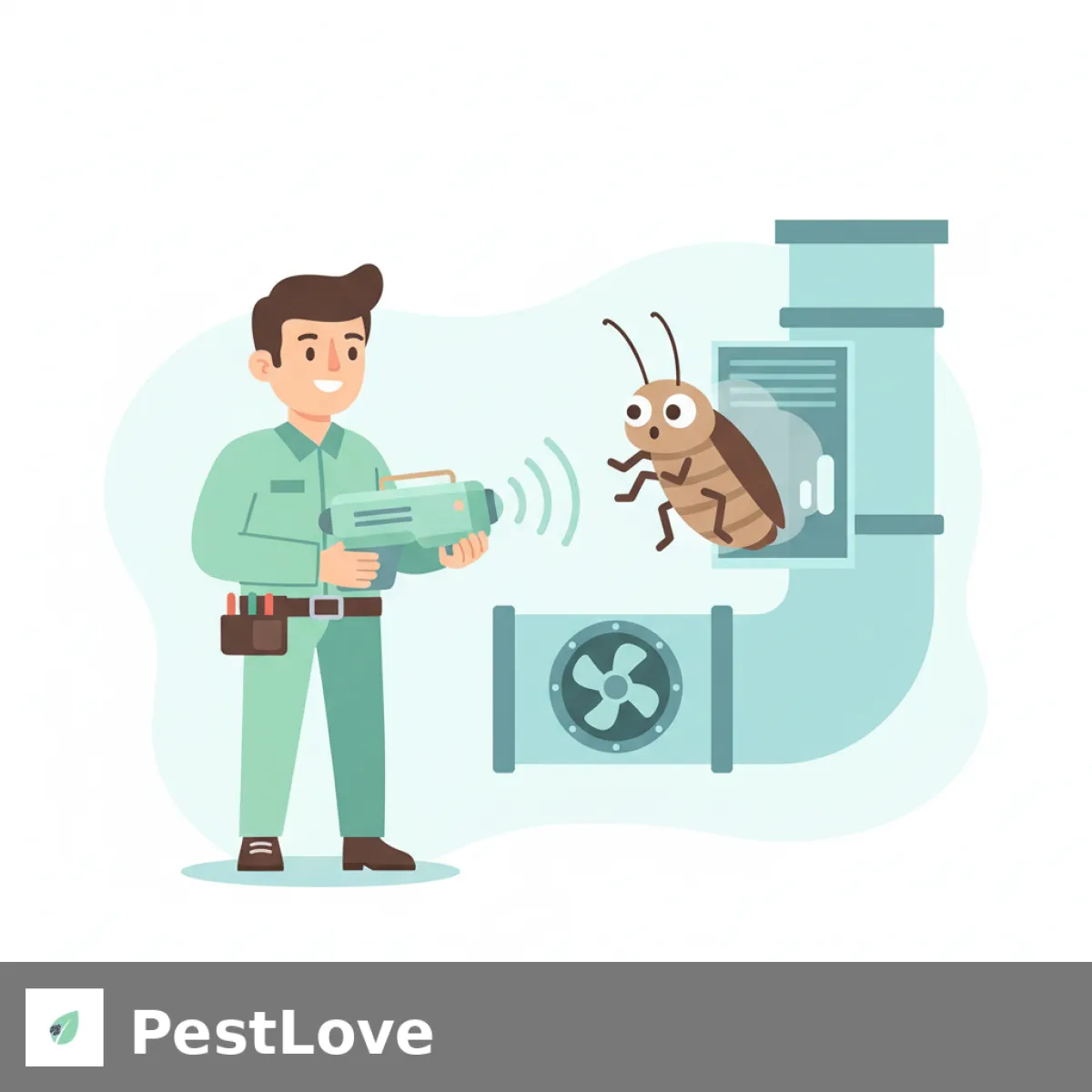
In commercial facilities, Heating, Ventilation, and Air Conditioning (HVAC) systems represent the circulatory system of the building. When German cockroaches (Blattella germanica) infest these systems, they transform from a localized nuisance into a facility-wide health hazard. Unlike infestations in kitchens or storage areas, HVAC infestations actively distribute pathogens and allergens through airflow, threatening the health of occupants and the regulatory standing of the business.
This guide outlines the Integrated Pest Management (IPM) protocols for identifying, treating, and preventing German cockroach infestations in commercial air handling units, ductwork, and mechanical rooms.
The HVAC Harborage: Why Cockroaches Invade Ventilation Systems
German cockroaches are thigmotactic, meaning they prefer tight, confined spaces where their bodies touch surfaces on multiple sides. Commercial HVAC systems provide an ideal environment that meets all their biological needs:
- Thermoregulation: Compressor motors and electrical control boards generate consistent warmth, allowing cockroaches to breed year-round regardless of external temperatures.
- Moisture Availability: Condensation pans, drain lines, and humidifiers within the Air Handling Unit (AHU) provide the water necessary for survival.
- Distribution Networks: Ductwork serves as a protected highway, allowing populations to spread between floors and rooms without exposure to light or predators.
Facilities with continuous food production or high organic waste are particularly vulnerable, as grease particles and food dust often accumulate in return air ducts, providing a food source directly within the harborage.
Inspection and Monitoring Protocols
Detecting activity inside enclosed ductwork requires specialized equipment and a systematic approach. Visual inspection of external grilles is insufficient.
1. Monitoring Trap Deployment
Glue boards should be placed strategically to map the infestation gradient. Key placement zones include:
- Return Air Vents: Place traps near the intake grilles where air (and potential foraging pests) enters the system.
- Mechanical Rooms: Place monitors near floor drains and the base of the AHU.
- Control Panels: Cockroaches often aggregate inside the electrical control boxes of HVAC units due to the heat generated by the electronics.
2. Borescope and Visual Analysis
For internal duct inspection, maintenance teams or pest management professionals (PMPs) utilize industrial borescopes to view void spaces without disassembling the system. Inspectors look for:
- Live Activity: Adult and nymph cockroaches clustering in corners or seams.
- Fecal Spotting: Dark specks (frass) adhering to duct walls or filters.
- Oothecae: Empty or viable egg cases glued to sheltered surfaces.
Sanitation and Environmental Modification
Successful eradication requires removing the factors sustaining the population. In HVAC systems, this primarily involves cleaning and moisture control.
Duct Cleaning and Sanitization: If ducts contain organic buildup (grease, skin cells, food dust), they must be professionally cleaned. HEPA vacuuming is critical to remove cockroach allergens (cast skins and feces) before they are recirculated. Standard vacuums should not be used, as they may exhaust allergens back into the air.
Moisture Management: Ensure condensate drain lines are free-flowing and not backing up. Standing water in drip pans must be eliminated. Leaking pipe unions within the mechanical chase should be repaired immediately.
Safe Treatment Protocols for Air Handling Systems
Treating HVAC systems presents a unique safety challenge: chemicals applied here can be blown directly into occupied spaces. Therefore, fogging and general liquid sprays are strictly contraindicated for internal ductwork in most scenarios.
1. Gel Baiting
Gel baits are the cornerstone of treating sensitive equipment. They are non-volatile and do not become airborne.
- Application Sites: Baits should be applied to structural crevices outside the direct airstream whenever possible, such as on the exterior casing of the motor, inside the electrical control box (carefully avoiding circuitry), and around the exterior frame of the vent.
- Rotation: To prevent resistance, rotation of bait classes is essential. See our guide on managing cockroach resistance for detailed chemical rotation strategies.
2. Insect Growth Regulators (IGRs)
Hydroprene or Pyriproxyfen devices (often in the form of point-source emitters) can be placed inside mechanical rooms or electrical boxes. These prevent nymphs from maturing into reproductive adults, effectively sterilizing the population over time. These must be secured so they do not dislodge into moving parts.
3. Silica Gel and Boric Acid Dusts
Desiccant dusts are highly effective but must be used with extreme caution. They can only be applied in void spaces (e.g., the wall void behind the duct) that are completely sealed off from the airflow. If dust enters the airstream, it becomes a respiratory irritant for building occupants.
Exclusion: Sealing the System
Once the population is knocked down, preventing re-entry is vital. This process aligns with GFSI pest control audit standards.
- Seal Penetrations: Use silicone or polyurethane sealant to close gaps where pipes and electrical conduits enter the air handler.
- Filter Integrity: Ensure high-quality filters fit tightly within their frames. A gap of just 1/16th of an inch is sufficient for a nymph to bypass the filter.
- Vent Screens: Install mesh screens behind grilles in high-risk areas (like storage rooms) to prevent entry, though care must be taken not to restrict airflow specifications.
When to Call a Professional
HVAC extermination is rarely a DIY task for facility managers due to the complexity of the machinery and the health risks involved. A licensed professional is required when:
- Disassembly is Required: Accessing the evaporator coils or blower wheel requires certified HVAC handling.
- Fumigation is Considered: In rare, severe cases where the entire building is empty, fumigation may be an option, but this requires rigorous legal and safety compliance.
- Audit Compliance: For facilities governed by health inspections or third-party audits, professional documentation of pesticide usage is mandatory.
For related infrastructure challenges, facility managers should also review protocols for controlling pests in drainage systems, which often connect indirectly to mechanical voids.
