
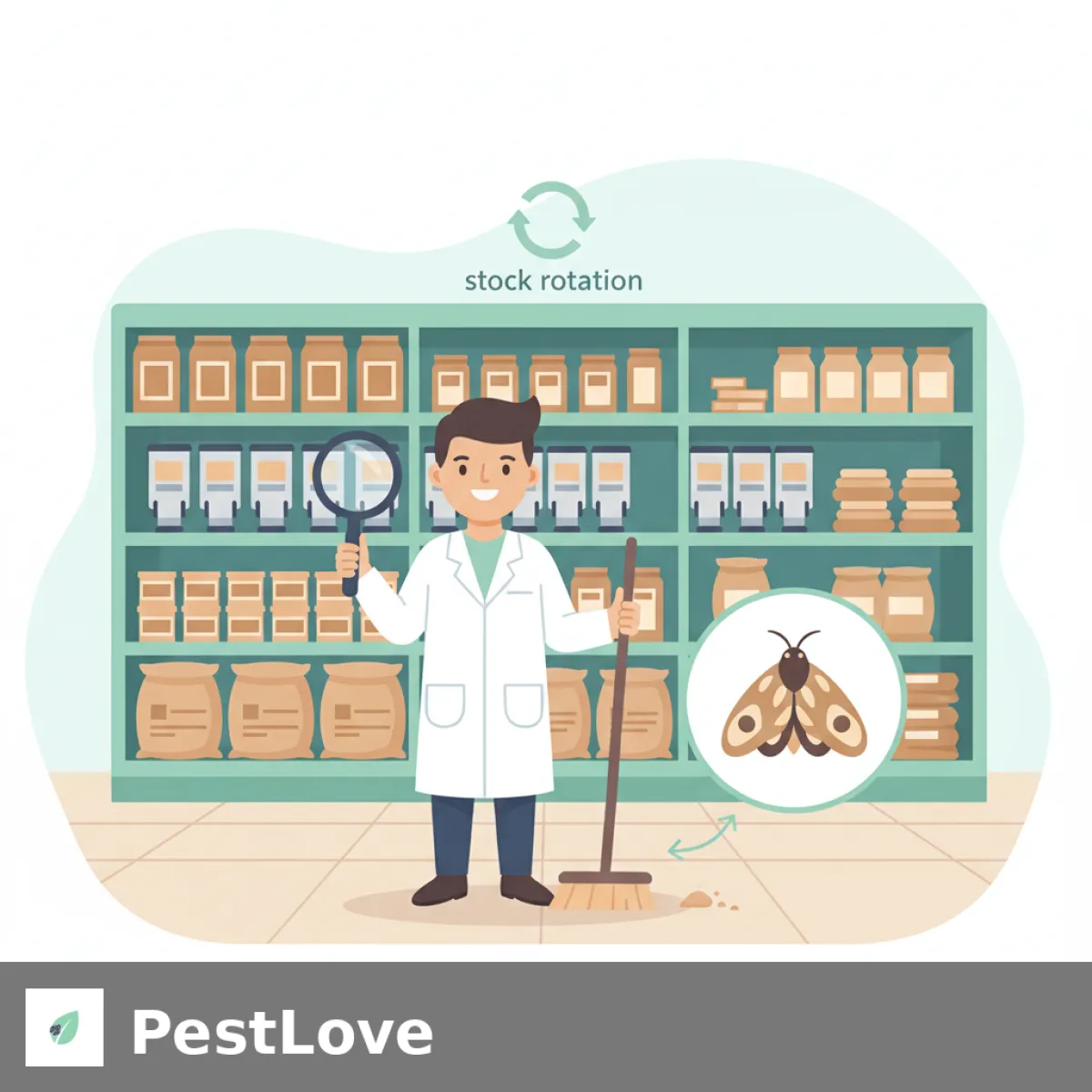
The High Cost of the "Pantry Moth" in Retail Environments
In the world of bulk food retail, few pests cause as much immediate financial damage and reputational harm as the Indian Meal Moth (Plodia interpunctella). As a pest management professional who has inspected countless bulk aisles—from zero-waste boutiques to large-scale health food supermarkets—I can tell you that these moths are not just a nuisance; they are a direct threat to your bottom line. Customers who find webbing in their granola or a larva in their flour bin do not return, and they often take their complaints to social media or health inspectors.
Unlike rodents, which typically hide their activity, Indian Meal Moths (IMMs) operate in plain sight. Their presence usually signals a breakdown in two specific areas: spillage management and stock rotation. In this guide, I will share the protocols I implement with my commercial clients to harden their facilities against these persistent stored product pests.
Identifying *Plodia interpunctella* in a Retail Setting
Before implementing control measures, your staff must be trained to identify the pest accurately. Misidentification often leads to ineffective treatments. The Indian Meal Moth is distinct in appearance:
- Adults: They are roughly 1/2 to 5/8 inch long. The key identifier is the wing pattern: the upper third is a pale gray, while the lower two-thirds are a coppery, reddish-brown. When resting, they appear triangular.
- Larvae: These are the damaging stage. They are off-white, sometimes with pinkish or greenish hues depending on their diet, with a brown head capsule. In a retail setting, you will often spot them crawling up walls or shelving units, looking for a place to pupate.
- Signs of Infestation: The most obvious sign is silken webbing inside bins, often clumping grains or nuts together near the surface. You may also see "frass" (granular droppings) at the bottom of gravity dispensers.
If you are managing a larger storage facility attached to your retail space, I recommend reviewing our guide on Indian Meal Moth Eradication for Organic Food Warehouses for back-of-house specific protocols.
The "Top-Off" Trap: Why Stock Rotation Failures Feed Moths
The single most common behavior I see that leads to infestation is "topping off" bins. This is the practice of pouring new product on top of old product in a gravity dispenser or scoop bin. From a pest management perspective, this is disastrous.
When you top off a bin, the product at the bottom—the "oldest" inventory—remains stagnant. This creates an undisturbed environment where moth eggs can hatch and larvae can develop without interruption. I have dismantled gravity bins where the top layer looked pristine, but the bottom three inches were a solid mass of webbing and larvae that had been undisturbed for months.
The Strict FIFO Protocol
To prevent this, you must enforce a strict First-In, First-Out (FIFO) policy that includes a cleaning cycle:
- Run it Dry: Do not refill a bin until it is empty or nearly empty.
- Isolate and Clean: Remove the bin from the shelf. Empty any remaining residue into the trash (do not mix it with the new batch).
- Sanitize: Wash the bin with hot, soapy water. Ensure it is bone-dry before refilling; moisture can lead to mold and attract other pests like the Mediterranean Flour Moth.
- Refill: Only then should the new product be added.
Managing Spillage: The Invisible Breeding Ground
In bulk retail, spillage is inevitable. However, where that spillage goes is what determines your pest risk. While your staff likely sweeps the visible aisles, the real danger lies in the "hidden zones":
- Under Kickplates: The space beneath the shelving units is often a graveyard of spilled oats, rice, and nuts. I frequently find thriving moth populations living entirely off debris that has been kicked under the shelves.
- Dispenser Mechanisms: The crevices around the handles and spouts of gravity bins accumulate flour dust and crumbs. This is sufficient food for larvae.
- Behind the Rack: If your shelving units are not on wheels, debris accumulates between the unit and the wall.
The "Deep Clean" Schedule
General sweeping isn't enough. You need a Master Sanitation Schedule:
- Daily: Vacuum visible spillage. Brooms often just push eggs into cracks; HEPA vacuums remove them.
- Weekly: Inspect the catch-trays under gravity bins. Wipe down the exterior of all bins.
- Monthly: Remove kickplates and vacuum underneath shelving units. Move gondolas if possible to clean behind them.
If you are also noticing rodent issues alongside moth activity, your spillage management is likely the root cause for both. Consult our guide on Rodent Exclusion Protocols for Food Warehouses for integrated sanitation strategies.
Monitoring with Pheromone Traps
Pheromone traps are an essential tool for the bulk retailer, but they must be used correctly. These traps use a synthetic sex pheromone to attract male moths.
Correct Usage:
- Monitoring, Not Control: Traps will not eradicate an infestation. They are an early warning system. Capturing males prevents them from mating, but it doesn't kill the egg-laying females already present.
- Placement: Do not place traps directly on the food bins. This can lure moths toward the food. Place them in a grid pattern away from the immediate product, near the ceiling (as heat rises, so do pheromones).
- Interpretation: A sudden spike in the catch count indicates a new emergence or a contaminated delivery. Use this data to pinpoint the source.
When to Call a Professional
While sanitation and rotation are your primary defenses, a severe infestation requires professional intervention. If you are seeing moths flying during the day, or if you find larvae in multiple unconnected bins, you have a structural infestation.
A professional can perform:
- Crack and Crevice Treatments: Applying insect growth regulators (IGRs) into the shelving joints where larvae pupate, without contaminating food surfaces.
- Fumigation: In extreme cases, off-site fumigation of contaminated pallets may be necessary.
- Mating Disruption: For large stores, we can install mating disruption dispensers that saturate the air with pheromones, confusing males and effectively stopping reproduction.
Remember, the goal in bulk retail is not just to kill pests, but to maintain a sterile, trusting environment for your customers. By managing spillage and enforcing strict stock rotation, you starve the Indian Meal Moth out of your facility.
Key Takeaways for Retail Managers
- Never Top Off: Always empty and clean bins before refilling.
- Vacuum, Don't Sweep: Vacuums remove eggs; brooms spread them.
- Check the Hidden Zones: Under kickplates and behind shelving is where the population survives.
- Inspect Deliveries: Check pallets for webbing before they enter your sales floor.