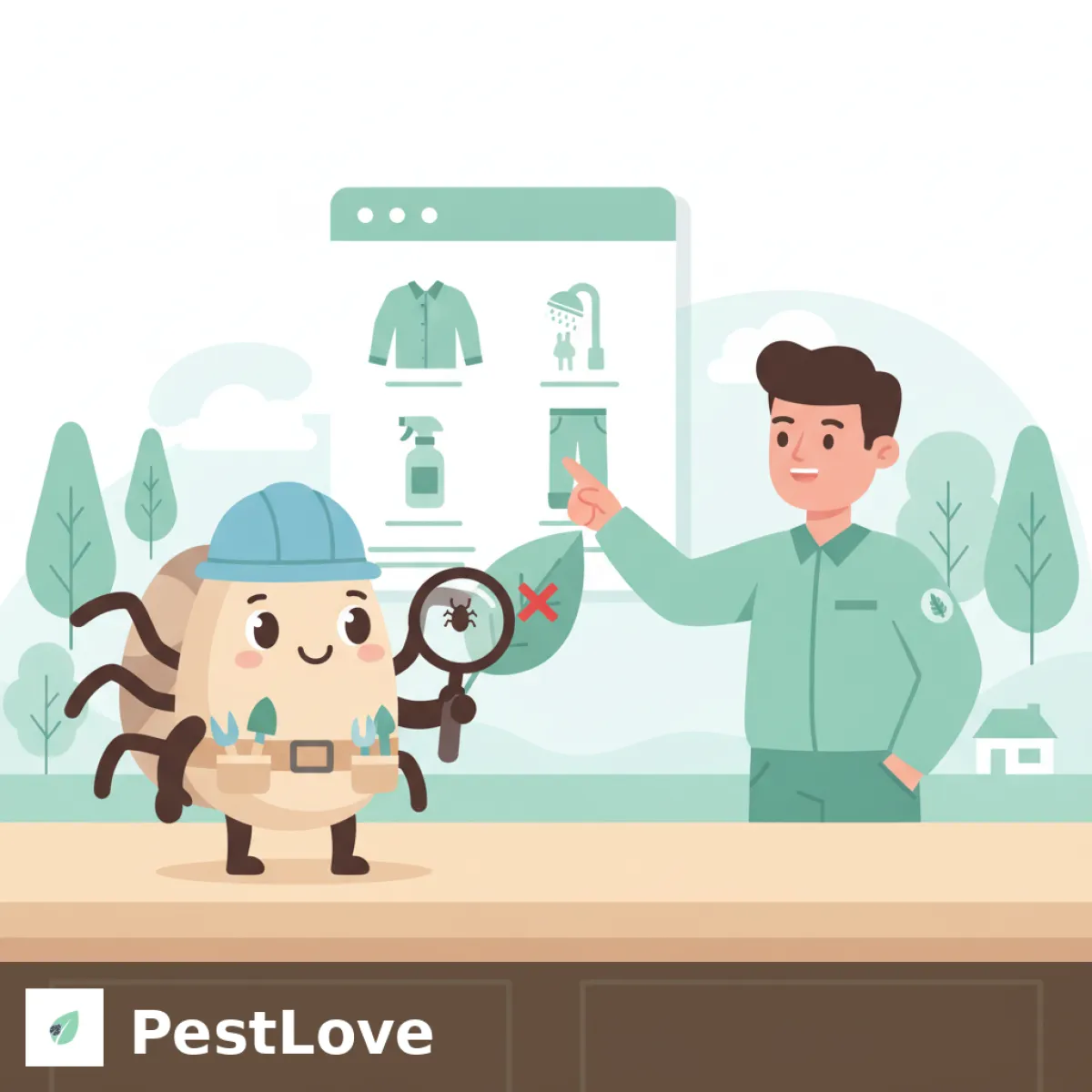
Executive Summary: The Occupational Risk of Vector-Borne Illness
For forestry workers, arborists, and landscaping crews, exposure to Borrelia burgdorferi—the bacterium causing Lyme disease—is not merely a possibility; it is an occupational hazard. The Centers for Disease Control and Prevention (CDC) reports that Lyme disease is the most common vector-borne disease in the United States, with outdoor workers facing significantly higher transmission rates than the general public. Effective prevention requires a tiered Integrated Pest Management (IPM) strategy that combines landscape modification, rigorous Personal Protective Equipment (PPE) standards, and chemical prophylaxis.
Key Takeaways for Safety Managers
- Vector Identification: The Blacklegged Tick (Ixodes scapularis) is the primary vector. Nymphs, active in late spring and summer, pose the greatest risk due to their small size.
- Chemical Barriers: Permethrin-treated clothing provides the most effective passive defense for workers.
- Habitat Management: modification of "edge habitats" can reduce tick density in work zones.
- Post-Shift Protocol: Mandatory tick checks and hot drying of work clothes are critical non-chemical interventions.
The Vector: Identifying Ixodes scapularis in the Field
Lyme disease is transmitted primarily by the Blacklegged Tick (often called the Deer Tick). Unlike larger dog ticks, Ixodes species are diminutive. Adult females are reddish-brown and approximately the size of a sesame seed, while nymphs—which are responsible for the majority of human infections—are roughly the size of a poppy seed. Understanding the life cycle is crucial for worker safety.
These arachnids do not jump or fly. They employ a strategy known as "questing," where they hold onto leaves and grass with their third and fourth pair of legs while holding the first pair outstretched, waiting to latch onto a passing host. Forestry crews moving through brush or landscapers maintaining perimeter vegetation are prime targets.
PPE Standards and Chemical Repellents
The first line of defense in occupational tick prevention is mechanical and chemical exclusion.
Permethrin-Treated Clothing
Research consistently demonstrates that clothing treated with 0.5% permethrin is highly effective at preventing tick bites. Unlike skin repellents, permethrin is an acaricide that kills ticks on contact. Ideally, work uniforms should be pre-treated factory-dipped garments, which retain efficacy for up to 70 washes. For crews using DIY sprays, re-treatment is necessary every few washes. Note: Permethrin should never be applied directly to the skin.
EPA-Registered Skin Repellents
For exposed skin, workers should utilize repellents registered with the Environmental Protection Agency (EPA). The most effective active ingredients include:
- DEET (20-30%): The gold standard for long-duration protection.
- Picaridin (20%): A synthetic compound resembling piperine (from pepper plants), offering similar protection to DEET without the plastic-melting properties.
- IR3535: Effective but may require more frequent reapplication.
Landscaping managers should ensure these repellents are available as part of standard occupational safety kits.
Landscape Modification and Site Management
For landscaping crews maintaining specific properties, IPM principles can reduce local tick populations. Ticks require high humidity to survive and desicate quickly in direct sunlight.
The 3-Meter Buffer Zone
Ticks thrive in the ecotone—the transitional edge between wooded areas and manicured lawns. Maintaining a 3-meter (approx. 9-foot) barrier of wood chips or gravel between forest edges and recreational areas restricts tick migration. This barrier dries out the ground, making it inhospitable for questing ticks.
Vegetation Management
Removing leaf litter and keeping grass mowed below 3 inches reduces shelter for small mammals (mice and chipmunks) that serve as primary reservoirs for Lyme bacteria. Invasive plant removal is also critical; dense stands of Japanese barberry or honeysuckle maintain microclimates with high humidity, favoring tick survival.
Post-Shift Decontamination Protocols
Transmission of Lyme disease typically requires the tick to be attached for 36 to 48 hours. This window of opportunity makes daily checks a vital safety protocol.
- Dryer First: Upon returning home, workers should place work clothes directly into a dryer on high heat for 10 minutes before washing. Ticks can survive a wash cycle but succumb quickly to desiccation.
- Full-Body Check: Workers must inspect high-risk areas: underarms, in and around ears, inside the navel, behind knees, and in the hair.
- Shower Immediately: Showering within two hours of coming indoors has been shown to reduce the risk of Lyme disease, likely by washing away unattached ticks.
When to Implement Professional Acaricide Applications
In high-burden areas where cultural controls are insufficient, targeted acaricide applications may be necessary. This is particularly relevant for public parks or high-traffic commercial landscapes. Pyrethroid sprays applied to perimeter vegetation (not open lawns) can significantly reduce nymphal tick density.
However, broadcast spraying should be used judiciously to minimize impact on non-target pollinators. Professional pest management services can employ mist blowers that penetrate the leaf litter where ticks seek shelter, ensuring maximum efficacy with minimal environmental drift.
Emergency Response: Tick Removal
If a tick is found attached to a worker:
- Removal: Use fine-tipped tweezers to grasp the tick as close to the skin's surface as possible. Pull upward with steady, even pressure. Do not twist or jerk the tick.
- Identification: Save the tick in a sealed bag or jar with alcohol for identification if symptoms develop.
- Documentation: Report the incident to the site safety manager for workers' compensation records.
Early symptoms of Lyme disease include fever, chills, headache, fatigue, muscle and joint aches, and swollen lymph nodes. The characteristic "bull's-eye" rash (Erythema migrans) occurs in approximately 70-80% of infected persons but is not always present.