
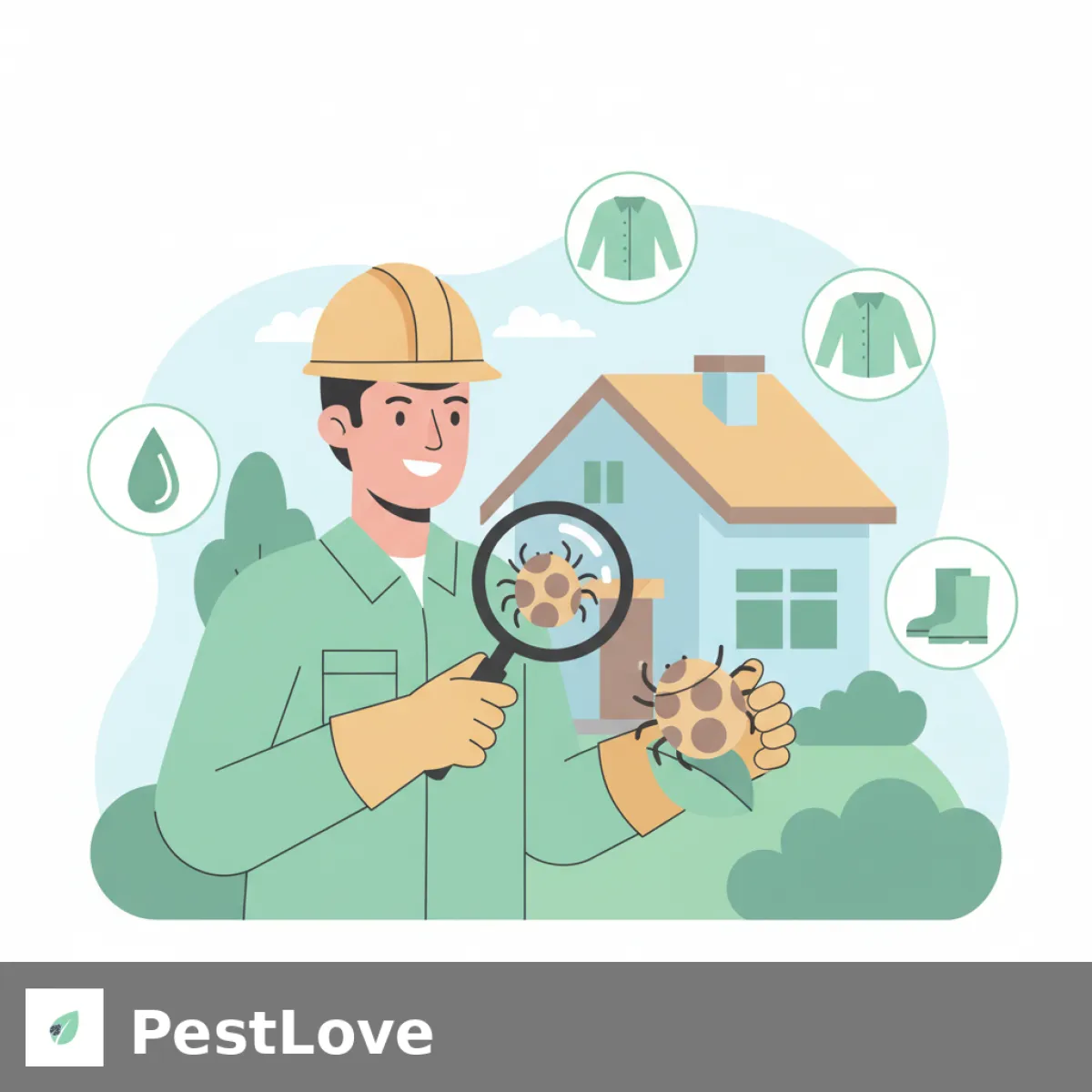
The Invisible Hazard on the Right-of-Way
In my years consulting for vegetation management and utility safety programs, I’ve seen safety briefings cover everything from arc flashes to chainsaw kickback. Yet, one of the most debilitating risks often gets a cursory mention: the black-legged tick (Ixodes scapularis). For utility workers, pipeline inspectors, and lineworkers, the "office" is often deep in the prime habitat of these arachnids—overgrown Right-of-Ways (ROWs), forest edges, and tall grasses.
Lyme disease, caused by the bacterium Borrelia burgdorferi, is not just a nuisance; it is an occupational hazard that can lead to long-term disability, joint pain, and neurological issues if untreated. Unlike a backyard gardener, a utility worker cannot simply "avoid" tall grass. Your job requires you to go where the infrastructure is, regardless of the biological threats present. This guide outlines professional-grade protocols for preventing tick bites specifically tailored for the rugged, variable environments of utility maintenance.
Understanding the Threat: Why ROWs are Tick Hotspots
Right-of-Ways are essentially artificial "edge habitats." Ecologically, these transition zones between dense forest and open land are where deer, mice, and other tick hosts congregate to feed. This makes utility corridors ground zero for tick populations.
The primary vector for Lyme disease is the black-legged tick (often called the deer tick). In their nymphal stage (spring and early summer), they are the size of a poppy seed, making them incredibly difficult to spot on safety gear. They do not jump or fly; they engage in "questing," holding onto vegetation with their back legs and reaching out with their front legs to latch onto a passing host—like a lineman’s boot or pant leg.
For a broader understanding of occupational risks in similar fields, refer to our guide on Occupational Tick Prevention: Safety Guidelines for Landscapers and Forestry Workers.
Layer 1: Exclusion and PPE Protocols
The first line of defense is mechanical exclusion. Standard issue FR (Fire Resistant) clothing provides a base, but specific modifications are necessary for tick safety.
- The Tuck Rule: It looks old-fashioned, but it saves lives. Pant legs must be tucked into boots, and shirts tucked into pants. This forces ticks to crawl up the outside of your clothing rather than gaining access to your skin.
- Light-Colored Gear: While high-vis orange or yellow is standard for visibility, light-colored pants (khaki or light grey) make dark crawling ticks significantly easier to spot before they attach.
- Permethrin-Treated Uniforms: This is the gold standard for industry. Unlike DEET, which is applied to skin, Permethrin is a contact insecticide applied to fabric. Ticks that crawl on Permethrin-treated FR clothing die or drop off. Many safety supply vendors now offer factory-treated FR workwear that retains efficacy for 70+ washes.
Layer 2: Chemical Repellents
When mechanical barriers aren't enough, chemical repellents are mandatory. However, utility workers must be careful with what they apply, especially around rubber goods and flame-resistant coatings.
- Skin Application: Use EPA-registered repellents containing DEET (20-30%) or Picaridin on exposed skin (neck, hands). Picaridin is often preferred in industrial settings because it is less likely to damage plastics and gear compared to high-concentration DEET.
- Frequency: Sweat and friction reduce efficacy. Reapply repellents every 4-6 hours during a shift, especially in humid conditions.
Layer 3: Behavioral Adjustments on the Job Site
We can't always choose the terrain, but we can choose how we interact with it.
- Staging Areas: Set up tool staging areas and hydration stations on paved surfaces or bare dirt whenever possible, rather than in the grass.
- Avoid "Tick Drag": Do not sit on logs, stumps, or the ground during breaks. These are often nesting sites for mice, the primary reservoir for Lyme disease.
- Vegetation Management: If clearing brush, work from the "safe" zone into the brush, rather than standing deep in the vegetation. Use mechanical trimmers to widen paths before walking through them.
Post-Shift Protocol: The "Buddy Check" and Hygiene
The most critical window for Lyme prevention is the first 24 hours. Research suggests that the Lyme bacterium typically requires the tick to be attached for 36-48 hours to transmit the infection. This gives you a safety buffer, provided you are diligent.
The Inspection Routine
Before leaving the shop or immediately upon returning home, perform a thorough check. Ticks prefer warm, moist areas.
- Key Check Zones: Underarms, in and around ears, inside the belly button, back of the knees, in and around the hair, between the legs, and around the waist.
- Gear Quarantine: Do not throw field clothes on the bedroom floor. Ticks can survive on clothing and move to family members or pets. Place work clothes directly into the dryer on high heat for 10 minutes before washing to kill any hitchhikers.
For those managing crews who may also have domestic risks, understanding general tick dangers is vital. See our article on Dangers of Tick Bites in Children to understand why gear quarantine protects your family.
Proper Tick Removal Technique
If you find an embedded tick, do not panic, and do not use "folk remedies" like burning it with a match, covering it in petroleum jelly, or using nail polish. These methods can cause the tick to regurgitate infectious fluids into your bloodstream.
- Use Fine-Tipped Tweezers: Grasp the tick as close to the skin's surface as possible.
- Pull Upward Steady: Pull with steady, even pressure. Do not twist or jerk the tick; this can cause the mouth-parts to break off and remain in the skin.
- Disinfect: After removing the tick, thoroughly clean the bite area and your hands with rubbing alcohol or soap and water.
- Save the Specimen: In an occupational setting, it is wise to tape the tick to an index card with the date and location of the bite. If symptoms develop, having the specimen can speed up medical diagnosis.
When to Seek Medical Attention
Lyme disease is notoriously difficult to diagnose in its early stages. Monitor the bite site for 30 days. Look for the expanding red rash (Erythema migrans), often resembling a bull's-eye. However, be aware that up to 30% of infected individuals never develop the rash.
Watch for flu-like symptoms: fever, chills, fatigue, body aches, and swollen lymph nodes. If these occur, seek medical attention immediately and inform the physician of your occupational exposure to tick habitats. Early treatment with antibiotics is highly effective.
A Note for Safety Managers
Integrating tick safety into your ISP (Injury and Safety Program) is not optional in endemic regions. Provide tick removal kits in all fleet vehicles. Schedule seasonal safety talks in early spring (nymph season) and late fall (adult tick season). Consider partnering with uniform suppliers who offer pre-treated Permethrin garments.
Furthermore, ensure your team understands the risks extend beyond the job site. If workers take company trucks home, ensure they aren't transporting pests to their own driveways. For related insights on preventing pests from traveling with you, read our guide on Protecting Pets from Early Season Ticks, which covers vector transport principles applicable here.
Key Takeaways
- Treat the Clothes: Permethrin-treated FR clothing is the most effective barrier for utility workers.
- Defend the Skin: Use Picaridin or DEET on exposed skin, reapplying every 4 hours.
- Dry on High: Put work clothes in the dryer on high heat immediately upon getting home to kill hitchhiking ticks.
- Don't Wait: Remove ticks immediately using tweezers; do not wait for a shift to end.
