
The Economic Imperative of Pre-Construction Mitigation
In commercial development, the cost of installing a comprehensive termite management system during construction is fractional compared to the expense of post-construction remediation. For large-scale assets—ranging from logistics warehouses to multi-story office complexes—termite intrusion represents not only a threat to structural integrity but a significant liability regarding asset value and operational continuity.
Integrated Pest Management (IPM) standards dictate that exclusion is the primary line of defense. Relying solely on concrete slabs or post-construction reactive treatments is scientifically insufficient for areas with high subterranean termite pressure. This guide outlines the industry standards for pre-construction barriers, focusing on the biological behaviors of Reticulitermes (Subterranean termites) and Coptotermes (Formosan termites).
Understanding the Subterranean Threat
Termites are relentless foragers capable of exploiting cracks as narrow as 1.5mm (1/64 of an inch). While concrete itself is inedible, standard concrete slabs are prone to shrinkage cracks, cold joints, and service penetrations (plumbing, electrical) that offer direct pathways from the soil to the structure. Species such as the Eastern Subterranean Termite (Reticulitermes flavipes) and the highly aggressive Formosan Termite (Coptotermes formosanus) construct mud tubes to traverse non-cellulose materials, seeking timber framing, drywall paper, or archival paper storage within the facility.
For property managers, understanding these biological vectors is crucial. Early detection is difficult once the slab is poured; thus, the barrier must be absolute before the concrete cures. See our guide on spotting termite swarms in foundations for indicators of barrier failure in existing structures.
Physical Barrier Systems: The IPM Gold Standard
Physical barriers are designed to force termites into the open where they can be visually detected, or to physically block their passage completely. These systems are permanent and do not degrade over time like chemical treatments.
Stainless Steel Mesh
Marine-grade stainless steel mesh (often 316 grade) is virtually impenetrable to termites. This mesh is typically clamped around service penetrations (pipes) and installed across cold joints or the entire slab footprint. The aperture size of the mesh is engineered to be too small for termites to pass through, effectively sealing the building envelope from the soil up.
Graded Stone Particles
Also known as basaltic termite barriers (BTB), this method utilizes crushed rock particles of a specific size range. When compacted, the particles are too large for termites to move and the voids between them are too small for termites to squeeze through. This is an environmentally sustainable option often used in conjunction with concrete slabs.
Chemical Soil Treatments and Reticulation
While physical barriers are preferred for longevity, chemical soil barriers remain a common industry standard. Modern non-repellent termiticides (such as fipronil or imidacloprid) are applied to the soil pad immediately prior to the concrete pour. These chemicals create a treated zone that eliminates termites upon contact or ingestion.
Reticulation Systems
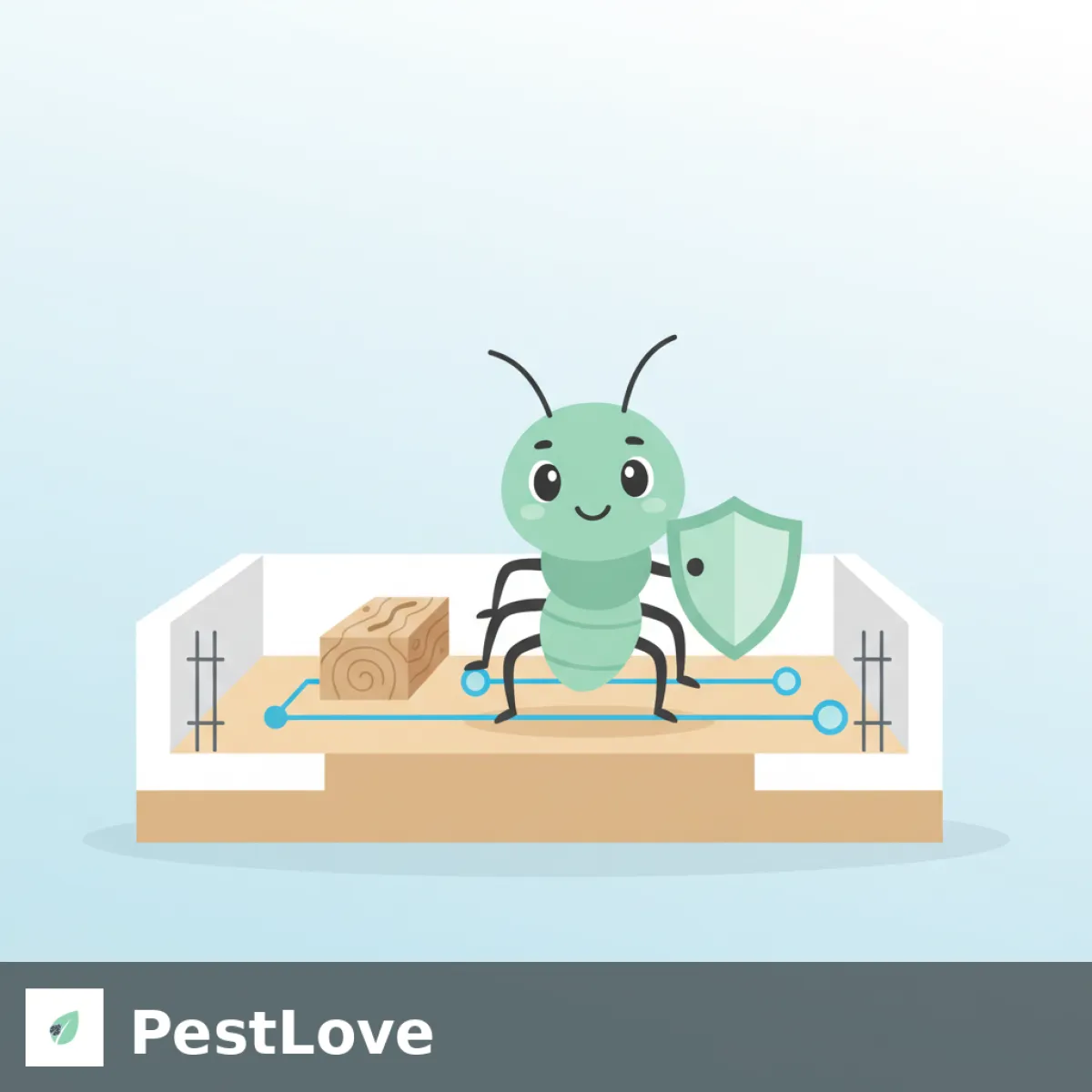
The primary limitation of chemical barriers is their lifespan (typically 5–10 years). To address this in commercial developments with vast footprints, reticulation systems are installed. These consist of a network of perforated piping installed within the fill or under the slab before pouring. This allows for the precise replenishment of termiticides years later without the need for disruptive drilling or excavation.
For developments in high-risk tropical zones, referencing specific regional compliance is necessary. See our report on regulatory compliance in Southeast Asian development for a comparative perspective on chemical load requirements.
Critical Integration Points: Penetrations and Joints
The weakest points in any commercial slab are the penetrations. A monolithic slab offers decent protection, but every pipe rising through the floor is a potential highway for infestation. Standards require:
- Penetration Collars: Plastic or mesh collars embedded in the concrete around pipes.
- Expansion Joint Sealing: Flexible, termite-resistant sealants used in control joints.
- Perimeter Protection: Ensuring the exterior beam is treated or protected to prevent external mud tubing.
Failure to secure these points is a primary cause of infestation in new builds. While older structures require complex mitigation for heritage wooden structures, new commercial builds have the advantage of engineered exclusion.
Engaging a Professional During Design
Effective termite management begins at the architectural drawing board. Commercial developers must engage a licensed Pest Management Professional (PMP) during the design phase to specify the appropriate barrier system based on local soil conditions, water table levels, and pest pressure.
For property managers taking over new buildings, verify the type of system installed and the warranty documentation. Regular inspections remain mandatory, even with barriers in place. Be vigilant for Formosan swarm detection during peak seasons, as barriers divert termites but do not eradicate local colonies.
