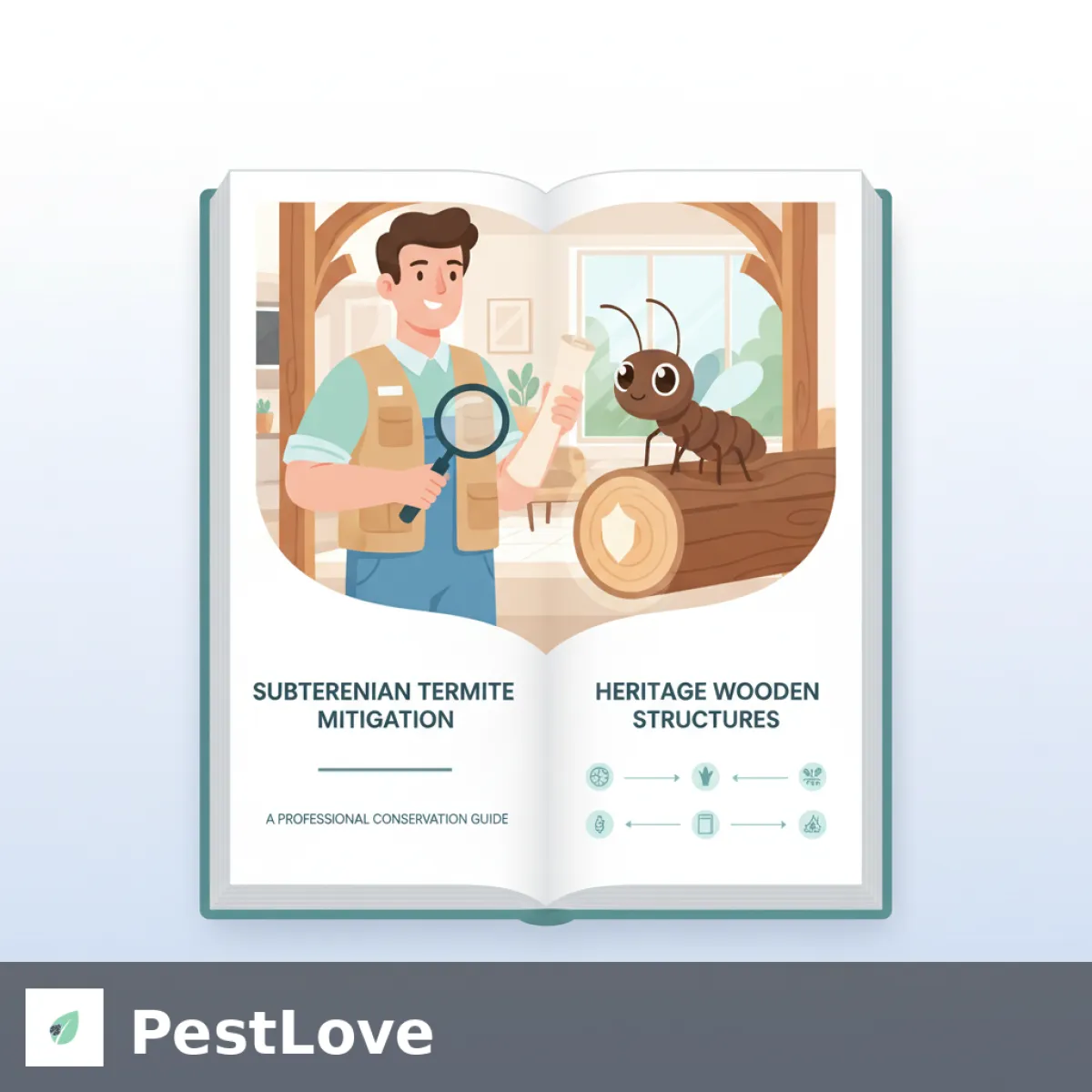
The Intersection of Entomology and Historic Preservation
In the world of pest management, few challenges are as high-stakes as treating a heritage structure. When I step onto a property listed on a historic register, the standard rulebook changes. We aren't just protecting wood; we are protecting history. Subterranean termites (primarily of the genus Reticulitermes) are the single greatest biological threat to historic timber-framed buildings, often causing irreversible damage before a single sign is visible to the untrained eye.
Heritage structures are uniquely vulnerable. They often feature wood-to-ground contact, stone foundations with high moisture permeability, and cellulose-rich old-growth timber that, while dense, has had centuries to soften in damp microclimates. Unlike modern construction, you cannot simply rip out a damaged 18th-century beam and replace it without diminishing the building's cultural value.
This guide outlines the professional protocols for identifying, treating, and preventing Subterranean termite infestations specifically within the context of historic preservation.
Identifying the Threat in Aged Timber
Distinguishing active termite damage from centuries of settling, dry rot, or previous inactive infestations requires a keen eye. In my field assessments of historic properties, I look for specific anomalies that differ from standard residential signs.
1. Mud Shelter Tubes on Historic Masonry
Subterranean termites require moisture and protection from desiccation. They build mud tubes to travel from the soil to the wood. On rough-hewn stone or historic brick foundations, these tubes can blend seamlessly with the mortar. I often find them tucked behind ivy or rising through the center of rubble-filled foundation walls, emerging directly into the sill plate.
2. The "Paper-Thin" Phenomenon
Historic finishes—varnishes, lead paints, and veneers—often hold their shape even when the wood beneath is gone. A common diagnostic technique is "sounding" the wood with a specialized mallet or screwdriver handle. Solid old-growth oak should ring; a hollow thud indicates internal excavation. I have encountered structural posts in colonial-era basements that looked pristine but crumbled under mere finger pressure because termites had eaten the springwood, leaving only the paint and the harder summerwood grain.
3. Swarmers (Alates) Indoors
Seeing winged termites inside a historic structure is a confirmed emergency. It implies a mature colony is likely living within or directly beneath the structure. For more on distinguishing these from ants, review our guide on termite swarms vs. flying ants.
Conservation-Focused Mitigation Strategies
The golden rule of historic preservation is "Do No Harm." Standard high-pressure liquid injections or indiscriminate drilling can stain delicate masonry, damage historic flooring, or introduce excess moisture. We employ specialized Integrated Pest Management (IPM) techniques for these sensitive environments.
Non-Invasive Detection Technology
Before we treat, we map. To avoid removing historic wainscoting or plaster unnecessarily, we utilize:
- Thermal Imaging: Active termite aggregations generate heat. High-resolution infrared cameras can detect these heat signatures inside wall voids without invasive probes.
- Acoustic Emission Devices: Termites are noisy eaters. Specialized stethoscopes can detect the rhythmic tearing of wood fibers, allowing us to pinpoint activity centers without drilling exploratory holes.
- Moisture Meters: Subterranean termites follow water. Mapping moisture content in a stone foundation helps us predict entry points.
The Baiting Paradigm
For heritage sites, termite baiting systems are often the preferred methodology over liquid barrier treatments. Liquid treatments require trenching around the foundation (which may disturb archaeological layers) or drilling through foundation slabs (risking historic floors).
Bait stations are installed in the soil around the perimeter. Foraging termites locate the station, consume the bait containing a chitin synthesis inhibitor, and share it with the colony. This leads to colony elimination without pumping hundreds of gallons of chemical into the historic soil matrix. It is reversible, non-invasive, and scientifically proven.
Targeted Borate Applications
For accessible unfinished wood (like attic rafters or floor joists visible from a basement), we apply borate-based solutions. Borates diffuse into the wood fibers, creating a barrier that remains toxic to termites for decades but is non-toxic to mammals. This acts as a stomach poison for any termite attempting to eat the treated timber.
Structural Modifications and Moisture Control
You cannot cure a termite problem in a heritage building without addressing the environmental conditions that invited them. Subterranean termites are relentless in their pursuit of moisture.
- Ventilation: Many historic crawlspaces suffer from dead air pockets. Installing passive ventilation or humidity-controlled fans is critical to drying out the substructure.
- Wood-to-Ground Contact: This is a cardinal sin in modern building codes but common in history. We often recommend a "sacrificial" intervention—carefully lifting posts onto discreet steel or stone plinths to break the contact with the soil.
- Drainage: Ensure that centuries-old gutters and downspouts are actually diverting water away from the foundation. I frequently see limestone foundations eroded by water, creating perfect highways for termites.
When to Call a Specialist
Heritage termite mitigation is not a DIY project. The risk of losing irreplaceable historical fabric is too high. If you manage a museum, a registered historic home, or a commercial venue in a repurposed building, you need a professional who understands both entomology and construction pathology.
A general pest control operator might solve the bug problem but destroy the building's character in the process. Look for specialists certified in IPM who have a portfolio of heritage work. For immediate steps on protecting the perimeter, consult our professional guide to termite prevention.
Key Takeaways for Property Managers
- Inspection is Vital: Annual inspections by a heritage specialist are non-negotiable.
- Prioritize Baiting: Ask for baiting systems to minimize structural intrusion.
- Control Moisture: A dry building is a resilient building.
- Document Everything: Keep detailed records of all treatments for future conservators.