
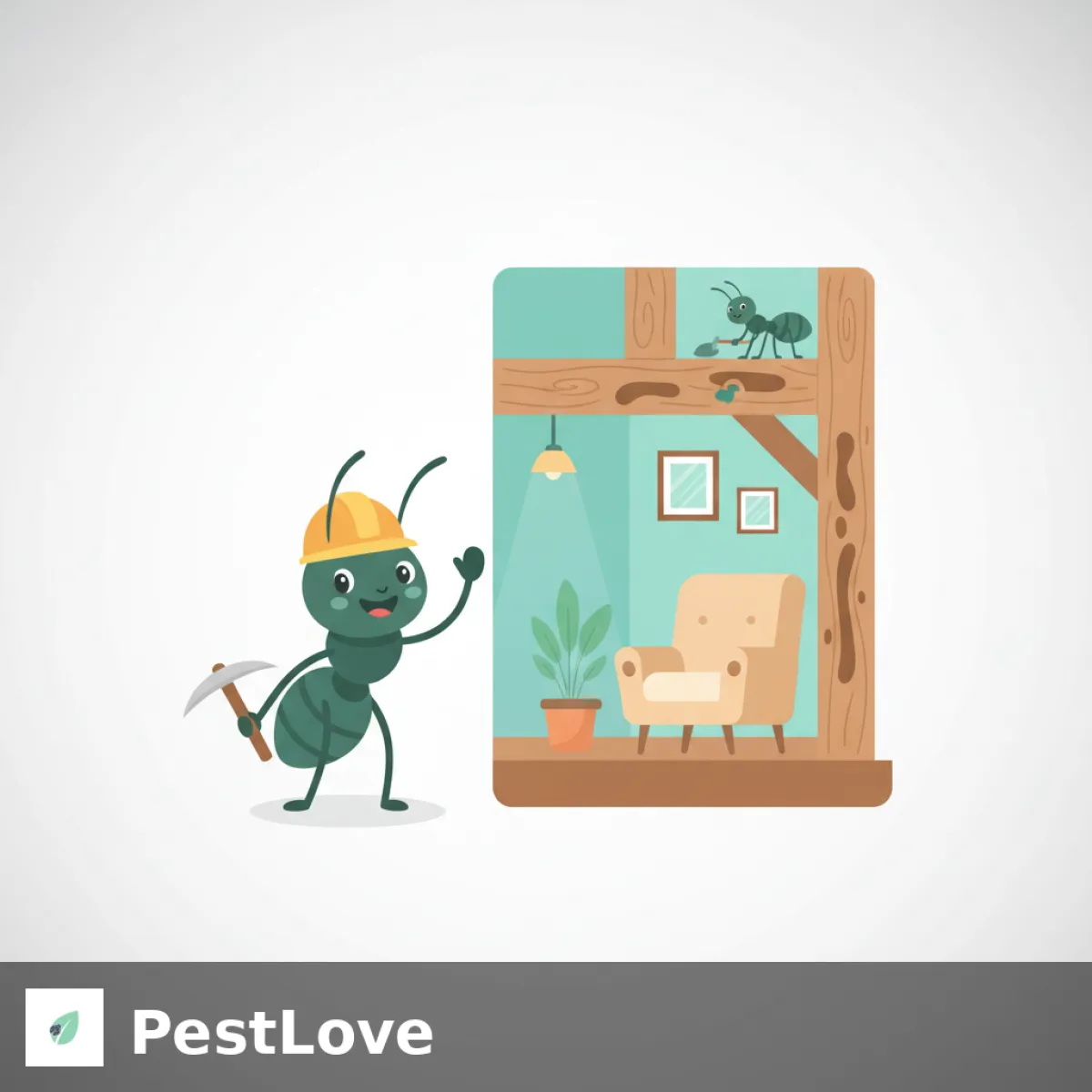
The Silent Threat to Heavy Timber Construction
In my years inspecting timber-framed lodges—from ski resorts in the Rockies to lakeside cabins in Europe—I have found that the most substantial threats often go unheard until the damage is critical. While termites often get the headline for wood destruction, Carpenter Ants (Camponotus spp.) are uniquely dangerous to the heavy timbers used in lodge construction.
Unlike termites, carpenter ants do not eat wood. They excavate it. They are meticulous engineers, carving out smooth, sandpaper-like galleries inside your beams to house their colonies. For a lodge owner, this distinction is vital: the damage is often hidden deep within load-bearing members, masking structural compromise until a beam sags or a deck support fails. This guide details the professional protocols for identifying excavation and mitigating risks to your property and guests.
1. The Biology of Excavation: Understanding the Enemy
To stop the damage, you must understand the behavior. Carpenter ants are polymorphic, meaning workers vary in size. The large, black ants often seen foraging are usually looking for food or moisture. However, the real threat lies in their nesting habits.
- Parent vs. Satellite Nests: The primary colony (parent nest) with the queen is typically located outdoors in decaying wood, such as tree stumps or landscaping ties. The ants infesting your lodge are likely establishing satellite nests to rear brood in a warmer, stable environment.
- Moisture Dependency: Camponotus prefer wood with a moisture content over 15%. In lodges, I frequently find them exploiting areas with minor water intrusion: around chimney flashings, hot tub decks, or eaves with clogged gutters.
2. Visual and Auditory Inspection Protocols
Detecting carpenter ants in heavy timber requires a different approach than standard drywall construction. Here are the field signs I look for during a structural audit:
The Frass Indicator
Because they don't consume the wood, they must eject the debris. Look for frass—which looks like fine wood shavings or sawdust—accumulating below beams, window sills, or baseboards. Unlike termite 'kick-out' pellets, which are uniform and hard, carpenter ant frass often contains insect parts and looks like pencil sharpener shavings.
The 'Hollow' Sound
In timber framing, I use a sounding hammer (or the handle of a heavy screwdriver) to tap along the length of beams. Solid wood returns a sharp, crisp ring. Excavated wood sounds dull or hollow. If a 10-inch beam sounds hollow for a span of 3 feet, you have a significant excavation that requires immediate professional assessment.
Auditory Activity
It sounds like fiction, but in a quiet lodge, you can often hear a large infestation. If you press your ear (or a stethoscope) against a suspected beam, an active colony sounds like dry leaves rustling or crinkling paper. This is the sound of thousands of workers moving inside the galleries.
For a comparison of flying insects you might spot, refer to our guide on Termite Swarms vs. Flying Ants.
3. Critical Vulnerability Zones in Lodges
Focus your inspection on these high-risk areas specific to timber construction:
- Beam Ends: Where exterior beams penetrate the building envelope. This is a common moisture entry point.
- Deck Ledgers: The connection point between your deck and the lodge. Rot here invites ants and structural failure.
- Log Chinking: Gaps in chinking allow moisture and ants deep into the logs.
- Dormers and Valleys: Roof intersections that trap snow or ice dams create the perfect moisture gradient for infestation.
4. Assessing Structural Compromise
Finding ants is one thing; assessing structural integrity is another. If you discover extensive galleries:
- Probe the Wood: Use a flathead screwdriver or an awl. If it penetrates the wood easily more than a quarter-inch, the timber is compromised.
- Map the Extent: Determine how far the hollow sound extends. Is it isolated to a decorative rafter tail, or does it run into the main load-bearing purlins?
- Check for Load: Is the compromised beam supporting a roof valley or a floor joist?
If the damage is in a load-bearing member, this is no longer just a pest control issue; it is a construction crisis. Do not attempt to patch this with wood filler. Consult a structural engineer immediately.
5. Integrated Pest Management (IPM) for Lodges
Eradication in complex timber structures requires a multi-faceted approach. Spraying the baseboards will not suffice.
Step 1: Moisture Control
You cannot eliminate carpenter ants permanently without eliminating the moisture. Repair roof leaks, grade soil away from the foundation, and ensure proper ventilation in crawl spaces. See our Early Spring Carpenter Ant Prevention Guide for detailed steps.
Step 2: Targeted Treatments
Avoid repellent sprays that cause the colony to split (budding). Instead, use non-repellent transfer insecticides or slow-acting baits. The goal is for foragers to carry the toxicant back to the satellite nest deep in the timber. Dust formulations injected directly into the galleries (drill-and-treat) are highly effective for killing the brood within the beams.
Step 3: Vegetation Management
Trim branches touching the roofline. These act as bridges for ants traveling from the parent nest in the forest to the satellite nest in your lodge. For broader perimeter defense, review How to Stop Carpenter Ant Scouts.
6. When to Call a Professional
As a lodge manager, you balance maintenance costs against revenue. However, carpenter ant excavation is a capital risk. You should engage a professional pest management service if:
- You find frass but cannot locate the nest entry point.
- The infestation is located in structural load-bearing beams.
- You hear activity within the walls or ceilings.
- This is a recurring issue despite previous spot treatments.
Commercial operators should also consider the reputational risk. Guests noticing large black ants in their bedding or dining areas leads to negative reviews. For broader commercial strategies, see The Business Owner’s Guide to Preventing Ant Invasions.
Key Takeaways
- Excavation, Not Consumption: Carpenter ants remove wood to nest, weakening timbers structurally without eating them.
- Follow the Moisture: Infestations are almost always linked to water intrusion or high humidity.
- Listen and Look: Use sounding hammers to find hollow beams and look for sawdust-like frass.
- Structural First: Assessing the load-bearing capacity of damaged beams is as important as killing the ants.
- Professional Treatment: Deep gallery injection and non-repellent transfer effects are required for successful eradication in timber frames.
