
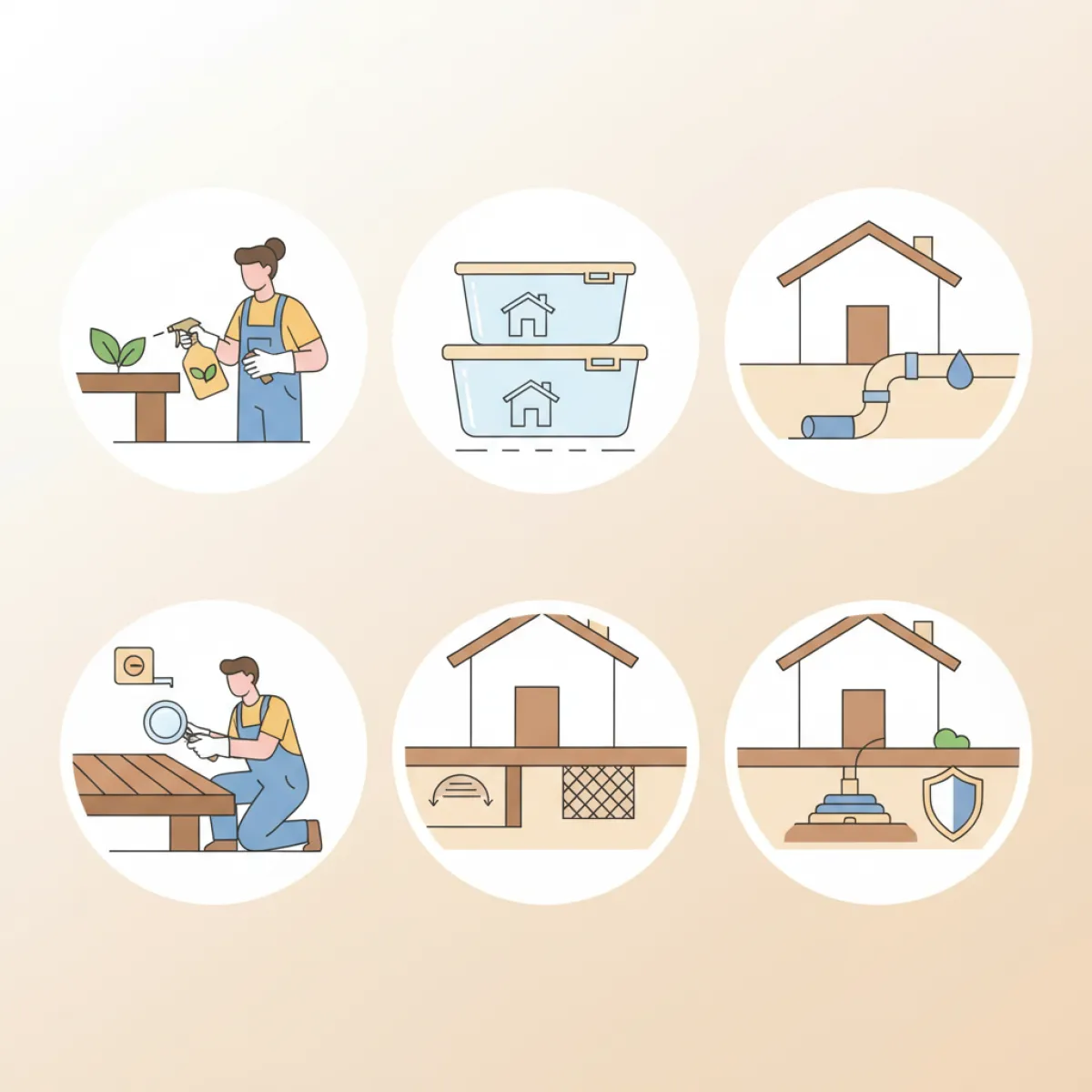
Key Takeaways
- Moisture management is your first line of defense against subterranean termites.
- Eliminate wood-to-ground contact to remove primary entry points.
- Implement Integrated Pest Management (IPM) for long-term protection.
- Regular professional inspections are critical in high-risk termite zones.
In my 15 years as a pest control professional, I have witnessed the devastating impact of termites firsthand. These 'silent destroyers' cause billions of dollars in property damage annually, often going undetected until structural integrity is compromised. Prevention is significantly more cost-effective than remediation. By understanding termite biology and applying professional-grade exclusion techniques, you can effectively armor your home against these wood-destroying organisms.
Understanding the Biology of Termites
Termites belong to the order Blattodea and are highly social insects. In the United States, we primarily deal with three types: Subterranean, Drywood, and Formosan termites.
Subterranean Termites (Reticulitermes flavipes): These are the most common and destructive. They live in the soil and build mud tubes to reach wood sources while maintaining the high humidity levels they need to survive.
Formosan Termites (Coptotermes formosanus): An invasive species often called 'super termites' due to their massive colony sizes and rapid consumption of wood. They are particularly prevalent in the Southern US.
Drywood Termites (Incisitermes spp.): Unlike their subterranean cousins, these do not require soil contact and live entirely within the wood they consume, often found in attics or structural timbers.
The IPM Approach to Termite Prevention
Integrated Pest Management (IPM) is a science-based decision-making process that identifies and reduces risks from pests and pest management strategies. Following EPA and university extension guidelines, we focus on several layers of defense.
1. Structural Defenses and Exclusion
Physical barriers are the foundation of any termite prevention plan. Termites can enter through cracks as narrow as 1/32nd of an inch.
- Eliminate Wood-to-Ground Contact: This is the most common entry point. Ensure siding, window frames, and door frames are at least 6 inches above the ground level. Use concrete footings for deck posts and stairs.
- Seal the Foundation: Use professional-grade sealants or metal mesh to close gaps around utility pipes and cracks in the foundation.
- Treated Lumber: When building or remodeling, use pressure-treated wood or naturally resistant species like cedar or redwood for outdoor projects.
2. Moisture Control: Dehydrating the Enemy
Moisture is the primary attractant for termites. Subterranean species cannot survive without it.
- Proper Drainage: Ensure gutters and downspouts are clear and divert water at least 5 to 10 feet away from the foundation.
- Ventilation: Maintain adequate airflow in crawl spaces and attics to prevent humidity buildup. Installing a vapor barrier in crawl spaces is a professional standard.
- Landscape Management: Keep mulch at least 12 inches away from the foundation. Mulch retains moisture and provides a thermal blanket for termite colonies.
3. Professional Preventative Treatments
While DIY measures are helpful, professional application of termiticides or baiting systems provides a higher tier of security.
- Liquid Soil Barriers: We apply non-repellent termiticides (like Fipronil) to the soil around the foundation. Termites pass through the treated zone, unknowingly picking up the chemical and transferring it back to the colony.
- Baiting Systems: Systems like Sentricon utilize Recruit® bait stations. These stations contain chitin synthesis inhibitors that prevent termites from molting, eventually collapsing the entire colony.
When to Call a Professional
Early detection can save you tens of thousands of dollars. Consult a professional immediately if you notice:
- Mud Tubes: Pencil-sized tubes running along walls or foundations.
- Swarmers (Alates): Winged termites emerging indoors or in large numbers near the foundation.
- Discarded Wings: Often found on windowsills or near doors after a swarm.
- Frass: Small, wood-colored pellets (indicative of Drywood termites).
- Blistered or Hollow-Sounding Wood: Use a screwdriver handle to tap on structural beams; a hollow thud indicates internal damage.
Conclusion
Termite prevention is an ongoing commitment, not a one-time event. By combining structural integrity, moisture control, and professional monitoring, you can ensure your home remains a fortress against these pervasive pests. Remember, a professional inspection once a year is the best insurance policy for your most valuable asset.
