The Unique Vulnerability of Historic Timber
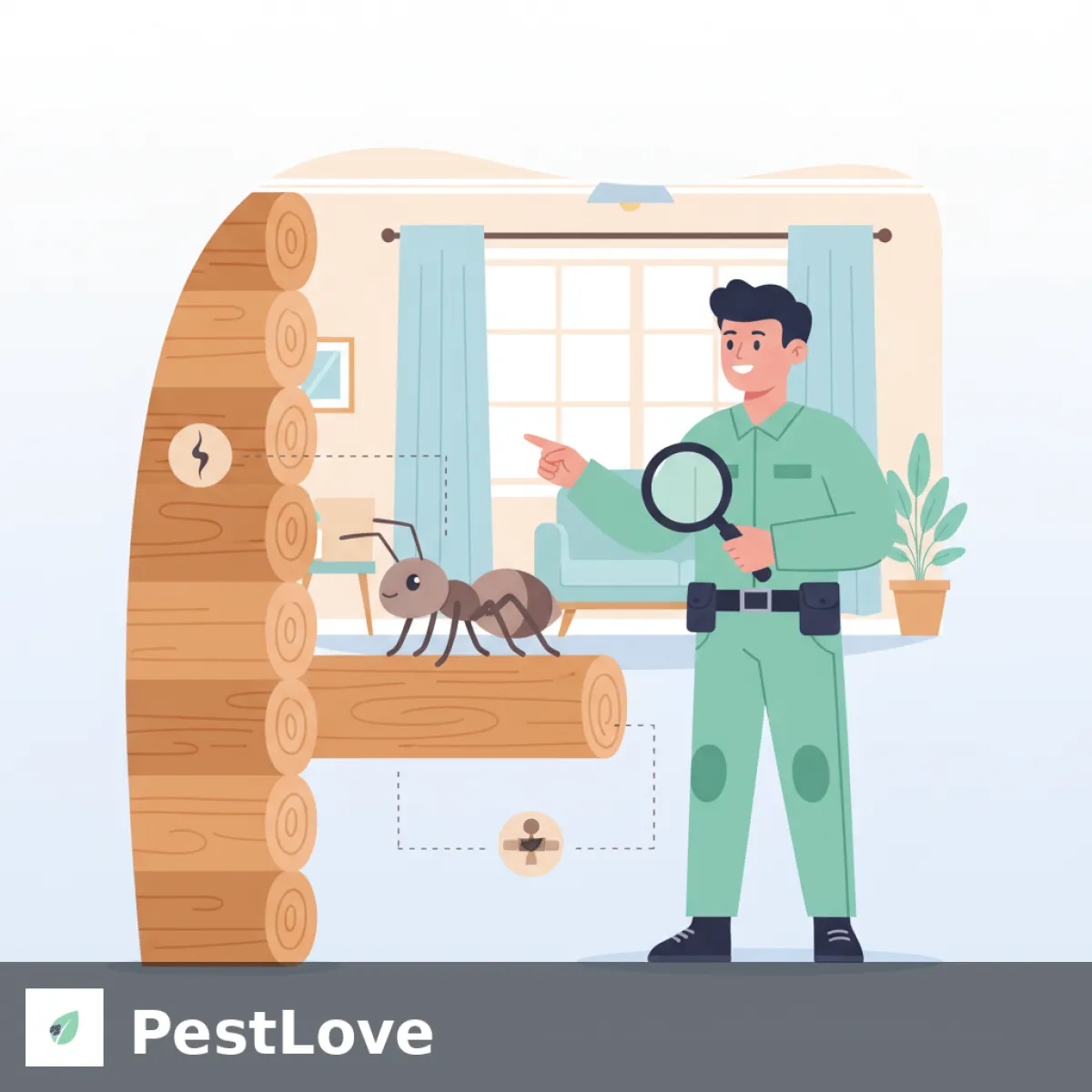
Historic timber lodges and log structures represent a unique intersection of architectural heritage and biological vulnerability. Unlike modern construction, which often utilizes pressure-treated lumber and concrete foundations, historic lodges rely on old-growth timber that, while dense, is susceptible to moisture retention over centuries of exposure. For the carpenter ant (Camponotus spp.), these structures offer an ideal environment: significant wood volume and the microclimates of moisture necessary for brood rearing.
Preserving these structures requires a shift from reactive pest control to proactive Integrated Pest Management (IPM). The cost of remediation in a timber-frame lodge is not merely financial but historical; once original hewn logs are excavated by an established colony, the structural and aesthetic integrity is often permanently compromised.
Understanding the Enemy: Camponotus Biology
To effectively protect a lodge, facility managers must understand the behavior of the adversary. Carpenter ants do not consume wood; unlike termites, they excavate it to create galleries for nesting. They are polymorphic, meaning workers vary significantly in size, ranging from 6mm to 12mm depending on the species and caste.
Parent vs. Satellite Colonies
A critical distinction in carpenter ant biology is the relationship between parent and satellite colonies. The parent colony, containing the queen, eggs, and early-stage larvae, requires high humidity and is typically located outside the structure—often in decaying tree stumps, landscape timbers, or woodpiles. Satellite colonies, containing mature workers, pupae, and winged reproductives, are established in drier environments, including the structural timbers of a lodge.
For historic lodges, the danger lies in the migration from the surrounding forest (the parent source) into the building (the satellite site). Identifying and severing this connection is the cornerstone of prevention.
Inspection Protocols for Timber Structures
Early detection is challenging in log structures due to the volume of wood and the complexity of joinery. Routine inspections should focus on specific indicators of activity.
1. Frass Identification
The most definitive sign of an active infestation is frass—wood shavings ejected from the colony as workers excavate galleries. Unlike termite damage, which contains mud or soil, carpenter ant galleries are smooth, clean, and sandpapered in appearance. Frass piles often accumulate below slit-like openings in the wood, often mistaken for sawdust.
2. Acoustic Monitoring
In the silence of a large lodge, specifically at night, active colonies can be audible. Workers produce a faint rustling or crinkling sound, known as stridulation, when disturbed or active. Maintenance staff should conduct acoustic checks in quiet periods, focusing on window frames and load-bearing corners.
3. Swarmer Activity
The emergence of winged ants (alates) inside the lodge indicates a mature colony within the structure. Differentiating these from termites is vital. Carpenter ants have elbowed antennae and forewings that are larger than their hindwings. For a detailed comparison, consult our guide on termite swarms vs. flying ants.
Structural Prevention and Exclusion
Preventing carpenter ant incursions relies on managing the physical environment to make the structure less attractive and less accessible.
Moisture Management: The First Line of Defense
Moisture is the primary attractant for Camponotus queens seeking nesting sites. Historic lodges often suffer from grade issues or aging drainage systems.
- Rooflines and Gutters: Ensure gutters direct water at least 10 feet away from the foundation. Clogged gutters can cause fascia board rot, a prime entry point for aerial invasions via tree branches.
- Vegetation Clearance: Trees and shrubs should be trimmed back to create a minimum 3-foot air gap between vegetation and the structure. Branches touching the roof act as "bridges," allowing ants to bypass foundation treatments.
- Wood-to-Ground Contact: Eliminate direct contact between structural timber and soil. Where historic design makes this impossible, consider localized barrier treatments.
Firewood and Debris Control
Firewood stacks are common vectors for introducing carpenter ants into a lodge. Wood should be stored on elevated metal racks at least 20 feet from the structure. Bringing wood inside should be done on a "burn-immediately" basis to prevent dormant ants from thawing and exploring the interior.
Chemical Control Strategies within IPM
When prevention fails, chemical intervention may be necessary. However, the choice of agent is critical to avoid worsening the infestation.
The Risk of Repellents
Spraying a repellent insecticide (such as many pyrethroids found in hardware stores) directly on foraging trails is often counterproductive. This creates a "barrier" that workers detect and avoid, often causing the colony to fracture or "bud" into multiple smaller colonies, spreading the infestation deeper into the lodge.
Non-Repellent Transfer Technology
Professional management of carpenter ants relies on non-repellent insecticides (e.g., fipronil or imidacloprid based formulations) and slow-acting baits. Foraging ants cross the treated zone without detecting the toxicant, returning to the nest to groom and feed others. This "transfer effect" is the only reliable method to eliminate the queen in the parent colony.
For lodges with extensive perimeter exposure, granular baits applied to the exterior perimeter can intercept foraging trails before they breach the foundation. This is particularly relevant for structural protection in timber-frame developments where multiple buildings share a wooded environment.
Identifying Structural Compromise
In advanced infestations, the structural capacity of the timber may be reduced. Unlike termites, carpenter ants do not eat the wood, but their excavation removes the heartwood, leaving only a thin outer shell. This can be devastating in load-bearing log walls.
If frass is consistently found or wood sounds hollow when tapped, immediate investigation is required. Probing the wood with a screwdriver can reveal the extent of the damage. For a deeper analysis of assessing damage, refer to our guide on carpenter ant excavation and identifying structural compromise.
Seasonal Protocols
Spring: Focus on exterior inspection. Look for scouts and reduce moisture around the foundation. See our guide on stopping scouts before they nest.
Summer: Monitor for swarmers and maintain vegetation buffers.
Autumn: Seal exterior cracks and chinking to prevent overwintering.
Winter: Monitor firewood and interior humidity levels.
When to Call a Professional
While maintenance staff can handle vegetation management and moisture control, the application of restricted-use termiticides or carpenter ant specific products usually requires a licensed applicator. If you suspect a colony is located within a load-bearing wall, or if you see swarmers inside the lodge, professional intervention is mandatory to prevent irreversible structural damage.
Key Takeaways for Lodge Managers
- Carpenter ants excavate; they do not eat wood.
- Moisture control is the most effective preventative measure.
- Vegetation touching the roof acts as a highway for infestation.
- Avoid OTC repellent sprays; they can cause colony budding.
- Regular inspections for frass and sound are essential in historic timber structures.