
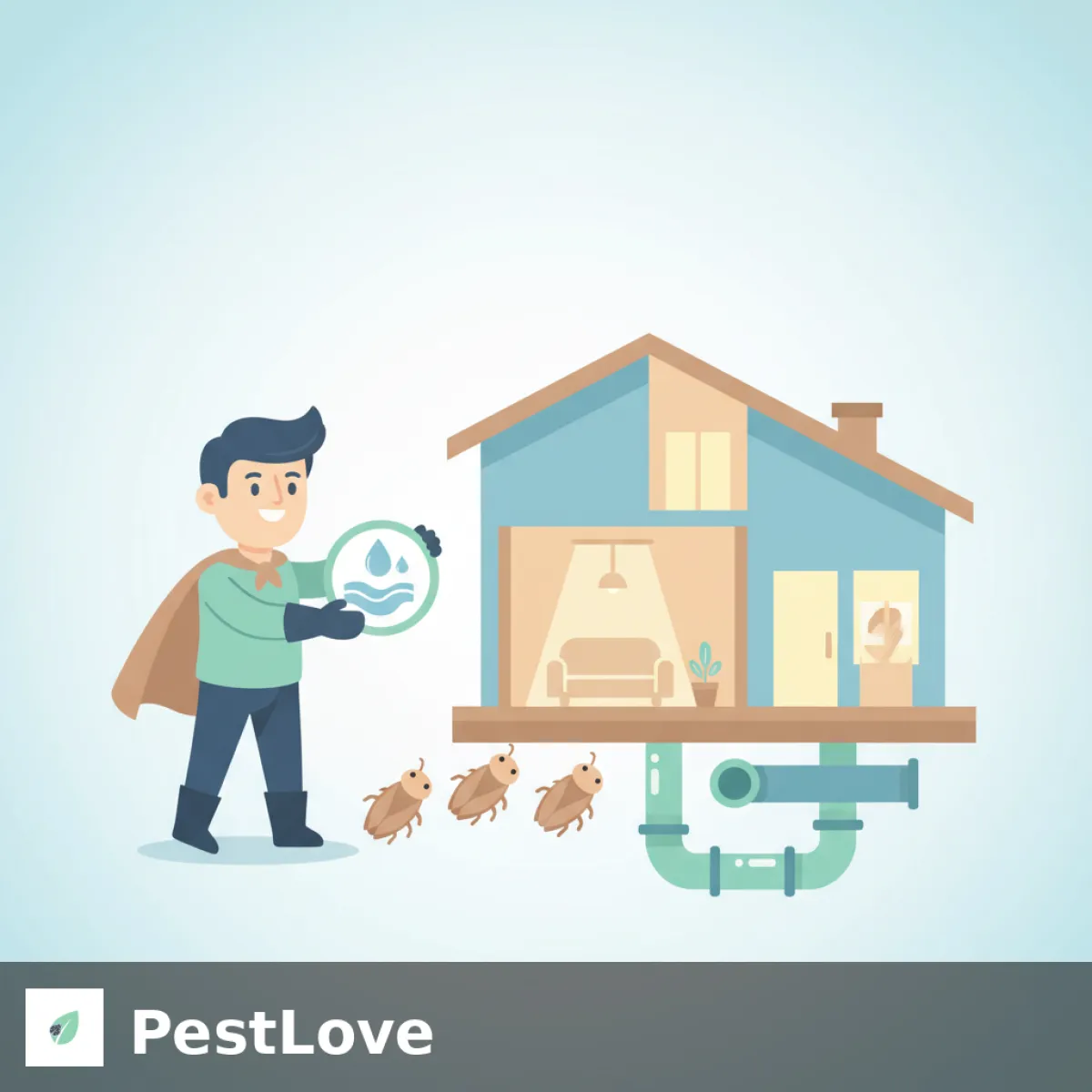
The Hidden Highway Beneath Your Feet
In the pest control industry, we often refer to urban drainage systems as the "superhighway" for pests. While homeowners often focus on sealing windows and doors, the largest entry point for the American Cockroach (Periplaneta americana) often goes unnoticed: the plumbing infrastructure connecting your property to the city's sewers. Often colloquially called "sewer roaches," "waterbugs," or "palmetto bugs," these pests are not just a nuisance; they are vectors for pathogens like Salmonella and E. coli, tracking bacteria from raw sewage directly into human living spaces.
Drawing from years of field work inspecting manholes and sub-slab plumbing, this guide outlines the behavior of these resilient scavengers and provides actionable strategies for exclusion and control.
Identification: Know Your Enemy
Before treating a drain, you must confirm the species. Treating a drain will do little if you are actually dealing with German Cockroaches living in your cabinetry.
- Size: The American Cockroach is the largest common structure-infesting roach, reaching 1.5 to 2 inches (38–53 mm) in length.
- Appearance: They are reddish-brown with a distinct pale yellow band around the edge of the pronotum (the shield behind the head).
- Wings: Adults have fully developed wings and can fly, though they typically glide from high places.
- Habitat Preference: Unlike the German Cockroach which prefers kitchens, the American Cockroach craves high humidity and decaying organic matter—conditions perfectly met by sewer lines, storm drains, and basements.
Why They Choose Your Drains
Urban drainage systems provide the "Perfect Storm" for Periplaneta americana survival:
- Biofilm as Food: Inside pipes, a slime layer called biofilm forms from soap scum, hair, and organic waste. This is a primary food source for cockroach nymphs.
- Consistent Climate: Sewers stay warm and humid year-round, protecting the population from winter freezes.
- Protection: Underground pipes offer a predator-free environment for breeding.
In my professional observations, infestations often spike in buildings when P-traps (the U-shaped pipe under sinks) dry out. The water in a P-trap acts as a gas and pest barrier. When a guest bathroom or floor drain goes unused for weeks, the water evaporates, effectively unlocking the front door for sewer roaches to crawl up into the home.
Prevention: The First Line of Defense
Integrated Pest Management (IPM) prioritizes exclusion over chemical reliance. Here is how to lock down your drainage system:
1. Maintain the Water Barrier
The simplest fix is often the most overlooked. Run water in all sinks, showers, and floor drains at least once a week to keep traps full. For rarely used drains, pour a small amount of mineral oil into the trap; it floats on the water, slowing evaporation significantly.
2. Install Trap Guards
For floor drains in basements or commercial utility rooms, install a drain trap seal (often called a "trap guard"). These one-way rubber valves allow water to flow down but snap shut to prevent insects and sewer gases from coming up.
3. Seal Pipe Penetrations
Inspect where pipes enter walls (under sinks or behind toilets). Cockroaches often travel along the outside of pipes through wall voids. Seal these gaps with steel wool and silicone caulk.
Professional Treatment Strategies
If you have active emergence from drains, pouring bleach is not the answer. Bleach flows away too quickly to be effective and can damage old pipes. Instead, use these targeted methods:
Bio-Enzymatic Cleaners
Starve them out. Use a professional-grade bio-enzymatic drain cleaner. These products contain bacteria that digest the organic scum (biofilm) lining the pipes. By removing their food source and breeding medium, you make the drain uninhabitable. This is similar to the sanitation protocols used for eliminating drain flies.
Insect Growth Regulators (IGRs)
For severe infestations, professionals may use a foaming agent mixed with an Insect Growth Regulator (IGR). The foam expands to coat the entire interior of the pipe, ensuring the chemical reaches roaches clinging to the top of the pipe (the crown). The IGR prevents nymphs from maturing into reproductive adults.
Dusting Void Spaces
Applying a desiccant dust, such as amorphous silica gel, into wall voids where plumbing lines run provides a long-term barrier. This adheres to the roach's waxy cuticle, causing them to dehydrate and die.
When to Call a Professional
While minor incursions can be managed with the steps above, you should contact a pest management professional if:
- You see roaches during the day (indicates a high population pressure).
- You detect a strong, musty, oily odor in the basement or bathroom.
- There are signs of structural failure in your plumbing (slow drains combined with pests).
For large-scale facilities, the approach differs significantly. Facility managers should refer to our specialized guide on controlling American Cockroaches in commercial drainage systems.
Key Takeaways
- American Cockroaches use dried-out P-traps as a primary entry point into buildings.
- Bleach is ineffective; use bio-enzymatic cleaners to remove the biofilm food source.
- Mechanical exclusion (trap guards, sealing pipes) is more effective than surface sprays.
- Regularly flushing unused drains is the most cost-effective prevention method.