
Executive Summary
For commercial kitchens, the presence of drain flies (Family: Psychodidae), also known as moth flies or sink flies, represents a critical sanitation failure rather than a mere nuisance. Unlike other structural pests, drain flies indicate the presence of decaying organic matter and bacterial biofilm within the facility's drainage infrastructure. This guide outlines professional Integrated Pest Management (IPM) protocols for the identification, remediation, and prevention of drain fly populations in floor drains and grease interceptors, focusing on the removal of breeding media to ensure compliance with health department standards.
1. Identification and Biological Profile
Accurate identification is the first step in any IPM program. Commercial kitchen managers must distinguish drain flies from other filth flies, such as fruit flies (Drosophila spp.) or phorid flies (Phoridae), as remediation strategies differ significantly.
Physical Characteristics
- Appearance: Drain flies are small (1.5 to 5 mm), gray or tan insects with a fuzzy, moth-like appearance due to the dense hair covering their bodies and wings.
- Wings: Held strictly roof-like over the body when at rest.
- Flight Pattern: Weak, erratic fliers that typically hop or fly short distances when disturbed. They are often found resting on walls or tile grout near floor drains.
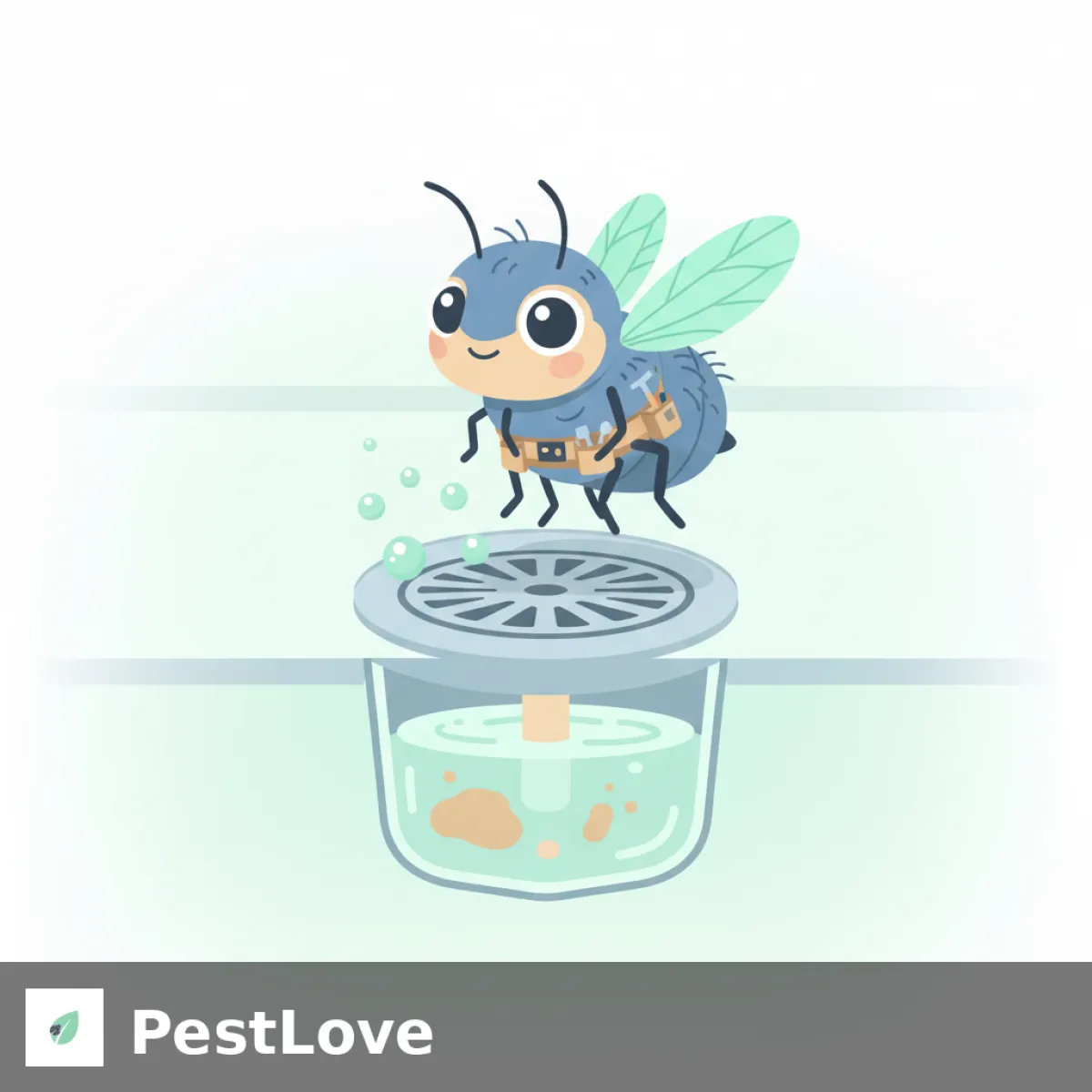
- Larvae: The larvae are legless, grey, and worm-like, often possessing a distinct dark breathing tube (siphon) at the posterior end, allowing them to survive submerged in gelatinous muck.
The Role of Biofilm
Drain flies do not breed in water; they breed in the organic film that accumulates on the vertical surfaces of drain pipes and the static layers of grease traps. This gelatinous matrix, known as biofilm, protects the eggs and larvae from chemical cleaners and water flow. A common misconception in commercial sanitation is that bleach or boiling water will eliminate the problem. In reality, these measures often fail to penetrate the thick biofilm where larvae feed and mature.
2. Inspection Protocols for Commercial Kitchens
Locating the source is critical. In a commercial kitchen, breeding sites are often redundant. Inspection should focus on areas with high organic load and consistent moisture.
Primary Breeding Zones
- Floor Drains: Specifically the area above the water trap (P-trap) where splash accumulation creates slime.
- Grease Traps (Interceptors): The underside of the lid and the undisturbed crust layer are prime breeding grounds.
- Loose Grout and Tiles: Moisture seeping under cracked tiles can create a hidden slurry of organic matter suitable for breeding.
- Beverage Lines: Soda fountain drainage lines often accumulate high-sugar biofilm.
Diagnostic Test: To confirm a specific drain as a source, place a strip of clear packing tape over part of the drain opening (sticky side down) before closing the facility. Check the tape the following morning; emerging adults will be stuck to the adhesive.
3. Remediation Strategies: The Sanitation-First Approach
Chemical control (adulticides) provides only temporary relief. Permanent eradication requires the physical removal of the breeding medium.
Mechanical Cleaning
The most effective initial step is mechanical removal of the biofilm. This requires long-handled, stiff-bristled brushes designed for pipe cleaning. Staff must scrub the vertical sides of the drain pipe to dislodge the gelatinous film. High-pressure water jetting (hydro-jetting) may be necessary for deeper pipe sections or hardened grease deposits.
Bio-Enzymatic Treatments
Following mechanical cleaning, the application of bio-enzymatic foamers or gels is the industry standard for maintenance. These products contain specialized bacteria that digest the organic matter (fats, oils, and grease - FOG) that forms the biofilm.
- Foam Application: Foam carriers allow the enzymes to cling to the vertical surfaces of the pipe, increasing contact time with the organic matter.
- Timing: Apply treatments at the end of the shift when water usage has ceased, allowing the enzymes to work overnight.
For facilities managing complex pest pressures, understanding the interaction between different pests is vital. For instance, compromised drainage systems can also harbor American cockroaches, creating a dual vector threat.
4. Grease Trap Specific Protocols
Grease traps are often the primary source of chronic infestations. While professional pumping removes the bulk waste, it often leaves residue on the walls and lid.
- Lid Sanitation: The underside of the grease trap lid is frequently neglected. Condensation and organic splatter create an ideal nursery for Psychodidae larvae. This surface must be scrubbed and sanitized during every pump-out.
- Gasket Inspection: Ensure the gasket seal is intact. A failed seal allows adult flies to escape the trap and enter the kitchen.
- Frequency: Increase pumping frequency during warmer months to reduce the development of the crust layer where larvae thrive.
5. Integrated Prevention and Exclusion
Once the immediate infestation is controlled, preventative measures must be integrated into the daily sanitation schedule.
- Scheduled Drain Maintenance: Implement a weekly biological drain maintenance program using enzymatic cleaners.
- Structural Repairs: Regrout loose tiles immediately to prevent organic seepage. Repair leaking pipes that contribute to constant moisture.
- Exclusion: Install fine-mesh drain covers where local codes allow, preventing adult flies from entering or exiting the drainage system.
Maintaining a pest-free environment often requires addressing multiple fronts. Similar sanitation rigor is required for rodent proofing commercial kitchens and managing resistant German cockroaches.
6. When to Call a Professional
While sanitation staff can manage routine cleaning, certain situations require professional pest management intervention:
- Structural Compromise: If flies persist despite rigorous drain cleaning, it may indicate a break in the sewer line under the slab. Smoke testing or camera inspection by a plumber is required.
- Insect Growth Regulators (IGRs): Licensed applicators can apply IGRs to drains, which prevent larvae from maturing into breeding adults.
- Systemic Infestation: When flies are found in multiple zones unrelated to drains, professional fogging or space treatments may be necessary to knock down the adult population while sanitation issues are addressed.
Failure to control drain flies can lead to health code violations and negative consumer perception. By adhering to these IPM principles, facility managers can ensure a sanitary environment and protect their brand reputation.