
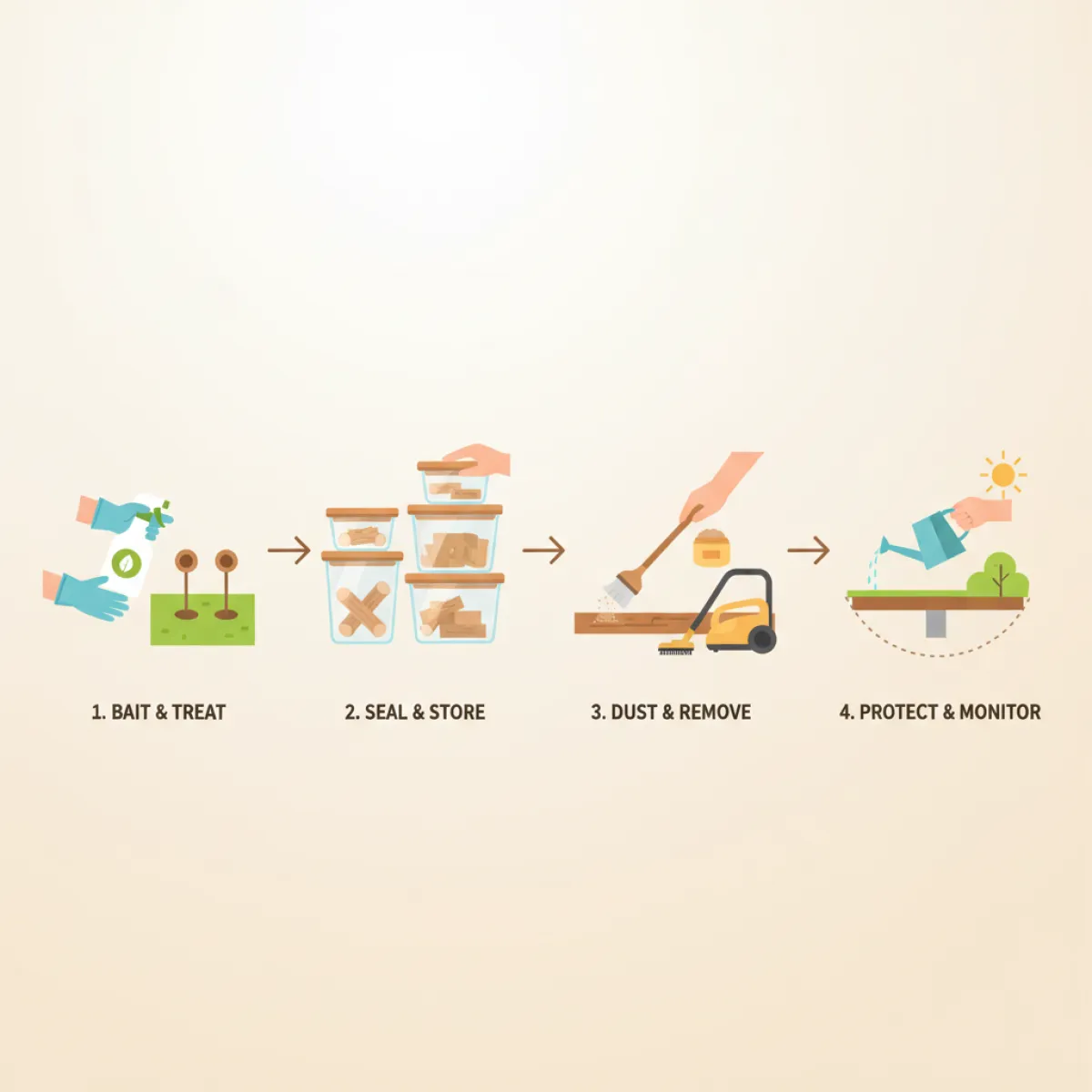
A Professional's Guide to Eliminating Termites
In my 15 years as a certified pest control professional and entomologist, I've seen firsthand the devastation termites can cause. Often called "silent destroyers," these insects chew through wood, flooring, and even wallpaper undetected. By the time homeowners notice the damage, it can cost thousands in repairs. However, with a solid understanding of Integrated Pest Management (IPM) and the right tools, you can take a proactive stance. This guide provides authoritative DIY strategies to combat these pests effectively.
Key Takeaways
- Early Detection is Critical: Regularly inspect your foundation for mud tubes and hollow-sounding wood.
- Moisture Control: Termites thrive in wet environments; fixing leaks is the first step in any treatment plan.
- Baiting vs. Liquid Barriers: Baiting is often more manageable for DIYers, while liquid barriers offer immediate protection.
- Know Your Species: Treatment for Subterranean termites differs significantly from Drywood termites.
Understanding the Enemy: Species and Behavior
To fight termites, you must know which type you are dealing with. In North America, the most common threats are:
- Subterranean Termites (Reticulitermes spp.): These live in the soil and build mud tubes to reach wood. They are responsible for the vast majority of termite damage in the US.
- Drywood Termites (Incisitermes spp.): Unlike their subterranean cousins, these do not need soil contact. They live inside the wood they consume, often found in attics or structural timbers.
- Formosan Termites: A particularly aggressive subterranean species often found in the Southern US, capable of consuming wood much faster than native species.
Step-by-Step: Identifying an Infestation
Don't wait for a floorboard to give way. Look for these signs monthly:
- Mud Tubes: These pencil-thin tunnels on foundation walls or crawl spaces are the "highways" for subterranean termites.
- The "Swarm": In spring, winged reproductives (alates) emerge to start new colonies. Finding discarded wings on windowsills is a major red flag.
- Frass: Drywood termites push their waste (tiny, six-sided pellets) out of small holes. These look like piles of sawdust or salt and pepper.
- Blistering Wood: Wood that looks water-damaged or bubbled often indicates termites feeding just beneath the surface.
Effective DIY Control Methods
1. Termite Baiting Stations
Baiting is one of the most effective DIY methods because it targets the entire colony, including the queen. These stations contain cellulose material treated with a slow-acting insecticide (like Noviflumuron or Hexaflumuron).
Pro Strategy: Install stations every 8 to 10 feet around your home's perimeter. Check them every few months. Once termites are detected in a station, replace the monitor with the active bait. The workers carry the poison back to the nest, eventually wiping it out.
2. Liquid Soil Treatments (Termiticides)
Creating a chemical barrier in the soil prevents termites from entering your home. Products containing Fipronil or Imidacloprid are professional-grade and available for consumer purchase.
Safety Warning: This involves digging a trench around your foundation. Always follow the EPA-approved label instructions exactly. Improper application can contaminate groundwater or fail to protect your home.
3. Borate Treatments
Borates (like Bora-Care) are excellent for protecting raw wood. When sprayed on wood surfaces, the borate penetrates deep into the fibers. When termites ingest the treated wood, it disrupts their digestive system and kills them.
4. The Cardboard Trap Method
While not a total solution, this is a great way to reduce numbers and confirm an infestation. Wet two pieces of corrugated cardboard and stack them. Termites are attracted to the moisture and cellulose. Once infested, remove the cardboard and burn it. Use this alongside other treatments.
When to Call a Professional
As an expert, I must emphasize that some situations are too dangerous or complex for DIY:
- Massive Swarms inside the house: This indicates a large, established colony nearby.
- Structural Failures: If you see sagging floors or ceilings, the integrity of your home is at risk.
- Formosan Termites: Due to their speed and colony size, professional intervention is almost always required.
Professional pest control companies have access to specialized equipment like sub-slab injectors and foaming machines that ensure total coverage.
Prevention: The Best Defense
Integrated Pest Management emphasizes long-term prevention. Follow these steps to make your home less attractive to termites:
- Manage Moisture: Ensure gutters direct water at least 5 feet away from the foundation. Fix any leaking outdoor faucets.
- Remove Food Sources: Keep firewood, mulch, and wood debris at least 20 feet away from your home.
- Seal Entry Points: Use caulk to seal cracks in the foundation and around utility pipes.
- Ventilation: Ensure crawl spaces and attics are well-ventilated to prevent moisture buildup.