
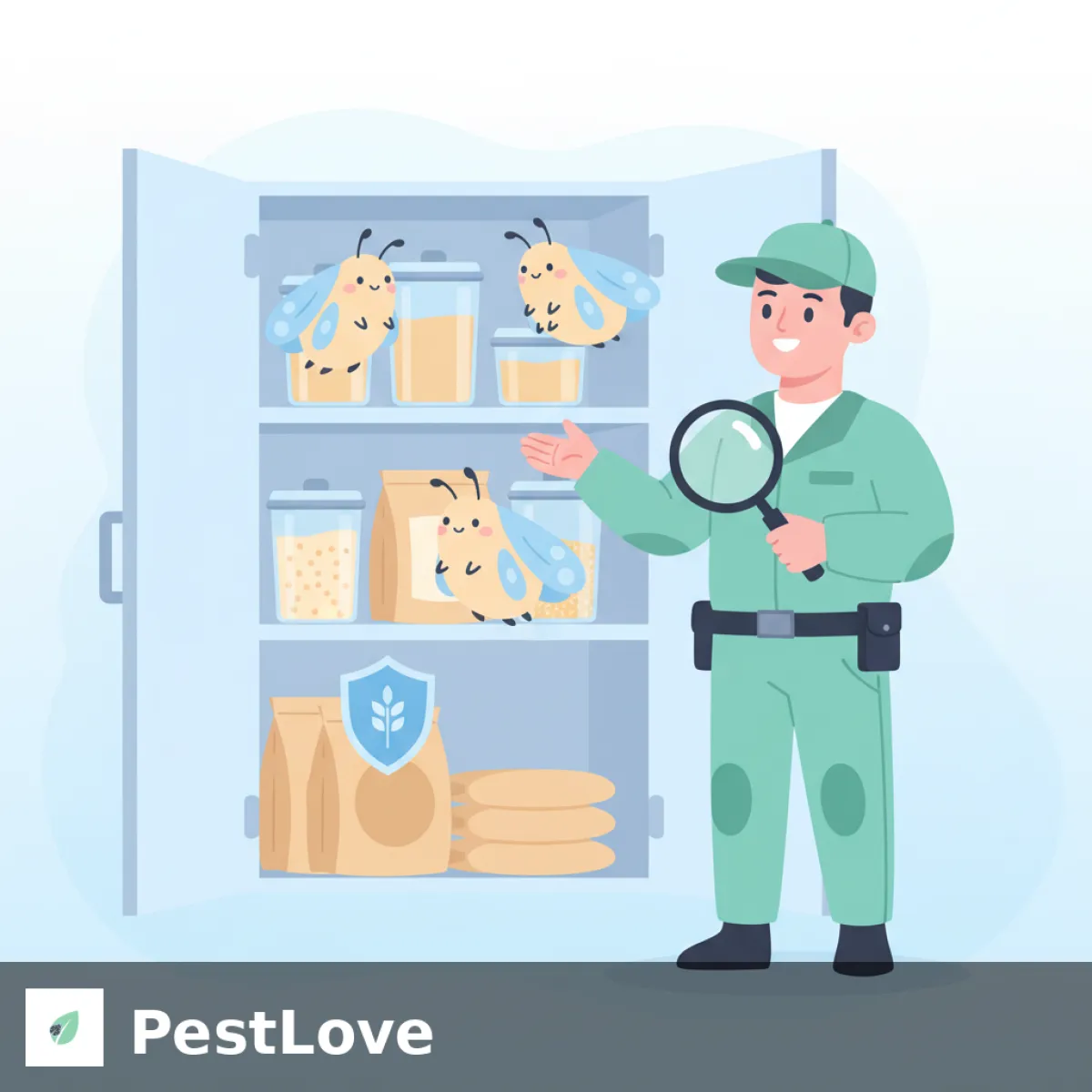
Key Takeaways for Retailers
- Identify Early: Look for distinctive copper-colored wing tips and webbing in gravity bin corners, not just flying adults.
- Source Control: 80% of retail infestations originate from the supplier. Implement strict receiving inspections.
- Sanitation is Treatment: Vacuuming spilled grain in cracks and crevices is more effective than pesticides in a food retail environment.
- Pheromone Monitoring: Use mating disruption and monitoring traps to pinpoint "hot spots" in the aisle before customers see them.
In the bulk food retail industry, your reputation hangs on the purity of your product. I have walked into high-end organic markets and seen the tell-tale fluttering of the Indian Meal Moth (Plodia interpunctella) near the ceiling lights. To a customer, that moth isn't just a pest; it’s a signal that the entire store is unclean. For a business owner, it represents significant financial "shrinkage" and a potential health inspection nightmare.
The Indian Meal Moth is the most common stored-product pest I encounter in retail environments. They are tenacious, capable of chewing through thin plastic, and thrive in the very environment you create: distinct, accessible food sources kept at room temperature. This guide outlines the professional Integrated Pest Management (IPM) strategies necessary to control this pest without compromising food safety.
Identification: Knowing Your Enemy
Misidentification leads to wasted effort. I often see store managers setting traps for fruit flies when they actually have a pantry moth problem. The Indian Meal Moth is distinct:
- Appearance: The adult moth is about 3/8 to 1/2 inch long. The key identifier is the wing pattern: the base of the wing (near the head) is dirty gray, while the outer two-thirds are a coppery, reddish-brown.
- Larvae: These are the destructive stage. They are dirty white, pinkish, or greenish caterpillars with a brown head capsule.
- Signs of Activity: In a bulk aisle, you rarely see the eggs. What you will see is silken webbing clumping the product together. If your organic oats are sticking to the sides of the gravity bin, you have an active infestation.
For a broader look at pantry pests, you might find our guide to pantry moths helpful for staff training.
Behavior in Retail Settings
Unlike grain beetles which burrow deep, Indian Meal Moth larvae tend to feed on the surface. However, in gravity bins, they can spin webs that clog the mechanism.
They are particularly drawn to:
- Bird seed (often the "Patient Zero" in general stores)
- Dried fruits
- Nuts (especially almonds and walnuts)
- Grains and flour
- Chocolate
Field Note: I once traced a massive store-wide infestation back to a single pallet of dog food in the back warehouse that had been pushed behind a shelving unit and forgotten. The moths migrated from the warehouse to the bulk bins in the front of the house. Stock rotation is your first line of defense.
Prevention: The First Line of Defense
1. The "Receiving Quarantine" Protocol
You cannot control what happens at the distribution center, but you can control what enters your store. Train your receiving staff to inspect the seams of bags, especially multi-walled paper bags. Look for webbing or small holes. If a pallet shows signs of activity, reject it immediately. Do not bring it inside "just to sort it out."
2. Proper Storage and FIFO
First-In, First-Out (FIFO) is critical. Old stock is a breeding ground. Ensure that your backstock is kept in sealed plastic totes or cold storage if possible. Cardboard is not a barrier; larvae can chew through it.
For warehouses managing large organic stocks, specific protocols for eradication in organic environments are essential to maintain certification.
3. The "Deep Clean" Schedule
Spillage is inevitable in bulk retail. However, spillage that sits under a shelving kick-plate for three months is a biological time bomb.
The Protocol:
- Daily: Vacuum spills immediately. Do not just sweep; sweeping pushes eggs into cracks.
- Weekly: Inspect the "dead zones"—the tops of shelving units, behind displays, and the junction between the floor and wall.
- Monthly: Empty and wash bins. I recommend a rotation where 25% of bins are deep-cleaned every week.
Treatment Strategies: IPM for Retail
When you have an active infestation, spraying pesticides is rarely the answer in a food retail setting due to contamination risks. We rely on mechanical and biological controls.
1. Isolation and Removal
If you find webbing in a bin:
- Bag it: Carefully remove the entire bin content into a heavy-duty trash bag. Seal it immediately.
- Remove it: Get the trash bag out of the building. Do not put it in the back room dumpster; put it in the external compactor.
- Wash it: The bin must be washed with hot, soapy water and fully dried.
2. Pheromone Traps
Pheromone traps are invaluable for monitoring, though they rarely control a full outbreak on their own. They use a sex pheromone to attract male moths.
- Placement: Place them in a grid pattern in your store and warehouse.
- Interpretation: A sudden spike in the catch count tells you exactly where a new infestation is emerging, allowing you to target your search.
3. Crack and Crevice Treatment
While we avoid broad spraying, a licensed professional can apply Insect Growth Regulators (IGRs) into the cracks and crevices of shelving units. This prevents larvae hiding in the structure from maturing into breeding adults. This is often necessary when the infestation has moved from the food product into the store fixtures.
When to Call a Professional
While staff can handle minor sanitation issues, you need professional intervention if:
- You are seeing moths daily despite cleaning.
- Customers are complaining.
- You cannot locate the source (it may be in the ceiling voids or structural hollows).
- You need to apply any chemical treatments (legal requirement in commercial spaces).
Similar to hygiene standards in bakeries, bulk retail requires a zero-tolerance policy. A professional can conduct a thorough audit, identify structural deficiencies, and design a compliant service program.
Protecting your inventory from the Indian Meal Moth is an ongoing battle, not a one-time event. Vigilance, sanitation, and rapid response are your best tools.