
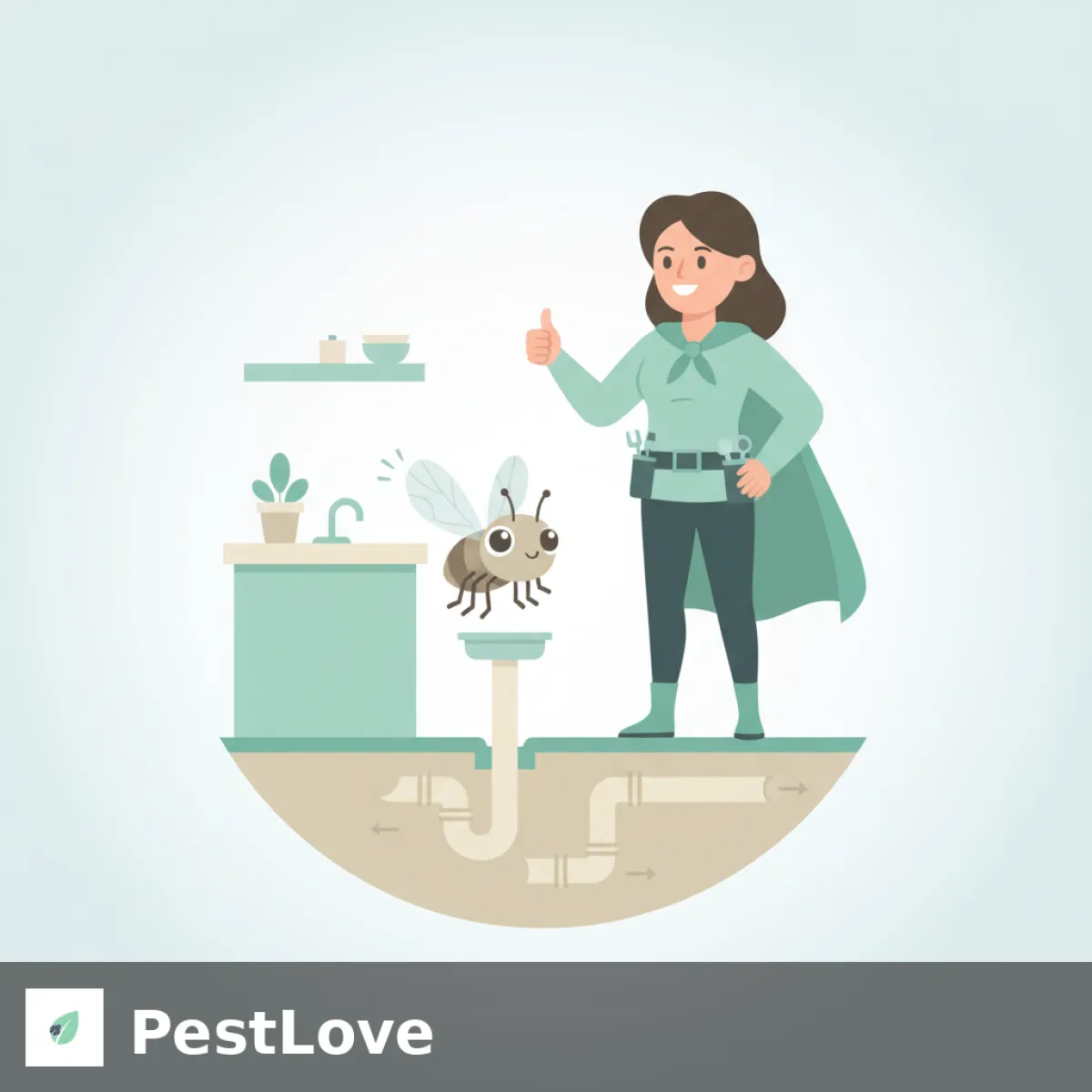
Key Takeaways
- The "Indicator" Pest: Phorid flies (Phoridae) often signal a break in underground sewage lines or structural plumbing failure, not just poor surface sanitation.
- Identification is Key: Distinguish them from fruit flies by their "humpbacked" appearance and erratic, running behavior on surfaces.
- Bleach is Not the Answer: Pouring chemicals down the drain rarely works; the breeding ground is often outside the pipe in sewage-saturated soil.
- Structural Repair is Mandatory: Permanent elimination requires fixing the compromised infrastructure (cracked cast iron, separated PVC) alongside bio-enzymatic cleaning.
In my years of field work diagnosing commercial and residential pest issues, few calls are as frantic as those involving Phorid flies. Unlike the seasonal annoyance of house flies, a Phorid fly infestation typically points to a much deeper, more expensive problem: your building's infrastructure is failing. Often called "coffin flies," "scuttle flies," or "sewer flies," these pests thrive where humans least want to look—deep within decaying sewage systems.
For property managers of historic buildings or homeowners with houses built before the 1980s, Phorid flies are the "check engine light" of your plumbing system. When I walk into a commercial kitchen or a basement and see these specific flies scuttling across a countertop, I don't reach for a spray can; I ask for the blueprints to the plumbing.
1. Identification: Knowing Your Enemy
Before you can treat the problem, you must confirm you are dealing with Phorid flies and not their lookalikes, such as Fruit Flies or Drain Flies. Misidentification leads to wasted time and money on ineffective treatments.
Physical Characteristics
- Size: Tiny, typically 1/16 to 1/8 inch long.
- Shape: From the side, they have a distinct "humpbacked" appearance due to the arch of their thorax.
- Color: usually black, brown, or yellowish.
- Wings: Clear wings with distinct, heavy veins near the base.
Behavioral Cues
The most tell-tale sign of a Phorid fly is its movement. When they land on a surface, they don't immediately fly away if disturbed. Instead, they exhibit a rapid, jerky running motion. They "scuttle" across tables, walls, and floors. If you see a small fly running erratically rather than taking flight, you are likely dealing with Phoridae.
For a comparison with other moisture-loving pests, review our guide on Drain Fly Eradication for Restaurants, as the environments often overlap.
2. The Root Cause: Aging Infrastructure
This is where the "General" pest control advice separates from the professional reality. You cannot control Phorid flies simply by cleaning your trash cans if the infestation is stemming from a sub-slab plumbing break.
The Cast Iron Crisis
Many buildings constructed prior to the mid-1970s utilize cast iron for sanitary sewer lines. Over decades, the bottom of these pipes corrodes due to the acidity of wastewater and gases (hydrogen sulfide). Eventually, the bottom rots out entirely.
When this happens, sewage leaks into the soil surrounding the pipe, usually underneath the concrete slab of the building. This creates a nutrient-rich, moist sludge—the perfect breeding ground for Phorid flies. The larvae feed on the organic matter in this soil, and the adults emerge through cracks in the concrete, expansion joints, or unsealed drain penetrations.
Common Structural Entry Points
- Broken Under-Slab Pipes: As described above, this is the most difficult to diagnose without professional equipment.
- Dried P-Traps: Floor drains that are rarely used allow the water seal to evaporate, giving sewer insects a direct highway into your facility.
- Compromised Wax Rings: A toilet rocking on its base often indicates a failed wax seal, allowing flies to escape from the closet bend.
- Uncapped Cleanouts: During renovations, old cleanouts are sometimes carpeted or tiled over without being properly sealed.
Similar structural vulnerabilities allow other pests to enter, as noted in our Facility Manager's Guide to Controlling American Cockroaches.
3. Health Risks and Business Impact
Phorid flies are not just a nuisance; they are a health hazard. Because they breed in decaying organic matter, feces, and carcasses, they are mechanical vectors for pathogens. They can transfer bacteria like Salmonella, E. coli, and other food-borne illnesses directly onto food prep surfaces.
For businesses, particularly in the hospitality and healthcare sectors, the presence of these flies is often a critical violation during health inspections. A customer seeing a fly running across their plate assumes the kitchen is dirty, unaware that the problem might be a broken pipe three feet underground.
4. Professional Inspection Methods
If you suspect Phorid flies, put away the fly swatter and pick up a flashlight. Here is the professional protocol for locating the source:
The Tape Test
To identify which drain or crack is the source, place a piece of clear heavy-duty tape (sticky side down) over the center of floor drains, leaving some air gaps on the sides for airflow. Check it after 24 hours. If flies are stuck to the bottom, you have confirmed an entry point.
Smoke Testing
This is the gold standard for diagnosing infrastructure breaches. A professional plumber or pest management professional pumps non-toxic smoke into the drainage system. If smoke appears rising from a crack in the floor, behind a baseboard, or from under a toilet, you have found the breach where flies are entering.
Camera Scoping
Running a borescope camera down the lines can visually confirm breaks, root intrusion, or collapsed sections of pipe that are retaining solid waste.
5. Integrated Pest Management (IPM) for Phorid Flies
Effective control relies on a hierarchy of actions: Sanitation, Exclusion, and lastly, Chemical Control.
Step 1: Sanitation (Bio-Enzymatic Cleaning)
Bleach and boiling water are temporary fixes that damage old pipes. Instead, use a professional-grade bio-enzymatic foam or gel. These products contain bacteria that "eat" the organic scum lining the pipes, removing the larvae's food source.
Protocol: Apply the bio-foam to all drains at the end of the night for 7-10 consecutive days. Do not run water immediately after application.
Step 2: Structural Exclusion (The Cure)
This is the hard truth: You must fix the pipe.
- Pipe Relining: In some cases, a resin liner can be cured inside the existing pipe to seal the bottomless cast iron without digging up the floor.
- Excavation: Severe collapses require jackhammering the concrete and replacing the soil and pipe. This removes the contaminated breeding substrate.
- Sealing Cracks: Caulk all expansion joints and cracks in the floor with a high-quality sealant to prevent adults from emerging from the sub-slab soil.
Step 3: Adult Population Reduction
While the construction repairs are scheduled, you can manage the adult population to protect your reputation.
- Insect Light Traps (ILTs): Install ILTs low to the ground (Phorid flies often fly low) and away from food prep areas.
- Air Curtains: Keep positive pressure in the building to prevent entry from outside, though most Phorid infestations are internal.
For more on maintaining sanitary environments in commercial settings, refer to Eliminating Drain Flies in Commercial Kitchens.
6. When to Call a Professional
You need a professional when:
- Bio-enzymatic cleaning fails to resolve the issue after two weeks.
- Flies are emerging from cracks in the floor or walls, not just drains.
- You detect a faint smell of sewage or methane.
- The infestation is recurring despite consistent cleaning.
Managing Phorid flies is an exercise in detective work. It forces us to look beneath the surface—literally. By addressing the aging infrastructure that supports these pests, you ensure the long-term health and safety of your property.
