
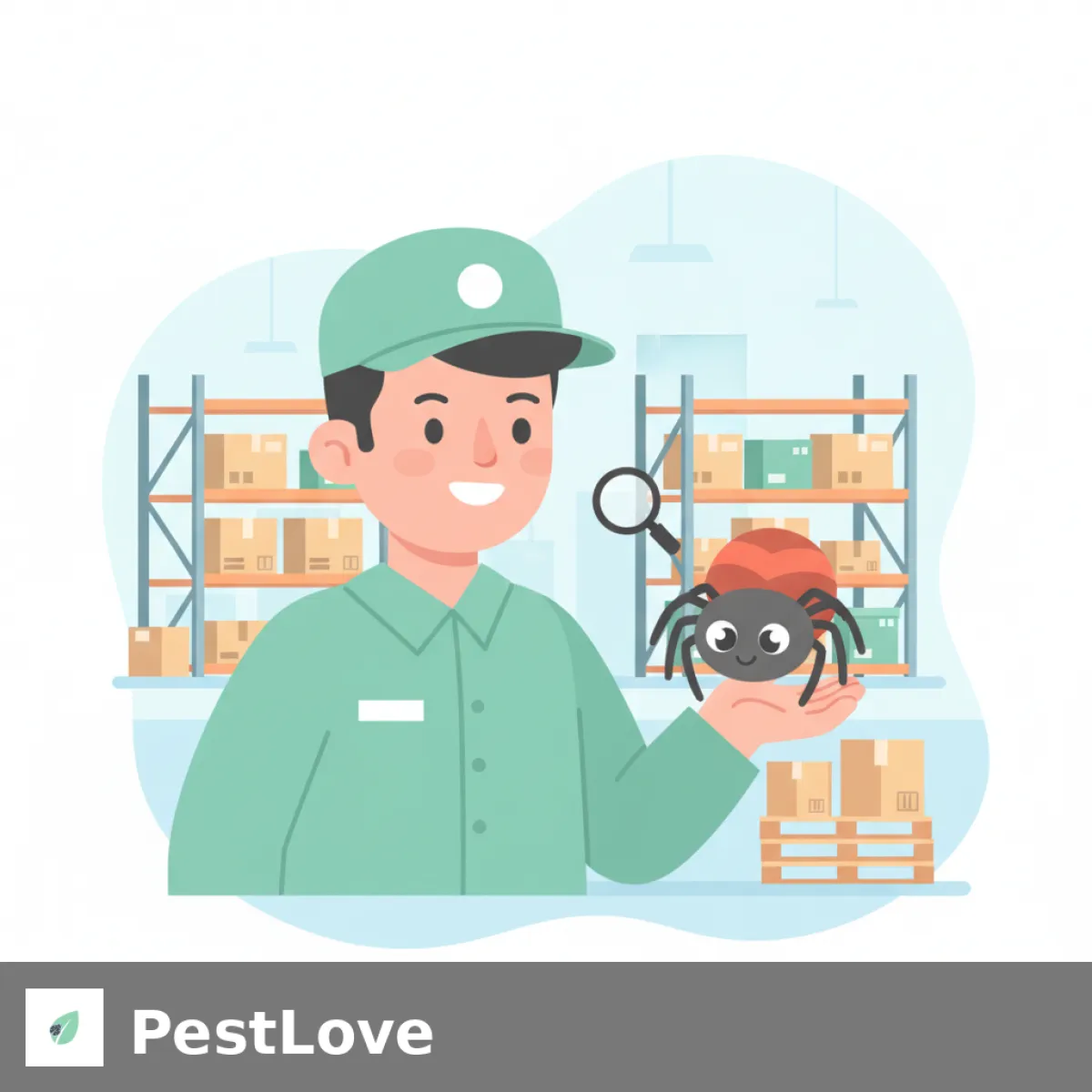
The Industrial Threat of Latrodectus hasseltii
In the high-traffic, high-volume environment of industrial warehouses and logistics centers, the Redback spider (Latrodectus hasseltii) presents a significant Occupational Health and Safety (OHS) risk. Unlike nuisance pests that primarily threaten stock integrity, Redbacks pose a direct physical threat to personnel, particularly those involved in manual handling, pallet wrapping, and container unloading. Their neurotoxic venom, containing alpha-latrotoxin, can cause severe pain, systemic illness, and significant operational downtime.
For facility managers, effective control is not merely about extermination; it requires a rigorous Integrated Pest Management (IPM) strategy that addresses the specific structural and operational characteristics of logistics hubs. These environments—often characterized by undisturbed corners, static inventory, and extensive shelving—mimic the Redback's preferred natural habitat of dry, sheltered crevices.
Identification and Inspection in Low-Light Environments
Accurate identification is the first line of defense. Misidentification can lead to unnecessary panic or, conversely, dangerous complacency. In the dim lighting typical of warehouse racking aisles, visual confirmation requires knowledge of specific morphological traits.
Distinguishing Redbacks from Lookalikes
The female Redback is the primary concern due to her size and venom potency. She is characterized by a spherical, satin-black body (approximately 1cm long) with a distinctive red or orange longitudinal stripe on the upper abdomen. However, in industrial settings, dust and debris can obscure these markings. Managers should look for the chaotic, tangled web structure typical of the Theridiidae family, often containing tough, white, spherical egg sacs suspended within the threads.
It is crucial to distinguish Redbacks from the 'Cupboard Spider' (Steatoda spp.), often called the brown house spider. While Steatoda can deliver a painful bite, it lacks the systemic medical severity of a Redback envenomation. For facilities dealing with broader arachnid risks, understanding the behavior of other species, such as in our guide on Brown Recluse Spider Safety Protocols for Distribution Centers, provides a comparative baseline for risk assessment.
Identifying High-Risk Zones in Warehousing
Redbacks are thigmotactic, meaning they seek contact with solid surfaces on multiple sides of their body. In a logistics context, this behavior draws them to specific high-risk zones:
- Undersides of Pallets: The voids between pallet slats offer perfect harborage for nesting and egg-laying.
- Shrink Wrap Folds: Loose plastic wrapping on static stock creates micro-habitats that trap heat and moisture.
- Racking Uprights: The hollow bases of steel racking systems are common entry points.
- Loading Docks: Rubber door seals and dock leveler pits often harbor insects, which in turn attract predatory spiders.
Regular inspections should focus on 'slow-moving' stock areas (Category C inventory) where pallets may remain undisturbed for months, allowing populations to establish. This mirrors the risks seen in False Widow Spider Management in Logistics and Distribution Centers, where static inventory becomes a primary breeding ground.
Integrated Pest Management (IPM) Strategies for Logistics
Eradicating Redbacks requires a multi-layered approach. Reliance solely on chemical fogging is rarely effective long-term, as egg sacs are impervious to most aerosolized insecticides.
Cultural Control: Sanitation and Stock Rotation
The most effective deterrent is the disruption of habitat. Implementing a 'First-In, First-Out' (FIFO) inventory system ensures that stock is physically moved before spider colonies can mature. Furthermore, aggressive sanitation protocols remove the prey base (ants, cockroaches, and beetles) that sustains the spider population.
- Debris Removal: Eliminate cardboard piles, loose timber, and plastic waste immediately.
- Perimeter Clearance: Maintain a vegetation-free zone of at least one meter around the warehouse exterior to prevent migration from garden beds.
- Vertical Storage: Keep pallets off the floor where possible to facilitate cleaning and inspection.
For facilities managing food products, these sanitation measures also support Warehouse Rodent Control, creating a holistic pest defense system.
Mechanical Control: Exclusion and Web Removal
Physical removal of webs and egg sacs is critical. Using extended vacuum cleaners with HEPA filters allows maintenance staff to safely remove spiders and their eggs from high racking without close contact. All vacuum contents should be sealed in plastic bags and disposed of externally immediately.
Exclusion tactics involve sealing cracks in concrete floors, gaps around loading dock doors, and utility penetrations. This prevents ingress not only of Redbacks but also of the large prey insects they hunt.
Chemical Control Protocols for Industrial Facilities
When populations are established, targeted chemical intervention by licensed pest management professionals (PMPs) is often necessary. Broad-spectrum spraying is discouraged in favor of precision treatments.
Residual Insecticides: Wettable powders or micro-encapsulated formulations are often applied to racking legs, wall-floor junctions, and perimeter fences. These products adhere to the spider's webbing and body, ensuring lethal contact.
Dusting Formulations: For hollow racking uprights and motor housings where liquid sprays are hazardous, insecticidal dusts provide excellent coverage and long-term residual protection.
Always consult safety data sheets (SDS) and ensure compliance with local regulations regarding chemical use in proximity to specific goods, especially in food or pharmaceutical logistics.
Emergency Response: Redback Bite Protocols
Despite best efforts, accidental contact can occur. Every logistics center should have a clear first-aid protocol for spider bites:
- Calm the Victim: Panic increases heart rate and the spread of venom.
- Apply Ice: Use a cold pack on the bite site to reduce pain and inflammation. Do not apply a pressure immobilization bandage (unlike snake bites), as this can exacerbate local pain for Redback bites.
- Seek Medical Attention: Transport the patient to a hospital immediately, especially if systemic symptoms (sweating, nausea, muscle weakness) appear.
- Identification: If safe to do so, capture the spider or take a clear photograph for identification by medical staff.
For facilities in regions with diverse dangerous fauna, such as New South Wales, familiarity with Sydney Funnel-Web Spider Identification and Emergency Protocols is also advisable, as bite treatments differ significantly between species.
When to Engage Professional Pest Management
- Live spiders are frequently sighted in active work zones.
- Egg sacs are discovered on outbound shipments (posing a biosecurity risk).
- Staff report bites or near-misses.
Professional technicians have access to specialized equipment, such as thermal foggers and crack-and-crevice injectors, which can penetrate the deep harborage areas typical of industrial racking systems. Regular audits and service reports are essential for maintaining a safe, compliant workplace.
