
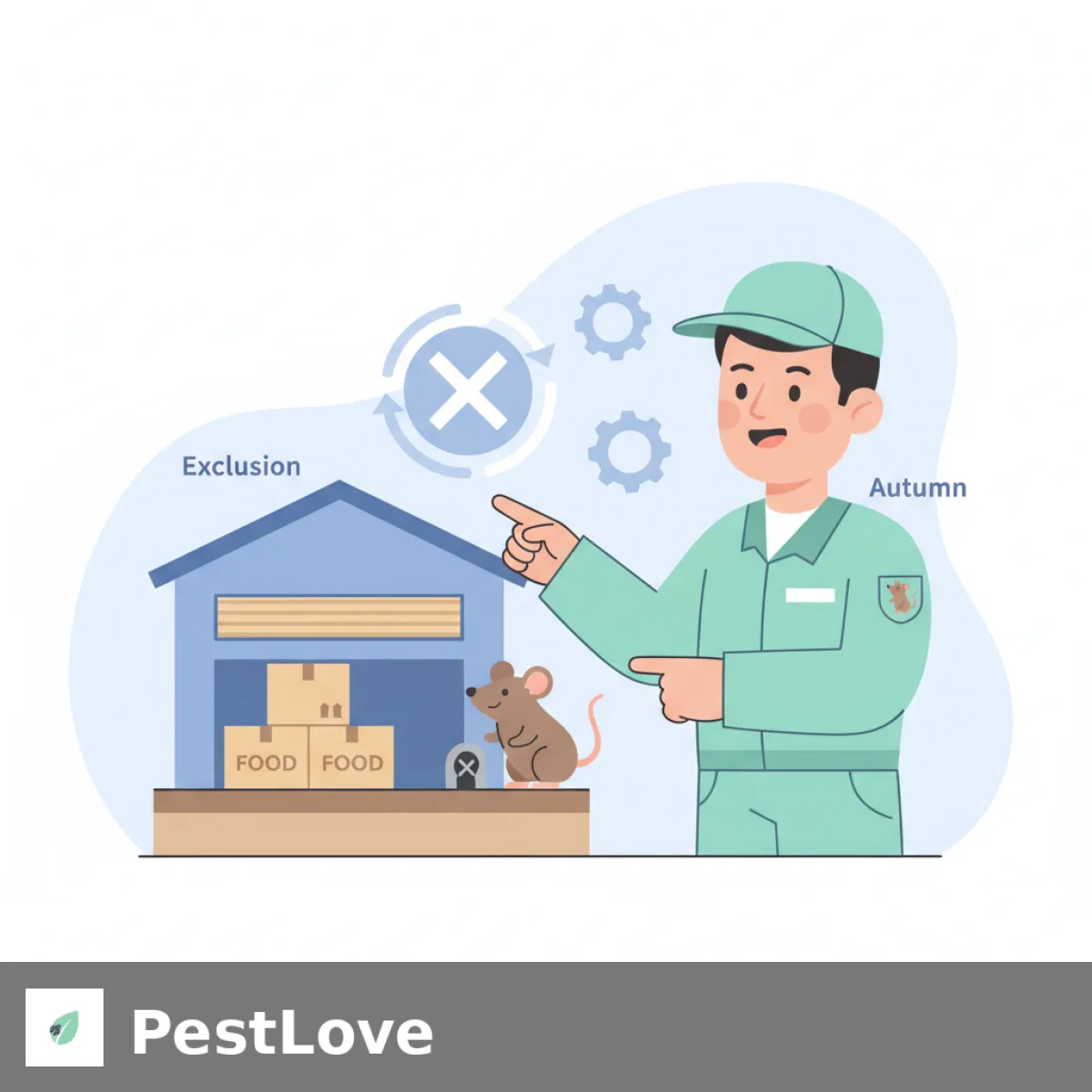
Key Takeaways
- Autumn (March–May) is the peak period for rodent ingress into New Zealand food warehouses as temperatures decline and wild food sources diminish.
- Norway rats (Rattus norvegicus) and ship rats (Rattus rattus) are the primary species targeting food storage facilities.
- Exclusion — sealing gaps as small as 6 mm for mice and 12 mm for rats — is the most cost-effective long-term strategy.
- New Zealand's food safety framework under the Food Act 2014 and MPI (Ministry for Primary Industries) standards require documented pest management plans.
- Anticoagulant rodenticide use must comply with EPA New Zealand regulations, with increasing emphasis on non-toxic and mechanical control methods.
Why Autumn Is the Critical Window
New Zealand's temperate maritime climate produces a sharp behavioural shift in rodent populations between March and May. As overnight temperatures fall below 10–12 °C across much of the North and South Islands, both Norway rats and ship rats abandon outdoor harbourage and actively seek the warmth, shelter, and reliable food sources that warehouses provide.
Food warehouses face compounded risk. Stored grain, packaged dry goods, fresh produce, and even cardboard packaging materials serve as attractants. Research from Landcare Research (Manaaki Whenua) confirms that rodent activity around commercial structures increases markedly during the autumn transition, with ingress attempts peaking in April and May in most regions.
Identifying the Target Species
Norway Rat (Rattus norvegicus)
The Norway rat is the larger of the two common pest species, typically weighing 200–500 g. It is a burrower by nature, often entering warehouses at ground level through floor drains, damaged slab edges, loading dock gaps, and utility penetrations. Droppings are blunt-ended and approximately 18–20 mm long. Norway rats tend to favour lower levels of a structure and are strong swimmers, making drainage infrastructure a key entry vector.
Ship Rat (Rattus rattus)
The ship rat — also called the roof rat — is lighter (150–250 g) and an agile climber. It commonly enters food warehouses via overhead service lines, roofline gaps, damaged soffit panels, and poorly sealed ventilation openings. Droppings are spindle-shaped and around 12 mm long. Ship rats are particularly problematic in racking systems and mezzanine areas where they can nest undisturbed among stored pallets.
House Mouse (Mus musculus)
Though smaller and less destructive per individual, house mice can squeeze through gaps as narrow as 6 mm and reproduce rapidly. They frequently co-occur with rat species in warehouse environments and should not be excluded from monitoring programmes.
Exclusion: The Foundation of Autumn Rodent IPM
Structural exclusion is the cornerstone of any effective rodent management programme. For food warehouses operating under MPI-registered Food Safety Plans, exclusion work should be completed before the end of March — ideally during the late-summer maintenance window.
Priority Inspection Points
- Loading docks and roller doors: Inspect dock levellers, weather seals, and the gap beneath roller shutters. Install brush strips or rubber dock seals rated for rodent exclusion. Any gap exceeding 10 mm under a roller door is a potential entry point.
- Service penetrations: Seal all pipe, conduit, and cable entry points with rodent-proof materials such as stainless-steel wool, cement mortar, or expanding metal mesh. Polyurethane foam alone is insufficient — rats gnaw through it within hours.
- Roof and soffit junctions: Ship rats exploit gaps where roofing iron meets fascia boards. Inspect the full roofline, paying particular attention to areas where downpipes, ventilation ducts, or electrical conduit penetrate the building envelope.
- Floor drains and sumps: Fit non-return valves or rodent-proof grates on all floor drains. Norway rats readily travel through drainage systems.
- Ventilation openings: Ensure all vents and louvres are fitted with galvanised mesh screens no larger than 6 mm aperture.
Material Selection
Effective exclusion materials must resist gnawing and corrosion in New Zealand's humid coastal and temperate environments. Recommended options include:
- Stainless-steel woven mesh (6 mm aperture or smaller)
- Galvanised steel kick plates at door bases
- Copper mesh stuffing for irregular gaps
- Concrete or cement mortar for permanent slab repairs
- Commercial rodent-proof door sweeps and brush seals
Monitoring and Detection
A robust monitoring programme enables early detection before an exploratory intrusion becomes a breeding population. Autumn monitoring intensity should increase from March onward.
Monitoring Tools
- Tamper-resistant bait stations: Position externally at 10–15 m intervals around the building perimeter, with internal stations at loading docks and high-risk zones. Use non-toxic monitoring blocks to track activity without deploying toxicant unnecessarily.
- Snap traps: Place along internal wall runs, behind racking, and near known entry points. Traps provide physical evidence of species and population pressure.
- Tracking cards and UV powder: Useful for mapping rodent travel routes inside the facility, particularly in overhead cable trays and racking systems where ship rats are active.
- Digital monitoring systems: Electronic trap sensors and remote bait station monitors provide real-time alerts, reducing inspection intervals and enabling rapid response — an increasingly adopted technology in New Zealand's larger food logistics operations.
Record-Keeping
Under MPI food safety requirements and third-party audit standards such as BRC Global Standards and FSSC 22000, all monitoring data must be documented. Records should include station identification numbers, inspection dates, species identified, activity levels, and corrective actions taken. Trend analysis of monitoring data across autumn months is essential for evaluating programme effectiveness.
Sanitation and Harbourage Reduction
Exclusion and monitoring are significantly undermined if sanitation standards slip. Warehouse managers should enforce the following protocols as part of the autumn IPM programme:
- Eliminate spilled product immediately. Even small quantities of grain, flour, or seed beneath racking create powerful attractants.
- Store all palletised goods at least 450 mm from walls to allow inspection access and reduce harbourage opportunities.
- Remove external harbourage: cut vegetation back at least 1 m from all building walls, clear accumulated waste and disused equipment, and ensure skip bins are lidded and emptied on schedule.
- Manage waste streams rigorously. Compactors and waste holding areas should be cleaned weekly at minimum during autumn.
For related guidance on stored product protection, see Pantry Moth Prevention for Australian Supermarkets, which covers complementary sanitation and stock rotation principles applicable to Southern Hemisphere food operations.
Chemical and Non-Chemical Control
Rodenticides
New Zealand's EPA regulates all rodenticide products under the Hazardous Substances and New Organisms Act 1996 (HSNO). In food warehouse environments, rodenticide use should follow strict IPM hierarchy — deployed only when exclusion and trapping prove insufficient. First-generation anticoagulants (e.g., diphacinone, coumatetralyl) are preferred over second-generation compounds (brodifacoum, bromadiolone) to reduce secondary poisoning risk to non-target wildlife, a concern underscored by the Department of Conservation and regional councils.
All rodenticide placements inside food warehouses must be in locked, tamper-resistant bait stations anchored to the structure, positioned where contamination of food products is impossible. External bait stations should be clearly mapped and inspected at intervals specified in the pest management plan.
Non-Chemical Methods
- Snap traps and electronic kill traps: Effective for both monitoring and population reduction, particularly inside the facility where toxicant use carries contamination risk.
- Live-capture traps: Occasionally used for species identification or in ultra-sensitive areas, though they require daily inspection.
- Exclusion reinforcement: Ongoing sealing of newly identified entry points based on monitoring data.
Regulatory Compliance in New Zealand
Food warehouse operators must ensure rodent management programmes satisfy multiple overlapping requirements:
- Food Act 2014 / Food Regulations 2015: Registered food businesses must operate under an approved Food Safety Plan (commonly based on a Food Control Plan or National Programme) that includes pest management provisions.
- MPI guidance: The Ministry for Primary Industries publishes sector-specific guidance on pest management expectations for food premises.
- Third-party audit schemes: Facilities exporting or supplying major retail chains typically operate under BRC, SQF, or FSSC 22000, all of which mandate documented, evidence-based pest control programmes with trending analysis.
- EPA HSNO requirements: Any rodenticide use must comply with product label directions and approved handler requirements where applicable.
Operators managing cold storage sections should also review Rodent Exclusion Protocols for Cold Storage Distribution Centers for supplementary guidance on temperature-controlled environments.
When to Call a Professional
Warehouse managers should engage a licensed pest control operator in the following situations:
- Monitoring data indicates a sustained increase in rodent activity despite exclusion and sanitation measures.
- Live rodents or fresh droppings are found inside product storage areas or near food contact surfaces.
- An upcoming third-party food safety audit requires independent verification of the pest management programme.
- Structural deficiencies require specialist rodent-proofing beyond routine maintenance capabilities.
- Rodenticide application is required and the facility lacks personnel with approved handler certification.
In New Zealand, the Pest Management Association of New Zealand (PMANZ) maintains a directory of qualified operators experienced in commercial food facility pest management. Engaging a PMANZ-member company provides assurance of professional standards and regulatory compliance.
Autumn Exclusion Timeline
- Late February – Early March: Conduct full perimeter and internal structural audit. Identify and prioritise exclusion deficiencies.
- March: Complete all structural repairs and exclusion installations. Increase external bait station monitoring frequency to fortnightly.
- April: Switch internal monitoring to weekly inspections. Deploy additional snap traps at high-risk interior zones. Review sanitation compliance with warehouse staff.
- May: Evaluate programme data. Adjust station placement and trap density based on trend analysis. Prepare documentation for any scheduled audits.
