
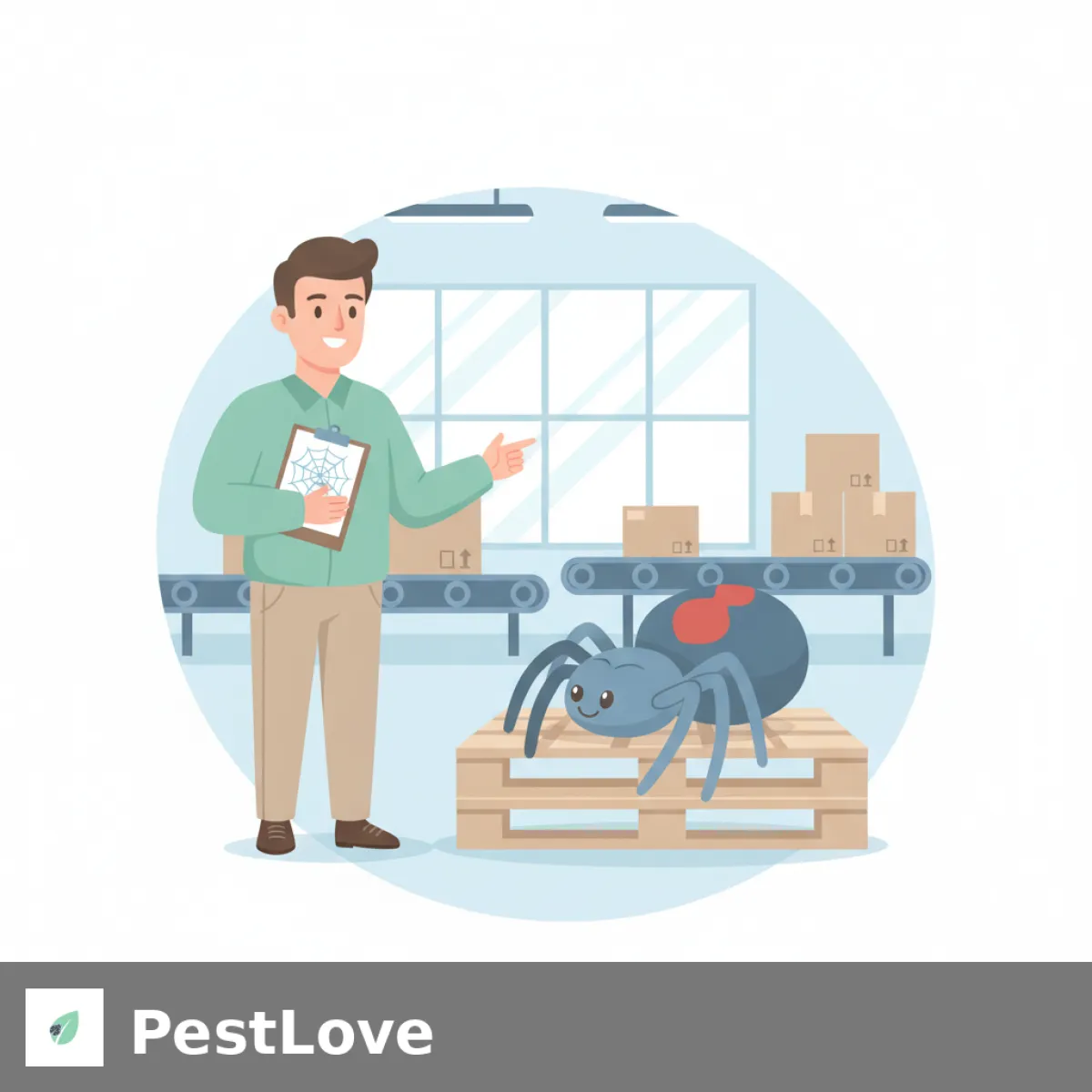
The Silent Threat in the Supply Chain
In the high-velocity world of logistics, where turnaround times and efficiency metrics dominate the conversation, a small, eight-legged biological hazard often goes unnoticed until a worker reports a bite. As a pest management professional who has walked the floors of countless distribution centers, I can tell you that Redback spiders (Latrodectus hasseltii) are not just a backyard nuisance; they are a significant Occupational Health and Safety (OHS) liability for loading docks and warehouses.
Redbacks thrive in the very environments we create for storage and transport. The combination of dry, sheltered corners, abundant insect prey attracted to security lighting, and the constant movement of pallets creates a perfect storm for infestation. Unlike rodents that damage stock, Redbacks threaten your most valuable asset: your workforce. A bite incident can lead to medical leave, workers' compensation claims, and a severe hit to team morale.
This guide is designed for facility managers and safety officers. We will move beyond basic identification and dive into the operational protocols required to manage this risk effectively using Integrated Pest Management (IPM) standards.
Identification: Knowing the Enemy on the Dock
Effective control starts with accurate identification. In a dimly lit warehouse, it is easy to mistake a common house spider for something more sinister. However, the Redback is distinct.
- Appearance: The female is the primary concern. She is jet black, approximately 1cm in body length (about the size of a large pea), with a distinctive red or orange stripe on the upper side of her abdomen. Juveniles may have white markings.
- The Web: This is your biggest clue during inspection. Redbacks build messy, tangled webs, often with sticky "trip lines" extending to the ground. Unlike the neat orbs of garden spiders, a Redback web looks chaotic and dirty, often incorporating leaves, dust, or debris from the warehouse floor.
- Egg Sacs: Finding these indicates an established population. They are round, creamy-white or yellow balls, suspended within the web.
For a broader comparison of spider species you might encounter, see our guide on identifying Redback and Funnel-web spiders.
Why Logistics Centers are Prime Targets
In my field experience, I’ve found that Redbacks are opportunistic travelers. They don't just wander in; they are often shipped in. A pallet sitting in a holding yard in a warm region can easily harbor a female and her egg sac, which is then transported into your facility.
High-Risk Zones in Warehouses:
- Pallet Racking: The void spaces in racking beams are ideal nesting sites. They offer protection from overhead predators and are rarely disturbed.
- Shrink Wrap Machines: The warmth and vibration, combined with the nooks and crannies of the machinery, attract insects, which in turn attract spiders.
- Loading Dock Door Seals: The rubber seals around dock levelers and doors are a classic entry point and nesting ground.
- Underside of Pallets: This is the most dangerous zone for manual handlers. Workers lifting pallets by hand are at high risk if they place their fingers into the nesting zone.
Just as we see with Brown Recluse spiders in distribution centers, the clutter and structure of logistics hubs provide an infinite number of harborage points.
Occupational Safety: The Cost of Complacency
A Redback bite is venomous. While fatalities are rare thanks to antivenom, the symptoms—severe pain, sweating, muscular weakness, and nausea—can debilitate a worker for days. From a management perspective, the response to a sighting should be immediate.
Recommended Safety Protocols:
- Gloves Mandatory: Enforce a strict policy of wearing protective gloves when handling pallets or stock that has been stationary for more than 24 hours.
- Visual Inspection: Train staff to "scan before they span." A quick visual check of pallet corners and racking beams can prevent an incident.
- Reporting Culture: Encourage staff to report webs immediately without fear of reprimand for slowing down operations. A web reported today prevents a bite tomorrow.
Integrated Pest Management (IPM) Strategies
Reliance on chemical spraying alone is a failure of strategy. In a logistics environment, you cannot spray every square inch of a 50,000-square-foot facility. Instead, we use IPM.
1. Cultural Control & Sanitation
The most effective method is habitat modification. If they can't build a web, they can't survive.
- De-clutter: Remove empty cardboard, unused pallets, and plastic debris from corners and along walls. These are effectively "spider hotels."
- Regular Cleaning: Use industrial vacuums to remove webs and egg sacs. Physically removing the egg sac is arguably more effective than spraying it, as the silk sac is highly water-repellent and resistant to chemical penetration.
- Lighting Management: Insects are attracted to bright white security lights at dock doors. Redbacks follow the food. Consider switching to sodium vapor lights or LED wavelengths that are less attractive to flying insects.
2. Physical Exclusion
Stop them from entering. Inspect the weather stripping on all dock doors. If you can see daylight under a door, a spider can walk right in. This also helps with preventing rodent ingress, killing two birds with one stone.
3. Chemical Control (Professional Application)
When chemical intervention is necessary, it must be targeted. Broadcasting pesticides over inventory is rarely safe or legal.
- Dusting: Application of insecticidal dusts into racking voids and wall cavities is highly effective. It stays active for months and affects spiders hiding deep in crevices where sprays can't reach.
- Spot Treatments: Targeted application of wettable powders or micro-encapsulated pyrethroids along baseboards and racking legs creates a barrier.
- Fumigation: In extreme cases of imported container contamination, container fumigation may be required before goods are unloaded.
When to Call a Professional
While maintenance staff can handle basic cleaning, spider control in a high-volume warehouse requires a licensed pest management professional. You should engage a professional service when:
- Egg Sacs are Frequent: Finding one web is an incident; finding egg sacs indicates a breeding cycle.
- Incidents Occur: Any bite incident requires a formal investigation and a certified pest clearance to meet OHS obligations.
- Audit Compliance: If your facility handles food, pharmaceuticals, or medical devices, you are likely subject to GMP or HACCP audits which require a documented pest control program.
Conclusion: A Proactive Defense
Managing Redback spiders in logistics is not about achieving a sterile environment—that is impossible in an open loading dock. It is about managing risk to an acceptable level. By combining staff awareness, rigorous sanitation, and targeted professional treatments, you turn your warehouse from a spider haven into a fortress of productivity. Don't wait for a medical emergency to review your pest control protocols.
