
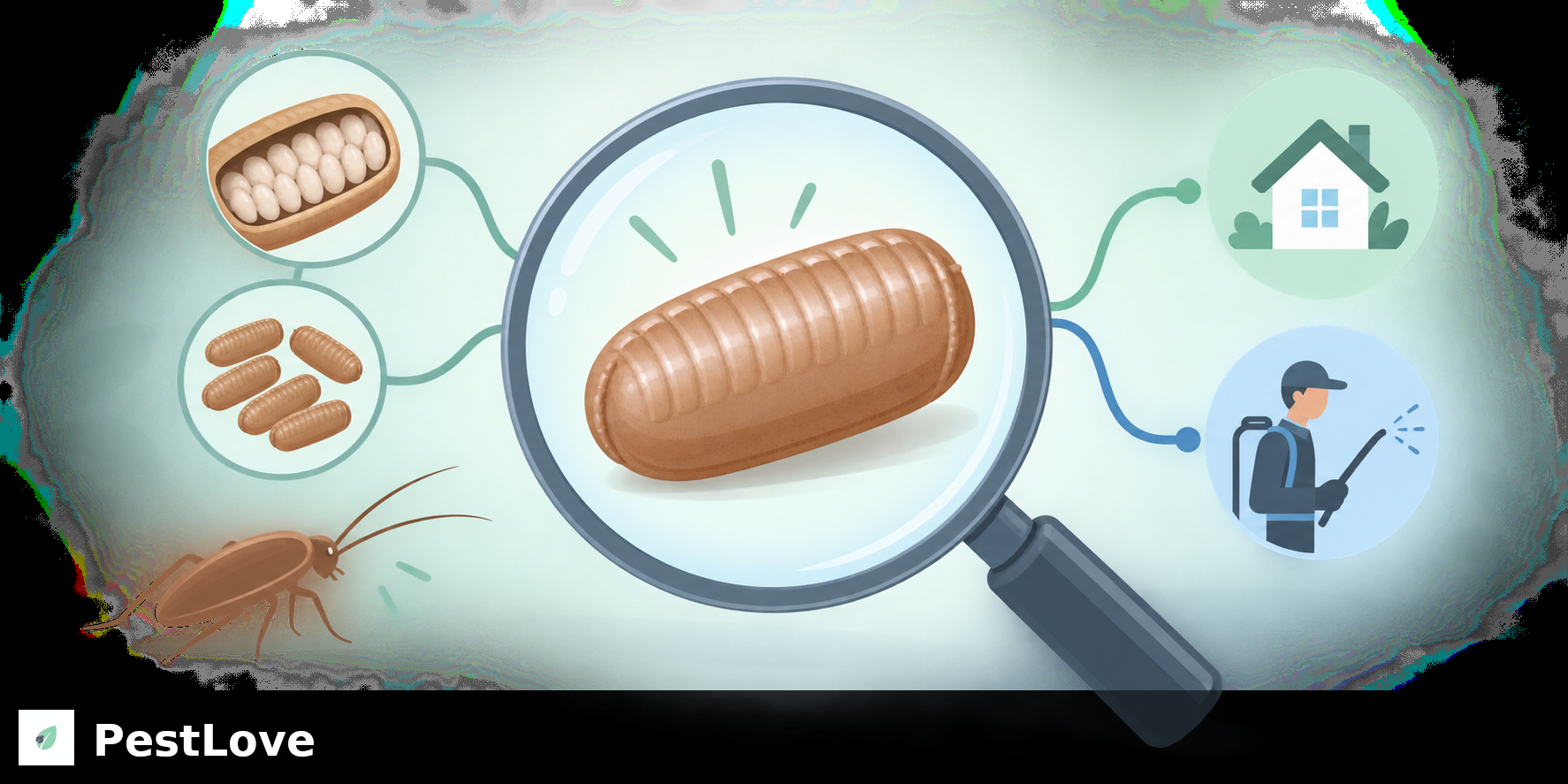
A confirmed cockroach egg case shows that reproduction occurred, but its diagnostic value depends on the species, condition and location of the case. One case cannot reliably show how many cockroaches remain, when the eggs were produced or whether an infestation is still active.
The capsule is called an ootheca, with the plural form oothecae. It contains multiple eggs. Cockroach species differ in how long females carry the capsule and where they deposit it, so the surrounding evidence matters as much as its appearance.
How much does one egg case reveal?
| Observation | Reasonable interpretation | Immediate response |
|---|---|---|
| Egg case attached to a live female | This confirms a live cockroach and is consistent with active reproduction. A light beige capsule carried at the tip of a small cockroach's abdomen is characteristic of a female German cockroach. | Photograph the insect, retain it for identification if practical and inspect nearby cracks, appliances, food and water sources. |
| Detached, intact case | The case may contain developing eggs, may no longer be viable or may have arrived on a transported object. Appearance alone does not confirm viability. | Photograph its position, place it in a sealed container or remove it with a vacuum, and begin monitoring nearby. |
| Opened or visibly empty case | Nymphs may have emerged, but the case alone cannot date the event or prove that living cockroaches remain nearby. | Look for nymphs, cast skins, fecal spotting and additional cases. |
| Several cases in one protected space | The location may have served repeatedly as a deposition site or harborage. | Expand the inspection to adjoining cracks, equipment and utility penetrations. |
| First-instar smokybrown cockroach nymphs | A hatch is likely to have occurred nearby. University of Georgia guidance states that first-instar smokybrown cockroaches are not very mobile and that their presence suggests a nearby egg-case hatch. | Prioritize the immediate area for inspection, monitoring and control. |
| Case attached to furniture, an appliance, a box or another transported item | The object may be an introduction route rather than proof that the surrounding room was the original source. | Isolate and inspect the item, then check its receiving and storage route. |
Species clues from the case and its location
Size and color overlap among species, so identification should not rest on the capsule alone. Adults, nymphs, placement and surrounding habitat provide additional evidence.
German cockroach
The German cockroach, Blattella germanica, is an indoor species associated with kitchens, bathrooms and other warm areas near food and water. Its light beige ootheca is about 1/4 inch, or 6 millimeters, long. Females carry it for most of an approximately 30-day incubation period and usually release it shortly before hatching. UC IPM reports about 30 young per case.
A female carrying an ootheca in a kitchen or another food-preparation area is strong evidence of current indoor activity. A detached case is less informative because monitoring is still needed to determine whether live cockroaches remain.
Brown-banded cockroach
The brown-banded cockroach, Supella longipalpa, prefers warmer locations than the German cockroach. Females glue light brown cases to protected surfaces. Documented locations include ceilings, furniture, closets and areas near electrical appliances or behind wall decorations.
Cases above counter height, behind pictures or inside furniture should shift the inspection beyond plumbing areas. In offices, hotels and mixed-use buildings, check furniture joints, shelving, stored materials and warm equipment. PestLove's guide to brown-banded cockroach detection in offices and server rooms covers that setting in more detail.
American cockroach
The American cockroach, Periplaneta americana, is a large reddish-brown species associated with warm, humid locations such as sewers, storm drains and steam tunnels. Females carry their egg cases briefly and then cement them to protected surfaces.
Cases near floor drains, service voids or below-grade utility routes justify inspecting for moisture, damaged pipes and movement through penetrations. A case near a drain does not prove that the drain is the source, so sticky traps can help compare activity along possible routes. Facility managers can also consult PestLove's guide to American cockroaches in commercial drainage systems.
Oriental cockroach
The Oriental cockroach, Blatta orientalis, produces dark red-brown cases that may appear nearly black. The species uses cool, dark and damp places such as basements, drains, garages and water-meter boxes.
A dark case at a low level near persistent moisture is consistent with Oriental cockroach activity, especially when accompanying adults are very dark. Inspect leaks, drainage, door thresholds and below-grade openings. For relevant facilities, see PestLove's guide to Oriental cockroach prevention in basement utility tunnels.
What an egg case cannot establish
- Population size: The number of cases found is not a dependable census. Other cases and live insects may remain concealed.
- Current activity: An old, empty case records past reproduction but does not prove that living cockroaches remain.
- Exact age: Visual appearance alone cannot reliably date a case.
- Species with certainty: A photograph of a small brown capsule may be insufficient. Adult markings, nymphs and placement should be considered together.
- Point of origin: Cases can be carried into buildings on appliances, furniture, boxes and other stored or transported items.
How to inspect after finding a case
- Record the evidence. Photograph the case beside a ruler and note whether it was attached or loose. Record the room, surface and height. Place it in a sealed container if professional identification is needed.
- Inspect the immediate area. Use a flashlight around cracks, cabinet voids, appliance motors, pipe penetrations, drains, furniture joints and stored materials. Look for live insects, nymphs, cast skins, fecal marks and more cases.
- Place sticky monitors. Put glue boards against wall edges and near suspected harborages or food and water sources. Number the monitors and record their positions and catches. Sticky traps locate and track activity but do not control an established infestation by themselves.
- Check introduction routes. Inspect incoming boxes, used appliances, furniture and food deliveries. Reduce unnecessary cardboard and clutter that can provide hiding places.
- Correct supporting conditions. Repair leaks, remove food residue, use sealed food and waste containers, reduce clutter and close accessible entry points.
- Reinspect and compare records. New nymphs, additional cases or continuing trap catches indicate continuing activity. Empty, poorly positioned traps do not prove elimination.
Removal and integrated control
UC IPM recommends vacuuming cracks and crevices to remove cockroaches, cast skins, egg cases and debris. It also recommends a HEPA or triple-filter vacuum because airborne fragments of cockroach skins and droppings may cause allergies when inhaled. Combine physical removal with monitoring, sanitation, moisture correction and exclusion.
The U.S. Environmental Protection Agency describes integrated pest management as combining preventive measures with reduced-risk treatment methods to reduce reliance on chemical pesticides. For cockroaches, practical prevention includes removing food, water and shelter and closing entryways and hiding places.
If pesticides are used, choose a product permitted for the location under applicable local rules and follow the entire label. Keep baits and other products out of the reach of children and pets. Place targeted treatments near identified harborages or travel routes. Spraying alone does not remove the food, water, shelter or entry routes that support an infestation.
Total-release foggers are a poor substitute for inspection and integrated control. EPA warns that their flammable propellants can cause a fire or explosion if the products are misused. Failure to leave the treated premises or to air them out before reentry can also result in illness.
Commercial response priorities
- Restaurants and food production: Protect exposed food and utensils, document the finding, inspect equipment and utility penetrations, and notify the pest management provider. PestLove's commercial kitchen resistance guide provides related guidance for German cockroach management.
- Hotels: Inspect the affected room and relevant service routes, including housekeeping equipment, linen storage, furniture and food or beverage equipment. Use monitoring records to distinguish an isolated introduction from continuing activity.
- Warehouses: Isolate suspect goods when operationally feasible, inspect pallets and packaging, and compare findings across receiving, storage and dispatch areas.
- Multi-unit properties: Inspect connected units and shared service voids when evidence indicates movement beyond one room. Restricting the inspection to the reporting unit may miss activity elsewhere.
Serious, persistent or widespread activity warrants assessment by a pest management professional who meets local qualification requirements. Professional help may also be appropriate in food facilities, healthcare settings, lodging properties, multi-unit buildings and locations where pesticide use requires specialized training.