
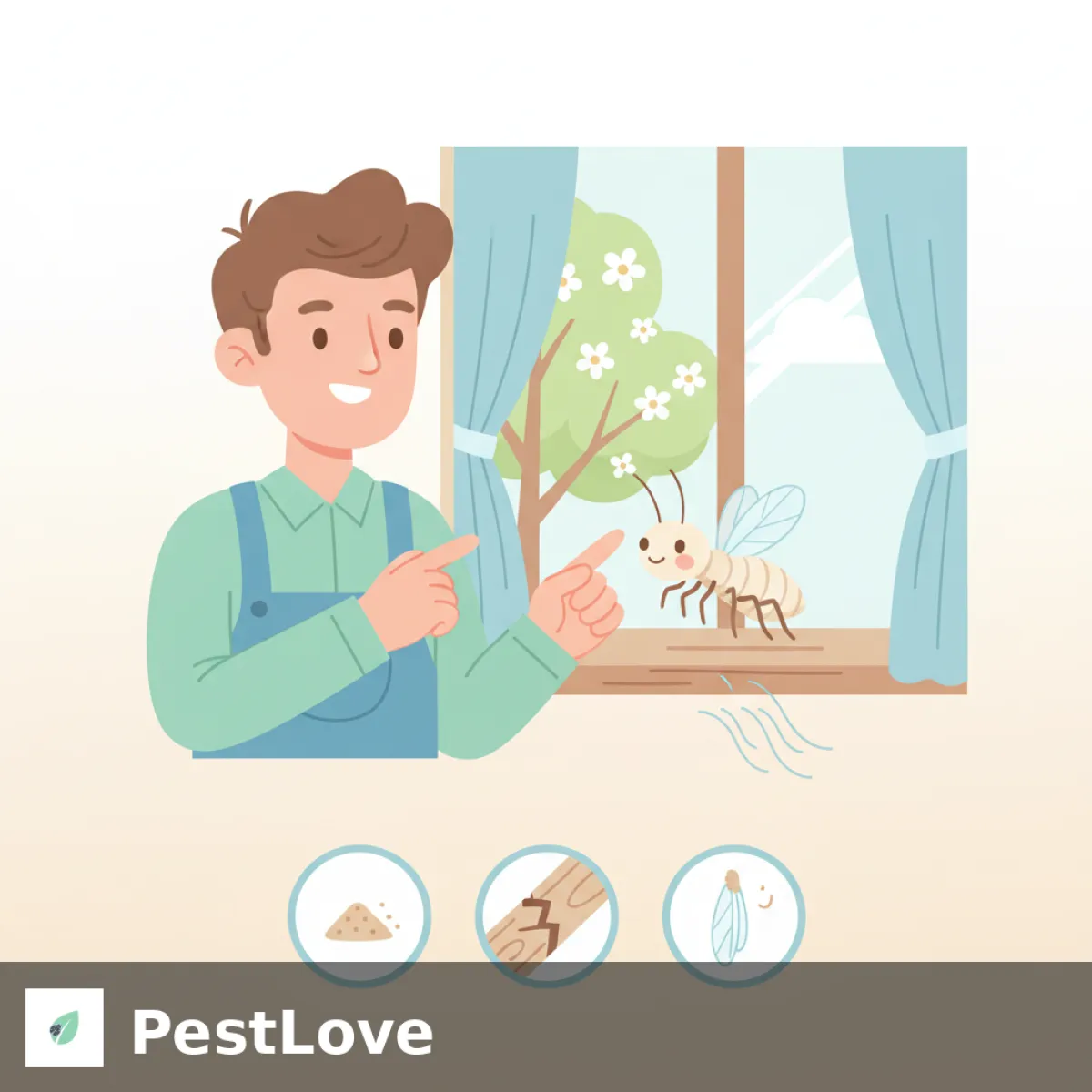
The Spring Awakening: Why Termites Swarm Now
As winter creates a thaw and spring rains begin to saturate the soil, a biological alarm clock goes off beneath the foundation of millions of homes. This is the start of the termite swarming season. For homeowners, witnessing a swarm—often described as a sudden eruption of winged insects—can be terrifying. However, from an entomological perspective, a swarm is simply a reproductive flight designed for colony expansion.
While the sight of hundreds of flying insects is distressing, the swarm itself does not bite, sting, or consume wood. Its sole purpose is to pair off, mate, and establish new colonies. The real danger lies in what the swarm signifies: a mature, well-established colony is operating nearby, possibly within the very structure of your home.
Identifying the Swarmer (Alate): Termite vs. Flying Ant
One of the most frequent calls received by pest control professionals in March and April involves the misidentification of flying ants as termites. Distinguishing between the two is critical for assessing the threat level.
Key Morphological Differences
- Antennae: Termites possess straight, beaded antennae. Flying ants have elbowed (bent) antennae.
- Waist: Termites have a broad waist, making their body look like a single, uniform segment. Ants have a pinched, constricted waist separating the thorax from the abdomen.
- Wings: Both insects have two pairs of wings. However, termite wings are equal in length and have a milky, translucent appearance with many veins. Flying ant wings are unequal in length (the front pair is longer) and generally clearer.
For a deeper dive into visual identification, refer to our guide on Termite Swarms vs. Flying Ants.
The Silent Signs: What to Look For Before You See Bugs
By the time you see a swarm cloud in your living room, the infestation is undeniable. However, subtle signs often precede the main event. A vigilant homeowner can spot these indicators early.
1. Discarded Wings on Windowsills
Termite swarmers (alates) are phototactic—they are biologically attracted to light. If a swarm occurs indoors, the insects will instinctively fly toward windows, glass doors, or light fixtures. After a brief flight, they land, twist off their wings, and seek a mate. Often, you will not see the termites themselves, but you will find piles of shed wings accumulating on window ledges or caught in spider webs in the corner of a room.
2. Mud Tubes on Foundations
Subterranean termites (Reticulitermes spp.) require high humidity to survive. To traverse exposed areas like concrete foundations, they construct protective tunnels made of soil, wood particles, and saliva. These "mud tubes" are typically the width of a pencil. Breaking open a tube can reveal worker termites; however, even empty tubes indicate past or present activity.
3. Frass (Termite Droppings)
Unlike subterranean termites, drywood termites do not use soil tubes. Instead, they push fecal pellets, known as frass, out of "kick-out" holes in the wood. These pellets often resemble a pile of salt and pepper or fine sawdust. If you notice unexplained grit accumulating below furniture or baseboards, use a magnifying glass: termite frass has a distinct hexagonal shape.
Evaluating Risk Factors Around the Home
Prevention is the cornerstone of Integrated Pest Management (IPM). Reducing conditions conducive to termite activity can lower the likelihood of a colony establishing itself.
- Moisture Control: Repair leaky faucets, ensure gutters drain away from the foundation, and fix grading issues that allow water to pool near the home. Termites thrive in moist environments.
- Wood-to-Ground Contact: Ensure that siding, door frames, and porch steps do not directly touch the soil. Create a buffer zone using concrete or metal flashing.
- Mulch Management: While mulch retains moisture for plants, it also provides a bridge for termites. Keep mulch at least 12 inches away from the foundation.
For a comprehensive strategy, read The Professional Guide to Termite Prevention.
Immediate Steps If You See a Swarm
If you witness a swarm inside your home, follow these professional protocols:
- Do Not Panic: The house will not collapse overnight. Termite damage is slow and cumulative.
- Do Not Spray Indiscriminately: emptying a can of consumer-grade bug spray will only kill the visible swarmers, not the colony. It also contaminates the area, making professional inspection more difficult.
- Collect a Sample: Capture a few insects (alive or dead) in a jar or bag. This allows a professional to confirm the species—identifying whether you have Subterranean, Drywood, or Formosan termites dictates the treatment plan.
- Note the Location: Mark where the swarm emerged if possible. This helps technicians locate the exit holes or mud tubes.
When to Call a Professional
While some pest issues can be managed with DIY methods, termites pose a structural threat that usually requires professional intervention. Soil treatments, bait stations, and fumigation require licensed application and specialized equipment.
If you suspect an infestation, consult our resource on Professional vs. DIY Termite Treatments to understand your options. A timely inspection can save thousands in repair costs.
Key Takeaways for Homeowners
- Spring rain and warmth trigger reproductive swarms.
- Distinguish termites from ants by checking the waist and wing length.
- Discarded wings on windowsills are a primary indoor warning sign.
- Mud tubes on exterior foundations indicate subterranean termite activity.
- Save a sample of the insect for professional identification.