Key Takeaways
- Two distinct pests, two distinct habitats: Fungus gnats (Bradysia spp., Sciaridae) breed in saturated potting media and planter beds; drain flies (Clogmia albipunctata and Psychoda spp., Psychodidae) breed in the organic biofilm lining drains, sumps, and irrigation catch basins.
- Rain is the trigger, not the cause: Bogotá's bimodal rainfall pattern (peaks around March–May and September–November) raises atrium humidity and soil moisture, accelerating larval development already latent in the substrate.
- Sanitation outranks spraying: Adult knockdown treatments produce a visible but temporary result. Both species rebound within one generation unless the larval medium is physically altered or removed.
- Larvicides are the professional standard: Bacillus thuringiensis subsp. israelensis (Bti) for gnat-infested media and enzymatic drain foams for psychodid biofilm form the backbone of any credible programme.
- Guest perception is the business risk: Small flies over a breakfast buffet or hovering near a lobby planter generate review-site complaints far out of proportion to any health hazard.
Why Bogotá Atriums Are High-Risk Environments
Bogotá sits at roughly 2,640 metres above sea level, producing a cool, humid climate with mean temperatures near 14°C and pronounced rainy periods. Modern hotel atriums in the city are engineered to counteract that cool exterior: glazed roofs, supplemental heating, and dense interior plantings create a warm, humid microclimate substantially different from the street outside. That microclimate is precisely what small dipteran pests require.
The combination is unusual. Outdoor temperatures are too cool for sustained heavy fly pressure, so many properties assume low risk. Inside the atrium, however, temperatures often sit between 18°C and 24°C with relative humidity above 70 percent — conditions in which fungus gnats complete a generation in roughly three to four weeks and drain flies in as little as one to three weeks. Rainfall compounds the problem by raising groundwater, slowing drain evacuation, backing up irrigation runoff, and increasing ambient humidity throughout the enclosed volume.
Identification: Telling the Two Species Apart
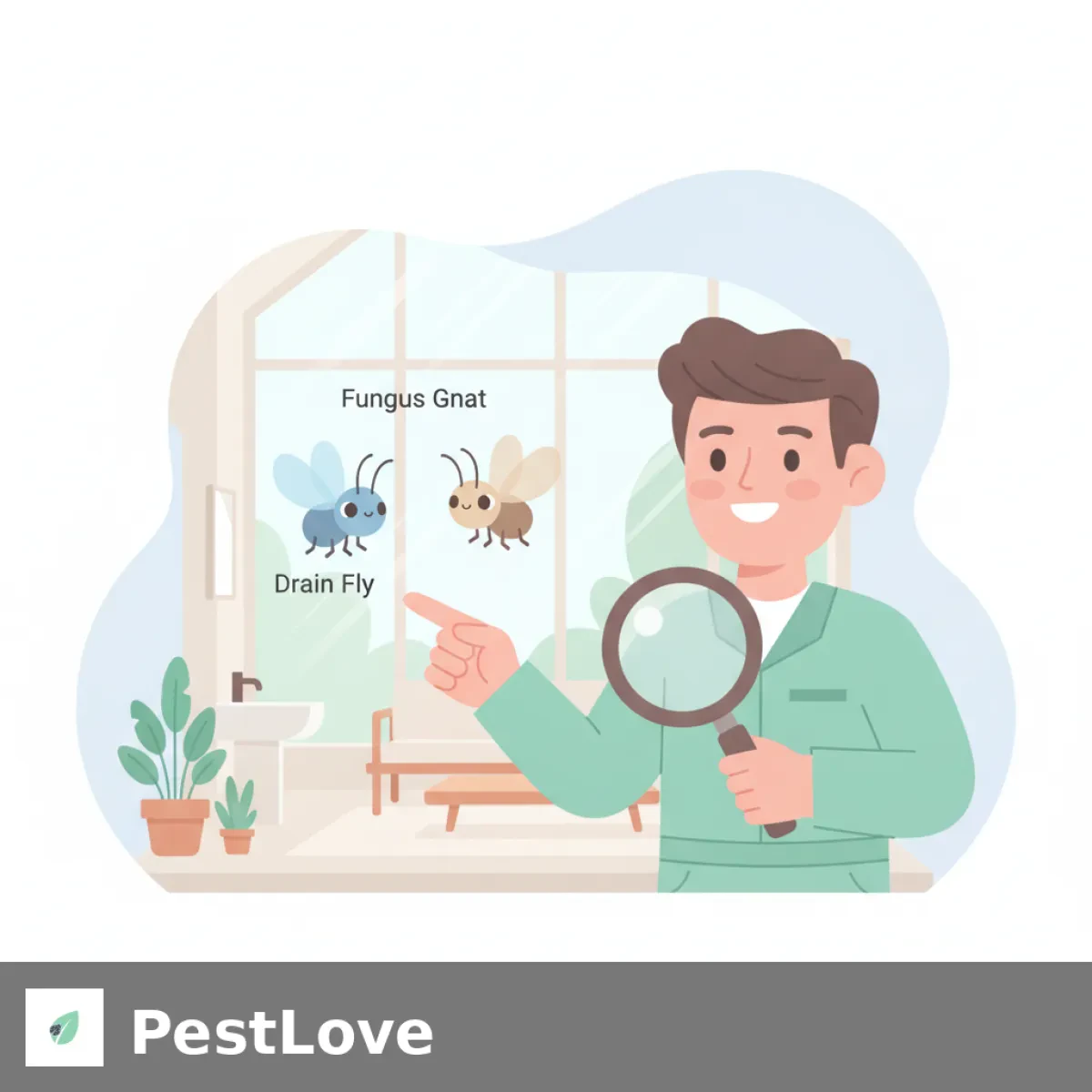
Fungus Gnats (Sciaridae)
Adult fungus gnats are delicate, dark grey to black flies roughly 2–4 mm long, with long legs, slender antennae, and a characteristic Y-shaped vein pattern on clear wings. They fly weakly and erratically, drifting near soil surfaces, window glass, and illuminated surfaces. Larvae are translucent white with a distinct shiny black head capsule, typically 3–6 mm long, and are found in the upper few centimetres of moist potting media where they feed on fungi, algae, and decaying root material.
Drain Flies (Psychodidae)
Drain flies — also called moth flies or filter flies — are markedly different in appearance. Adults are 1.5–5 mm, tan to grey, and densely covered in hairs, giving a fuzzy, moth-like profile. Wings are held roof-like over the body at rest. They are poor fliers, moving in short hops, and are typically observed resting on walls near floor drains, in service corridors, or on tile above sumps. Larvae are legless, elongated, and semi-aquatic, living within the gelatinous biofilm that accumulates on drain walls, in grease traps, and beneath loose floor tile where standing moisture collects.
Field Distinction for Facility Staff
A simple rule serves front-line staff well: if the fly hovers over plant material, suspect fungus gnats; if it rests motionless on vertical surfaces near drains, suspect drain flies. Confirmation should always be tied to the location of activity clusters recorded on a floor plan.
Behaviour and Biology Driving Post-Rain Surges
Fungus gnat females deposit eggs in moist organic substrate, often 100–200 eggs across a lifespan of about one week. Larvae require continuously moist media; if the top layer of potting mix dries fully, larval mortality rises sharply. Rain-driven humidity in a glazed atrium suppresses that natural drying cycle, allowing several overlapping generations to accumulate. Overwatering by landscaping contractors — a common practice during cool, cloudy weeks when plants transpire less — reinforces the effect.
Drain fly larvae are not dependent on standing water so much as on the biofilm itself, a slime of bacteria, fats, and organic debris adhering to pipe interiors. This is why running water through a drain, or pouring bleach down it, rarely resolves an infestation: the treatment passes over the film without dislodging it. Extended rain periods raise the water table and can cause partial backflow in older municipal connections, delivering additional organic loading to atrium and basement drains.
Both species are largely nuisance pests rather than significant disease vectors. Drain flies have been documented mechanically carrying bacteria from unsanitary substrates and, in rare cases, have been implicated in nasal or bronchial allergic responses and isolated reports of accidental myiasis. Fungus gnat larvae can damage ornamental root systems, weakening the atrium planting scheme and adding a horticultural replacement cost.
Prevention: An IPM Framework for Atrium Environments
Integrated Pest Management, as defined by the US Environmental Protection Agency and university extension programmes, prioritises inspection, habitat modification, and monitoring over routine chemical application. For atriums, that translates into five workstreams.
1. Irrigation and Media Management
- Shift landscaping contracts to moisture-metered irrigation rather than fixed schedules. Allow the top 3–5 cm of media to dry between waterings wherever plant species tolerate it.
- Specify low-organic, well-draining media for interior planters. Peat-heavy mixes retain moisture and support fungal growth that gnat larvae feed upon.
- Apply a 1–2 cm topdressing of horticultural sand, gravel, or decorative stone. This creates a dry surface barrier that inhibits oviposition.
- Ensure every planter has functioning drainage and that catch trays are emptied, not left holding standing water.
2. Drainage and Biofilm Control
- Map every floor drain, cleanout, condensate line, sump, elevator pit, and irrigation catch basin within and beneath the atrium footprint.
- Institute a scheduled mechanical brushing programme using a stiff drain brush to physically remove biofilm from pipe walls, followed by an enzymatic or microbial drain product applied during low-flow overnight hours.
- Fit trap primers or schedule weekly water addition to seldom-used drains. Dry traps admit sewer gas and psychodid adults alike.
- Inspect grease interceptors serving atrium cafés on a defined pumping schedule and document each service.
3. Structural and Housekeeping Controls
- Repair grout failures, loose tile, and cracked coving where moisture and organic debris accumulate beneath the surface.
- Correct negative floor slope and ponding near planter edges and water features.
- Address condensate drip from glazing and HVAC diffusers, which supports algal growth on adjacent surfaces.
- Remove decaying leaf litter from planter beds promptly rather than allowing it to compost in situ.
4. Monitoring and Documentation
Deploy yellow sticky cards horizontally at media level in planters (fungus gnats are strongly attracted to yellow) and vertically near drains and service areas. Number each station, plot it on a floor plan, and record weekly counts. A rising trend line gives facility teams two to three weeks of warning before guests notice anything — a decisive advantage in hospitality. This trend data also satisfies auditor expectations under most food-safety and quality management schemes.
5. Water Features
Atrium fountains, reflecting pools, and koi ponds require their own regime of filtration maintenance, edge cleaning, and — where appropriate — larvicidal treatment. Properties managing ornamental water should review guidance on larvicide application for hotel water features and koi ponds, as the same stagnation dynamics that support mosquitoes also favour psychodids.
Treatment: Targeted Interventions
Fungus Gnat Suppression
Biological larvicide. Bacillus thuringiensis subsp. israelensis (Bti), supplied as granules or a soluble concentrate, is the primary tool. Applied as a soil drench, Bti produces toxins lethal to sciarid larvae while presenting minimal risk to plants, staff, and guests. Because Bti degrades relatively quickly in media, repeat applications at 5–7 day intervals across two to three generations are typically required.
Beneficial organisms. Predatory mites (Stratiolaelaps scimitus, formerly Hypoaspis miles) and entomopathogenic nematodes (Steinernema feltiae) offer effective, low-visibility control in atriums where guests are continuously present and where spray application is operationally awkward.
Insect growth regulators. Products containing pyriproxyfen or similar IGRs disrupt larval development and are useful in rotation to manage resistance pressure.
Adult reduction. Sticky cards and, where aesthetics permit, discreetly housed light traps reduce the adult population and lower guest-visible activity, but should never be relied upon as the sole measure.
Drain Fly Elimination
The evidence-based sequence is consistent across professional practice: physically remove the biofilm, then apply a residual biological product, then verify.
- Confirm the source. Tape a clear plastic sheet or an inverted cup over the suspect drain overnight. Adults emerging and trapped against the barrier confirm the breeding site.
- Brush mechanically. Use a long-handled drain brush appropriate to the pipe diameter to scour the interior walls and the underside of the drain grate.
- Apply enzymatic foam. Foaming products expand to contact the full pipe circumference above the water line, which liquid pours cannot achieve. Apply during closure hours to maximise dwell time.
- Avoid bleach and boiling water as primary tools. Both are widely used and largely ineffective against established biofilm; bleach may also damage older pipe materials and interfere with grease-trap biology.
- Re-verify. Repeat the trap test 10–14 days after treatment to confirm emergence has ceased.
Facilities managing recurring psychodid pressure in food-service areas will find additional operational detail in the guide to drain fly control in commercial kitchen floor drains and grease traps and in the broader sanitation manager's guide to eliminating drain flies.
Protecting Guest Experience and Reputation
In hospitality, the commercial cost of small flies is reputational rather than regulatory. Atriums typically host reception, lobby lounge, and breakfast service — the three areas most photographed and most frequently referenced in online reviews. Practical mitigations include scheduling planter and drain servicing outside peak guest hours, avoiding visible sticky cards in guest sightlines by placing them within foliage or behind planter rims, and training front-desk staff to log and escalate guest sightings through a defined channel rather than dismissing them.
Properties operating a formal IPM programme should integrate atrium monitoring into their existing documentation. Broader structural guidance is available in the overview of integrated pest management for luxury hotels, which sets out contractor oversight and record-keeping expectations transferable to Andean properties.
When to Call a Professional
In-house teams can reasonably manage irrigation adjustment, topdressing, drain brushing, and sticky-card monitoring. Licensed professional intervention is warranted when:
- Sticky card counts continue to climb after four to six weeks of consistent sanitation effort.
- The suspected breeding source lies within inaccessible infrastructure — sub-slab drainage, wall voids, elevator pits, or lift-station sumps.
- Emergence is traced to a possible broken or leaking sewer line beneath the slab, which requires camera inspection and is a structural repair matter, not a pest treatment.
- Any restricted-use pesticide, foam injection into building voids, or fogging is contemplated. In Colombia, application of registered pest control products in commercial premises must be carried out by licensed operators working under approved sanitary protocols.
- The property faces an imminent audit, brand inspection, or unresolved guest complaint escalation requiring documented remediation.
A qualified provider will begin with a written inspection report identifying specific breeding sites, not a blanket spray quotation. Facility managers should treat any proposal that omits source identification as inadequate.
Summary
Post-rain fungus gnat and drain fly activity in Bogotá hotel atriums is a predictable, source-driven phenomenon rather than a random infestation. Fungus gnats trace back to overwatered planting media; drain flies trace back to organic biofilm in drainage infrastructure. Both respond decisively to habitat modification supported by targeted biological larvicides, and both return promptly when only adults are treated. A documented monitoring programme, disciplined irrigation management, and a scheduled mechanical drain-cleaning regime constitute the most reliable defence for any glazed atrium property operating through the Andean rainy season.