
The Invisible Threat in Your Floor Drains
In my years inspecting commercial kitchens—from bustling 24-hour diners to high-end hotel restaurants—I have seen a consistent pattern. It usually starts with a frantic call from a general manager stating that they are "cleaning everywhere" but tiny, fuzzy moths are still appearing on the walls near the dish pit. These are Drain Flies (Psychodidae), also known as moth flies or sewer gnats.
For a business owner, these aren't just a nuisance; they are a health code violation waiting to happen. Unlike house flies that breed in garbage, drain flies breed inside your infrastructure. I have stood in immaculate kitchens where the stainless steel gleams, yet the drains are teeming with larvae because the cleaning protocol was chemical rather than biological.
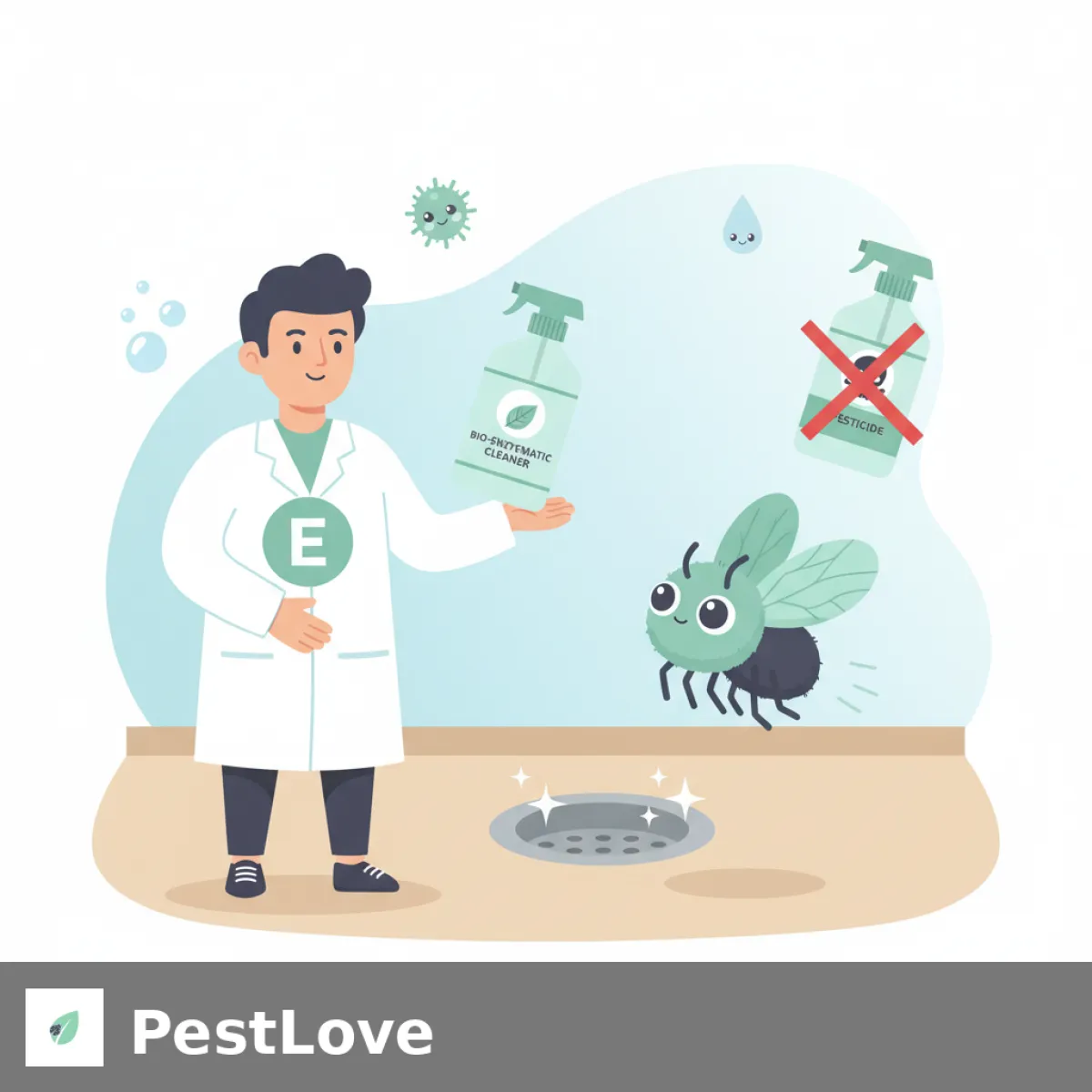
The debate between using Bio-Enzymatic Cleaners and traditional Pesticides is not just about preference; it is about the fundamental biology of the pest. In this guide, we will dismantle the myths of bleach and pesticides and explain why enzymatic digestion is the industry standard for total eradication.
Identification: Know Your Enemy
Before treating, you must confirm the target. I often see kitchen staff confusing drain flies with Fruit Flies (Drosophila) or Phorid Flies. Mistaking the pest leads to wasted effort.
- Appearance: Drain flies are 1.5mm to 5mm long, gray or tan, and have a fuzzy, moth-like appearance. Their wings are held roof-like over the body when at rest.
- Behavior: They are weak fliers. You will typically see them hopping or resting on walls within a few feet of a floor drain, sink, or grease trap.
- The Breeding Ground: They require the gelatinous organic slime (biofilm) that accumulates inside pipes to lay their eggs.
If the flies are running erratically across surfaces rather than flying, you might actually be dealing with Phorid flies, which often indicate a break in sewage infrastructure rather than just a dirty drain.
The Failure of Traditional Pesticides and Bleach
The most common mistake I witness in the field is the "scorched earth" approach: pouring gallons of bleach, ammonia, or boiling water down the drain. While this feels proactive, it is largely ineffective.
Why Bleach Doesn't Work
Drain fly larvae live embedded deep within the biofilm—a thick, protective layer of decaying food waste, grease, and bacteria that coats the inside of your pipes. Bleach is a liquid sanitizer; it passes quickly over the biofilm, perhaps killing the surface layer, but it does not penetrate. The larvae protected inside survive, and the biofilm remains intact, ready to support the next generation.
The Limit of Pesticides
Contact sprays (pyrethroids) will kill the adult flies you see on the wall. However, this is a temporary cosmetic fix. For every adult you kill, there are hundreds of larvae developing in the drains. Unless you remove the breeding medium, you are fighting a losing battle. Furthermore, spraying insecticides in a food preparation area requires strict adherence to safety protocols to avoid contamination.
The Solution: Bio-Enzymatic Cleaners
The professional standard for drain fly control is Bio-Remediation. This involves using cleaners containing living bacteria and enzymes designed to digest organic waste.
How It Works
Bio-enzymatic foam clings to the inside of the pipe. The specific strains of bacteria in these products produce enzymes that break down the long-chain molecules of grease, fats, and proteins that make up the biofilm. Essentially, the bacteria eat the habitat and food source of the drain fly larvae.
Key Advantages:
- Source Elimination: Without the biofilm, larvae cannot survive.
- Deep Penetration: The foam expands to coat the entire diameter of the pipe, reaching areas liquids miss.
- Preventative Maintenance: Regular use keeps drains flowing freely and prevents odors.
Professional Eradication Protocol
If you are facing an active infestation, follow this step-by-step protocol we use in commercial pest control.
Step 1: Mechanical Cleaning
Before applying enzymes, remove the bulk debris. Use a stiff, long-handled drain brush to physically scrub the inside of the drain pipe. This scarifies the biofilm, making it more susceptible to the enzymatic treatment. Warning: Do not just spray water; you must scrub.
Step 2: Apply Bio-Enzymatic Foam
At the end of the shift, when water usage has stopped, apply a professional-grade bio-enzymatic drain foam. Fill the pipe until foam exits the drain cover. Leave this overnight. Do not run water. Give the bacteria time to work.
Step 3: Address Insect Growth Regulators (IGRs)
For severe infestations, we may supplement cleaning with an Insect Growth Regulator (IGR). Unlike standard poisons, IGRs prevent larvae from maturing into breeding adults. This breaks the lifecycle while the enzymes destroy the habitat.
Step 4: Inspection of Grout and Crevices
Drain flies don't just breed in pipes. I have found thriving colonies in the slurry of wet grout under loose floor tiles or behind baseboards where water accumulates. Ensure your sanitation audit includes checking under equipment and repairing missing grout.
Prevention: The Manager’s Checklist
Eradication is meaningless without prevention. Incorporate these steps into your closing duties:
- Daily: Remove drain covers and clear solid debris from catch baskets.
- Weekly: Apply bio-enzymatic cleaner to all floor drains, sink drains, and soda fountain drip lines.
- Monthly: Inspect drain covers for damage. Large gaps allow cockroaches, such as American Cockroaches, to enter from the sewer system.
When to Call a Professional
If you have implemented a rigorous bio-enzymatic cleaning program for 3-4 weeks and still see flies, you likely have a structural issue. A broken pipe under the concrete slab allows wastewater to leak into the soil, creating a permanent breeding ground that no amount of drain cleaner can reach.
In these cases, we use endoscopic cameras to inspect the lines. If a break is found, it is a plumbing issue, not a pest control issue. However, diagnosing it early can save your business thousands in potential fines and lost revenue.
Remember: In a commercial kitchen, sanitation is pest control. Deny them the grime, and you deny them existence.