
Key Takeaways
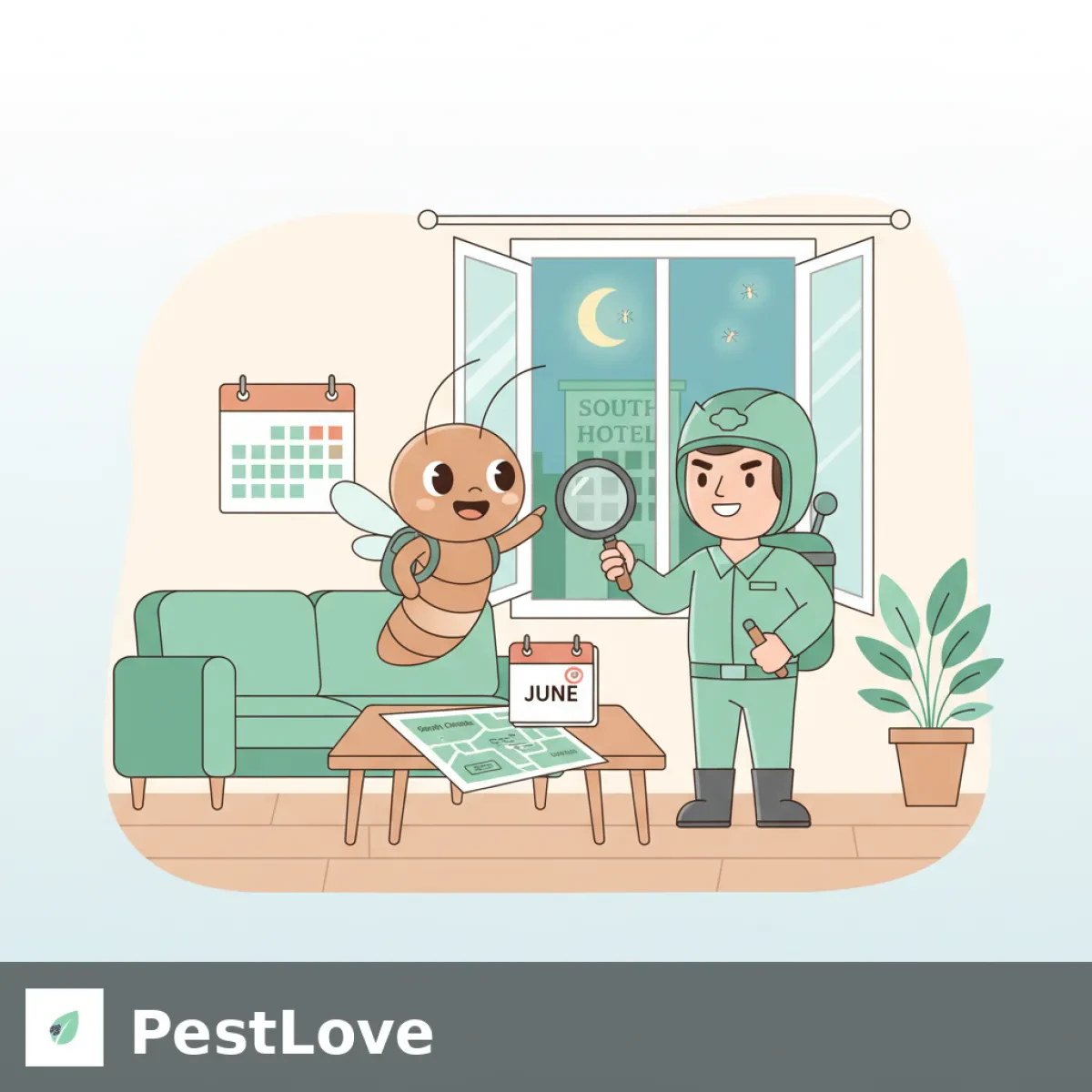
- Peak swarm window: Formosan subterranean termites (Coptotermes formosanus) typically swarm at dusk on humid evenings in late May through July across South China, with peak activity concentrated in June.
- Hotel-specific risk: Illuminated lobbies, poolside bars, garden pavilions, and rooftop restaurants act as powerful light traps that concentrate alates around guest-facing spaces.
- IPM framework: Effective management combines monitoring stations, moisture control, structural exclusion, professional liquid termiticide barriers, and in-ground baiting systems.
- Reputational stakes: A single visible swarm event during a banquet or wedding can trigger guest complaints, online reviews, and rebooking losses far exceeding the cost of preventative treatment.
- Professional engagement: Licensed pest management professionals should conduct annual pre-swarm inspections and design site-specific contingency plans.
Understanding the Threat in South China
The Formosan subterranean termite is widely regarded by entomologists as one of the most destructive structural pests in the world. Native to southern China, the species is endemic across Guangdong, Guangxi, Fujian, Hainan, and Hong Kong, where warm, humid conditions sustain massive colonies that can exceed several million individuals. Unlike native Reticulitermes species, a mature Coptotermes formosanus colony can consume significantly more cellulose annually and inflict structural damage at a much faster rate.
For South China hotel groups, June represents the convergence of two operational pressures: the seasonal swarm of reproductive alates and the start of the peak domestic tourism and wedding banquet season. A coordinated plan is essential to protect both the physical asset and the guest experience.
Identification: Recognizing Formosan Alates
Accurate identification underpins every downstream decision. During June swarms, hotel staff should be trained to distinguish Formosan termite alates from native termite species and from flying ants, which often emerge concurrently. Key diagnostic features include:
- Size: Alates measure roughly 12–15 mm including wings, with a yellowish-brown body.
- Wings: Four wings of equal length, milky or translucent with a dense network of fine hairs visible under magnification.
- Antennae: Straight and bead-like (moniliform), distinguishing them from the elbowed antennae of ants.
- Waist: Broad, without the pinched waist characteristic of ants.
- Soldiers: Teardrop-shaped heads that secrete a milky defensive fluid when disturbed — a hallmark of Coptotermes.
For a deeper comparison, refer to Termite Swarms vs. Flying Ants: The Professional Spring Identification Guide and How to Identify Termites.
Behavior: Why June Swarms Threaten Hospitality Operations
Formosan alates emerge in dense, synchronized flights triggered by warm, still evenings — often within 24 hours of significant rainfall. They are strongly phototactic, meaning they are drawn to artificial light sources. In hotel environments, this behavior creates predictable concentration points:
- Porte-cochère lighting and lobby chandeliers
- Outdoor restaurant string lights and lantern displays
- Pool deck and garden uplighting
- Illuminated signage and façade washes
- Guest room balcony lights
Once alates land, they shed their wings, pair off, and seek moist wood or soil to establish new colonies. Discarded wings collected from window sills, swimming pool surfaces, or carpeted lobby areas are often the first clear evidence of an active swarm event on the property. Established colonies thereafter forage through mud tubes and can attack structural timber, decorative wooden panels, ryokan-style tea rooms, and landscaped trees.
Prevention: A Pre-Swarm IPM Protocol for Hotel Groups
1. Annual Pre-Swarm Inspection
Engage a licensed pest management professional to conduct a comprehensive inspection in March or April. The inspection should cover all wood-soil contact points, expansion joints, plumbing penetrations, sub-slab voids, and landscape features. Findings inform the property's pre-swarm action plan. For commercial portfolios, see Post-Winter Termite Inspection Protocols.
2. Moisture Management
Formosan termites are uniquely capable of establishing aerial (above-ground) carton nests when adequate moisture is available — a critical risk in tropical hotels. Operations teams should:
- Repair leaking irrigation, condensate drains, and rooftop drainage promptly.
- Ensure positive grading away from foundations and pool decks.
- Inspect HVAC condensate lines, particularly above suspended ceilings.
- Replace water-damaged drywall, ceiling tiles, and skirting boards.
3. Structural Exclusion and Lighting Strategy
Because alates are drawn to light, hotels can meaningfully reduce indoor swarm intrusion through engineering controls:
- Switch exterior fixtures to yellow or amber LED bulbs, which are markedly less attractive to flying insects.
- Install fine-mesh screening on operable windows, lobby vents, and kitchen exhaust intakes.
- Reposition high-lumen fixtures away from entrances; supplement with downcast shielded lights closer to walkways.
- Seal expansion joints, utility penetrations, and weep holes with termite-resistant sealants.
4. Landscape and Storage Hygiene
Remove or relocate cellulose materials that act as colony seed sites: firewood stacks, decorative timber mulch, dead palm fronds, stored pallets, and unpainted wooden planters. Maintain at least 30 cm of clearance between soil and any wood cladding. For heritage timber assets, refer to Subterranean Termite Mitigation for Heritage Wooden Structures.
5. Pre-Construction and Retrofit Barriers
New developments and major renovations in the region should specify pre-construction termite barriers in accordance with Pre-Construction Termite Barriers: Regulatory Compliance in Southeast Asian Development. Existing properties can retrofit liquid termiticide trenches or in-ground bait stations along the perimeter.
Treatment: Responding to an Active Swarm Event
Immediate Response (First 24 Hours)
- Do not spray with retail aerosols. Surface insecticides kill visible alates but disperse foragers and rarely affect the parent colony.
- Contain and document. Vacuum alates and shed wings from public areas. Photograph specimens for laboratory identification.
- Dim affected exterior lighting for the remainder of the swarm window (typically 1–2 weeks).
- Notify the pest management contractor for emergency inspection within 24 hours.
- Brief guest-facing staff with a calm, factual script that reassures guests without disclaiming responsibility.
Professional Treatment Options
A licensed professional will select treatment based on construction type, soil conditions, and damage extent. Recognized methods within IPM guidelines from the U.S. EPA and university extension services include:
- Non-repellent liquid termiticide barriers (e.g., fipronil- or imidacloprid-based products) applied via sub-slab injection and perimeter trenching to create a continuous treated zone.
- In-ground bait stations using chitin synthesis inhibitors (such as hexaflumuron or noviflumuron) that are carried back to the colony and disrupt molting, leading to colony elimination over weeks to months.
- Localized foam or dust treatments applied directly to active galleries, carton nests, and mud tubes.
- Wood preservatives (e.g., borate-based products) applied to exposed structural timber during renovation.
For further methodology, see Termite Protection for Tropical Resorts: Baiting vs. Liquid Barriers and How to Get Rid of Termites.
When to Call a Professional
Formosan subterranean termite infestations are not appropriate for DIY remediation. Hotel operators should engage a licensed pest management professional whenever any of the following are observed:
- An active alate swarm inside the building envelope.
- Mud tubes on foundations, retaining walls, or expansion joints.
- Hollow-sounding or blistered wood, sagging floors, or stuck doors.
- Aerial carton nests in wall voids, ceiling cavities, or tree hollows.
- Recurring swarm events year over year, regardless of severity.
Hotel groups should also require contractors to provide written treatment plans, product safety data sheets, and warranty documentation aligned with local regulatory requirements. For broader hospitality IPM context, refer to Integrated Pest Management (IPM) for Luxury Hotels and The Definitive Guide to Termite Prevention.
Conclusion
For South China hotel groups, June Formosan termite swarms are a predictable, manageable risk — but only with disciplined preparation. A documented IPM plan that integrates pre-swarm inspections, moisture control, lighting engineering, and professional barrier or baiting treatments will protect both the physical structure and the guest experience during one of the region's most operationally sensitive months.
