English
Pantry Pests in Sealed Food: Keep, Freeze or Toss?
An unopened package is not necessarily insect-proof. Use the packaging, visible signs of infestation and storage history to decide whether to keep, freeze or discard dry food.
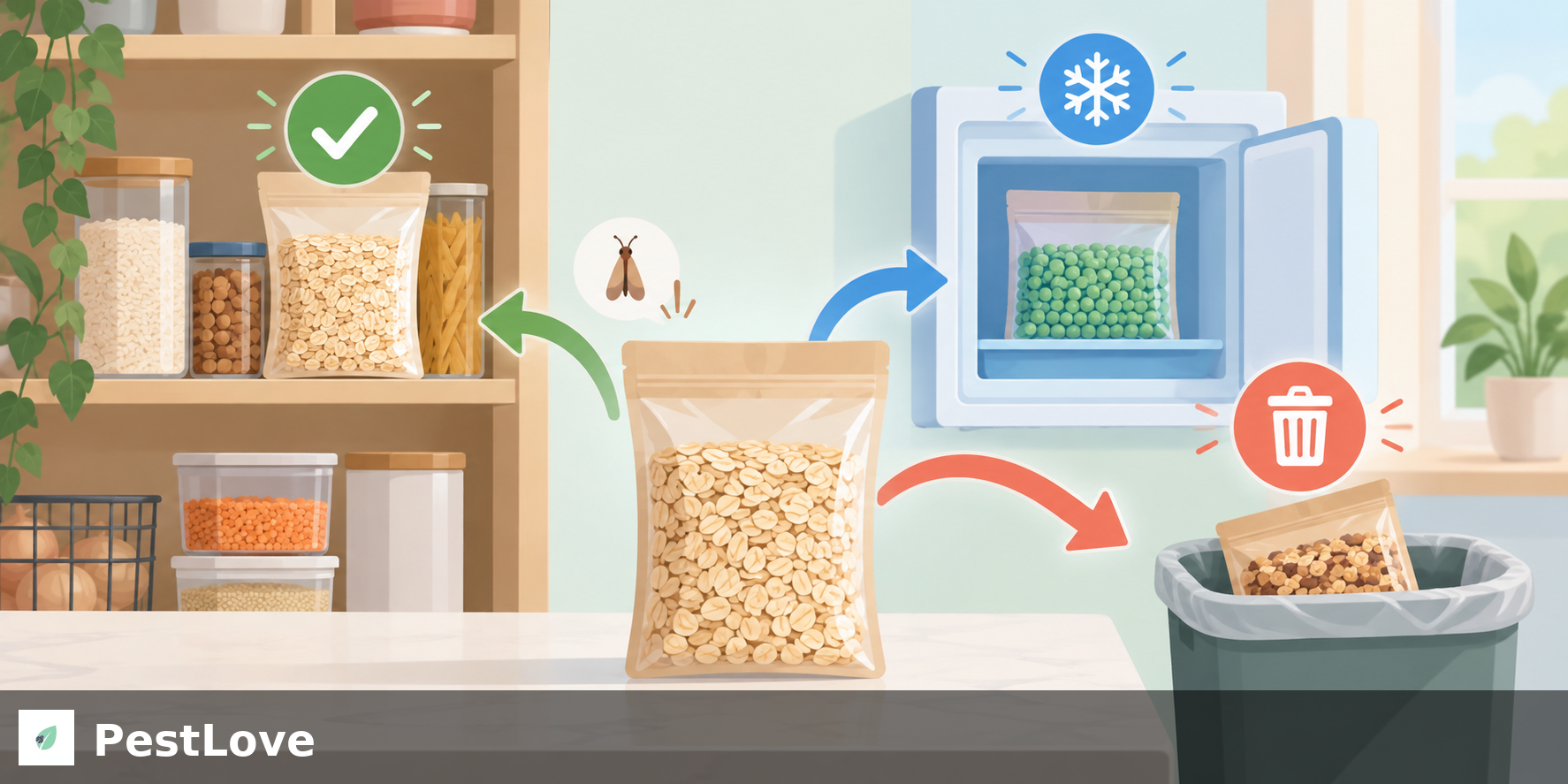
The short answer: discard food with insects, larvae, webbing, shed skins or insect waste. Freeze apparently clean dry food when exposure is plausible but no infestation is visible. Keep products in intact, pest-resistant containers when there are no warning signs.
A factory seal does not always exclude pantry pests. Some products may already contain eggs when packaged, while insects can chew through paper, plastic and foil bags after purchase. Rigid glass, metal and heavy plastic containers with tight closures provide a more effective barrier.
Why unopened packages need inspection
Pantry pests include several moths, beetles and weevils that develop in stored dry foods. Susceptible products include flour, cereal, rice, pasta, dried beans, nuts, spices, dried fruit, birdseed and dry pet food.
Indianmeal moth larvae produce silk webbing in infested food and may leave the product to pupate on walls or ceilings. Other warning signs include small beetles, caterpillar-like larvae, shed skins, insect waste, damaged grain and holes in packaging.
University extension guidance notes that infestations can arrive in prepackaged food and spread between products. Unopened cardboard boxes and bags therefore need examination when pantry pests are found nearby.
Keep, freeze or discard?
Discard food with visible infestation
Discard a product if you find:
- Live or dead insects inside the package
- Larvae, pupae or shed skins
- Silk webbing in or around the food
- Insect waste or obvious feeding damage
- Holes, tears, chewed areas or an open seal
- Insects repeatedly emerging from the package
Place the affected package in a closed bag or waste container and remove it from the storage area. Even when cold treatment kills insects, it does not remove webbing, shed skins, waste or damaged food. University of Maryland Extension recommends throwing away infested food and checking nearby containers.
Finding one affected package does not prove that it is the only source. Inspect other susceptible products before returning them to the cupboard.
Freeze questionable but apparently clean food
Freezing can be considered when dry food shows no insects, webbing or other contamination but may have been exposed. Examples include an intact bag stored beside an infested product or an older flexible package from the same cupboard.
Purdue University Extension recommends placing questionable or valuable material in a deep freezer at 0°F, approximately -18°C, for four days. Utah State University Extension advises 0°F or colder for four to seven days and states that this treatment should kill all insect life stages when the contents become thoroughly frozen.
Seal the item securely during handling. After treatment, store it in a clean glass, metal or heavy plastic container with a tight lid. Do not use freezing as a reason to retain food that contains visible insects or contamination.
Keep intact, pest-resistant packages
A product can generally remain in storage when:
- The package has no holes, tears, loose seams or broken closure
- No insects, larvae, webbing, shed skins or waste are visible
- The container is rigid glass, metal or heavy plastic with a tight closure
- The product has not contacted a pesticide or another contaminant
Check lids, rims, seams and package folds. For an opaque jar, can or container, inspect the contents when it is opened. An insect found on the outside of an intact rigid container does not by itself show that the contents are infested.
Flexible bags and cardboard packages provide less protection. Insects can chew through paper, plastic and foil bags, so apparently clean products in these materials deserve closer inspection when stored near a confirmed source.
Inspect the rest of the pantry
Remove susceptible products from the affected cupboard or rack and examine them under good light. Check:
- Flour, meal, baking mixes, cereal, rice and pasta
- Dried beans, seeds, popcorn and nuts
- Dried fruit, chocolate, spices, tea and powdered foods
- Dry pet food, birdseed and fish food
- Dried plant decorations and seed-filled items
- Old products at the back of shelves
Pay particular attention to package seams and the surface of the food. Indianmeal moth larvae may be found on walls or ceilings after leaving their food, so moths seen away from the cupboard can still indicate a stored-food source.
Not every indoor moth or beetle is a pantry pest. If the insect is not clearly associated with food, obtain an identification from a university extension service, entomologist or qualified pest professional before discarding large quantities of food or applying a pesticide.
Clean after removing affected products
Vacuum shelves, corners, cracks, shelf-support holes and adjoining floor edges. Wash the shelves with warm, soapy water and clean up spilled food and food dust before returning retained products.
Cleaning supports control, but it does not replace finding the infested product. University of Maryland Extension advises against spraying food-storage areas with insecticides. Purdue University Extension also states that routine insecticide use in pantries and cabinets is not recommended and that pesticides must never contact food or utensils.
Return insect-free food in tightly closed glass, metal or heavy plastic containers. Paperboard boxes and lightweight bags should not be treated as long-term insect barriers. Use older products first and inspect retained goods again if insects continue to appear.
For a broader moth-control program, see the pantry moth control guide for Europe.
Use an IPM approach
Integrated Pest Management, or IPM, combines monitoring, identification, prevention and proportionate control. For pantry pests, this means locating the source, removing affected food, cleaning spills, improving storage and continuing inspections.
The US Environmental Protection Agency describes IPM as a sequence of monitoring, identification, prevention and control. It recommends evaluating effective, lower-risk options before broader pesticide applications. Spraying visible insects while leaving an infested package in place does not address the source.
Food businesses need a documented response
Commercial kitchens, hotels, shops and warehouses should not apply household salvage decisions automatically to stock intended for sale or service. Stop movement of affected goods and segregate them while responsible food-safety personnel assess the lot under the facility's procedures and applicable local requirements.
Record the product, supplier, lot or delivery information, affected quantity and corrective action. Inspect matching stock and nearby storage locations. Do not assume that freezing makes visibly infested retail inventory acceptable for sale.
The FDA Food Code is a United States model for retail food and food-service establishments, offered for adoption by regulatory authorities. Its pest-control provisions call for routine inspection of incoming food and supplies, inspection of premises for pest evidence, control when pests are found and elimination of harborage conditions. Businesses elsewhere must follow the requirements of their own jurisdiction and food-safety program.
Professional help is appropriate when the source cannot be found, insects continue to appear after inspection and cleanup, identification is uncertain or multiple lots and storage areas are affected.
Frequently asked questions
Can pantry pests get into unopened food, and when can I keep a package?
A factory seal is not always insect-proof: pests may already be in a product or can chew through paper, plastic or foil bags. An intact rigid glass, metal or heavy plastic container with a tight closure can generally remain in storage if there are no insects, webbing, waste, damaged seams or other contamination; an insect on its outside alone does not prove the contents are infested.
When should I discard dry food instead of trying to save it?
Discard food with live or dead insects, larvae, pupae, shed skins, silk webbing, insect waste, feeding damage, holes, tears or a broken seal. Bag the affected package, remove it from storage and inspect nearby products. Even when freezing kills insects, it does not remove webbing, waste or damaged food.
When can I freeze apparently clean food exposed to pantry pests?
Freezing can be considered for dry food with no visible insects or contamination when exposure is plausible. Purdue University Extension recommends 0°F (about -18°C) for four days; Utah State University Extension advises 0°F or colder for four to seven days, with the contents thoroughly frozen. Seal the item during handling and transfer it to a clean, tightly closed glass, metal or heavy plastic container afterward.
How should I inspect the rest of the pantry after finding pests?
Examine susceptible dry foods, pet food, birdseed and seed-filled items under good light, especially package seams and food surfaces. Indianmeal moth (Plodia interpunctella) larvae can leave infested food and appear on walls or ceilings, so look for a stored-food source even when moths are seen away from a package. If an insect is not clearly associated with food, obtain expert identification before discarding large amounts of food or applying a pesticide.
How should I clean a pantry after removing infested food?
Vacuum shelves, corners, cracks, shelf-support holes and nearby floor edges, then wash shelves with warm, soapy water and remove spills. Cleaning does not replace finding and removing the infested product. Routine insecticide spraying in pantries is not recommended, and pesticides must never contact food or utensils.
What should a food business do with suspected infested stock?
Businesses should stop movement of affected goods and segregate them while responsible food-safety staff assess the lot under facility procedures and applicable local requirements. Record the product, supplier, lot or delivery details, affected quantity and corrective action, and inspect matching stock. The U.S. FDA Food Code is a model for retail food and food-service establishments, offered for adoption by authorities, not a universal rule; do not assume freezing makes visibly infested retail stock acceptable for sale.
Software for your business
Turn knowledge into a connected operation.
PestLove connects scheduling, field services, HACCP records, laboratory samples and reports. Every organization sees the tools relevant to its day-to-day work.
14-day free trial. No credit card required.
Related guides
All guides
Almond Moth July Fumigation for Saudi Date Packhouses
A professional guide to phosphine and controlled-atmosphere fumigation against Cadra cautella in Saudi date packhouses during July's peak heat. Covers identification...
Indianmeal Moth June IPM for Vietnam Coffee Warehouses
A professional guide to Indianmeal moth (Plodia interpunctella) management in Vietnamese Robusta coffee bonded warehouses during June. Covers identification, behavio...
Indian Meal Moth June Plans for Mexican Tortilla Plants
Mexican tortilla and masa harina facilities face peak Indian meal moth pressure in June as warm conditions accelerate Plodia interpunctella development. This guide o...